01
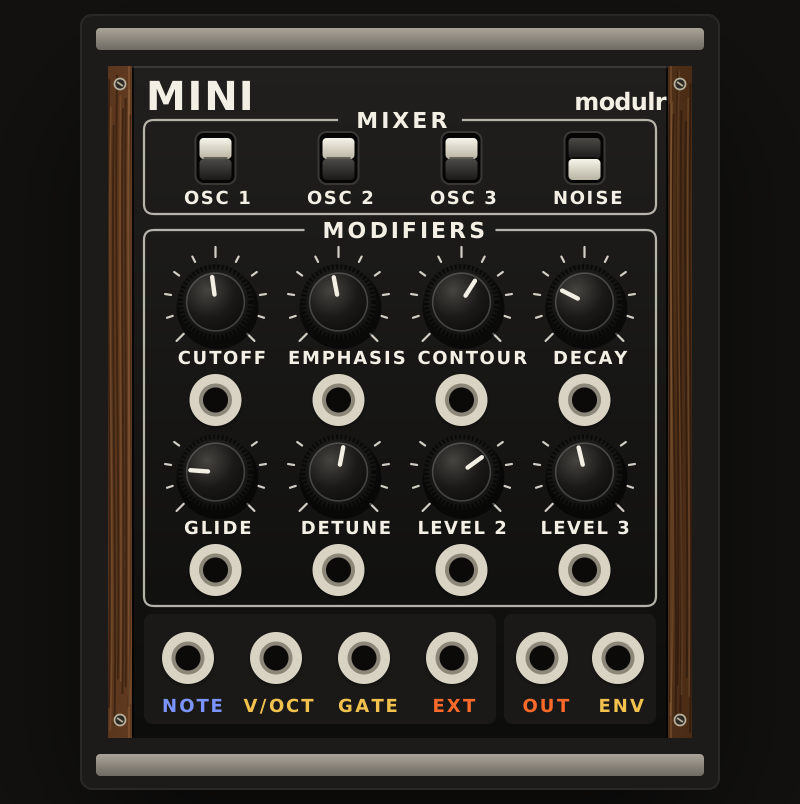
Modulr Mini
after the Minimoog Model D · 1970 · 22 HP
Three oscillators, a mixer and a four-pole ladder filter, with every section boxed and titled on the panel.
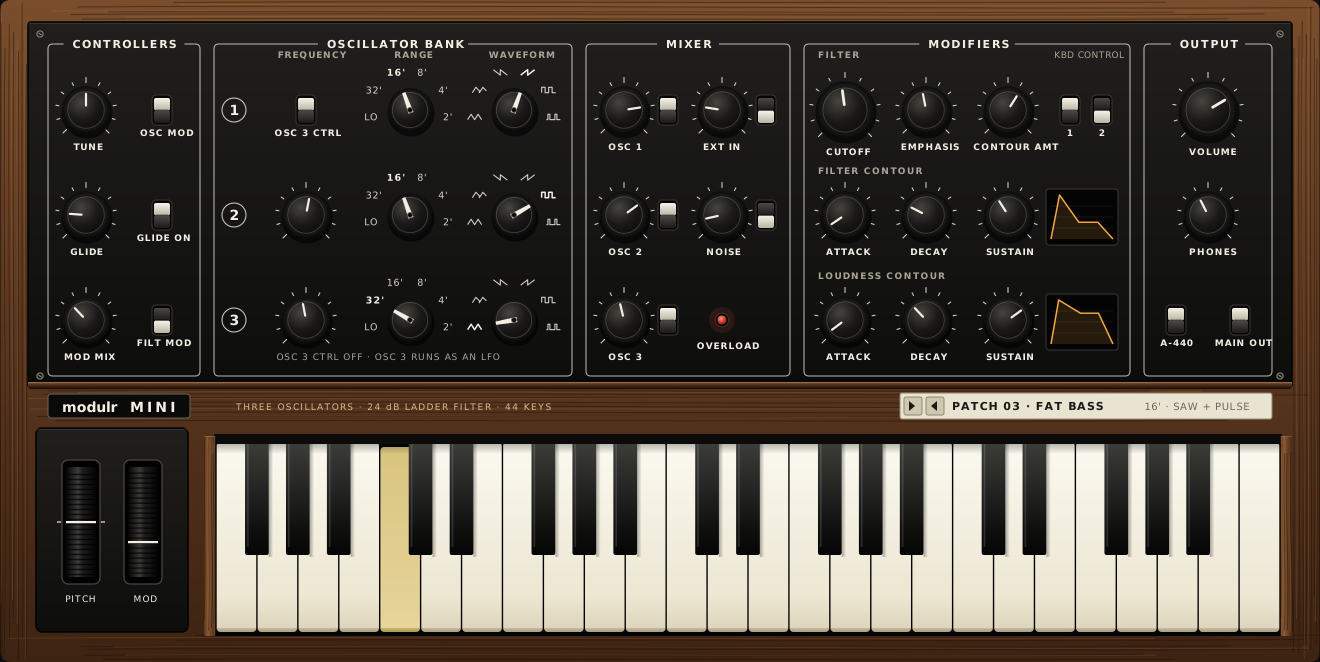
The editor
Each one is a study after an instrument’s grammar — its sections, its controls, its look — in Modulr’s own words, and a copy of nothing.
Every study is drawn twice: as a plug-in editor and as a Eurorack module. None of them is built. The catalogue is on sale as Legendary, the plan that carries it; what a subscription delivers beyond the drawings is not set.
The list is the order of the studies, and each row is a picture, the instrument it is a study after, the width of its module, and the pitch the product is sold on. The editor behind each disclosure is the same study as a plug-in window.
after the Minimoog Model D · 1970 · 22 HP
Three oscillators, a mixer and a four-pole ladder filter, with every section boxed and titled on the panel.
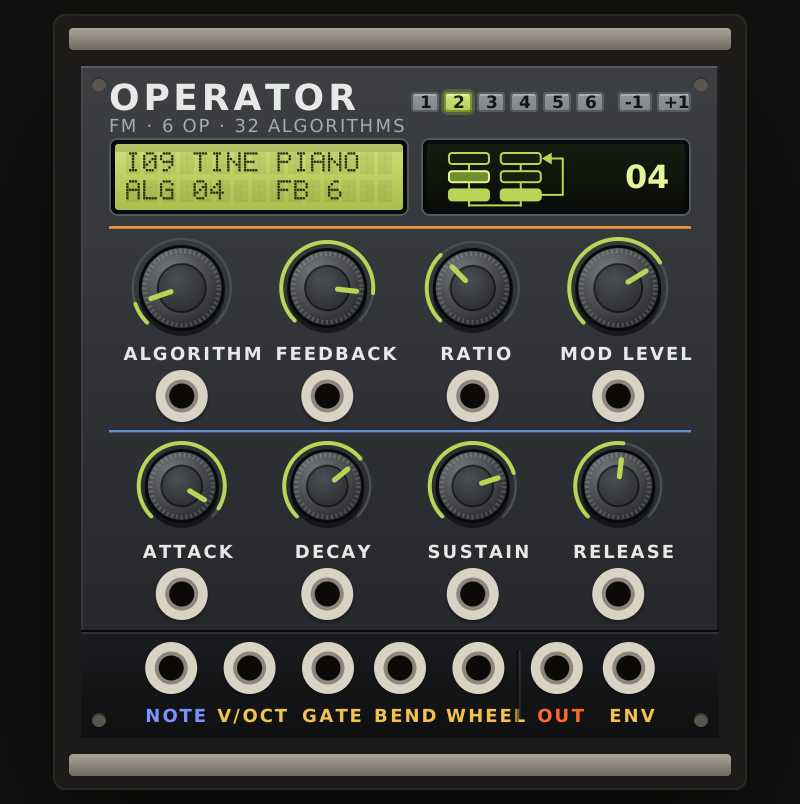
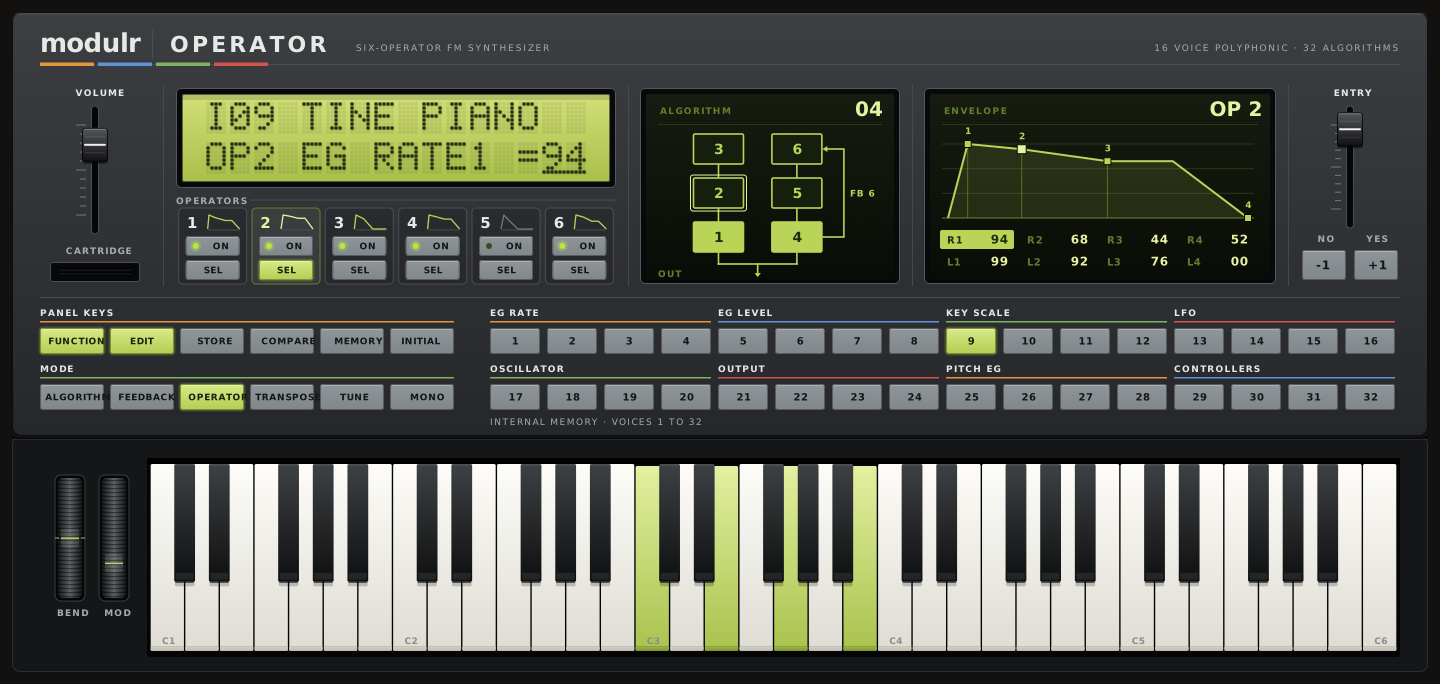
after the DX7 · 1983 · 24 HP
Six operators, thirty-two algorithms and four-rate envelopes, edited from a slider and a membrane panel.
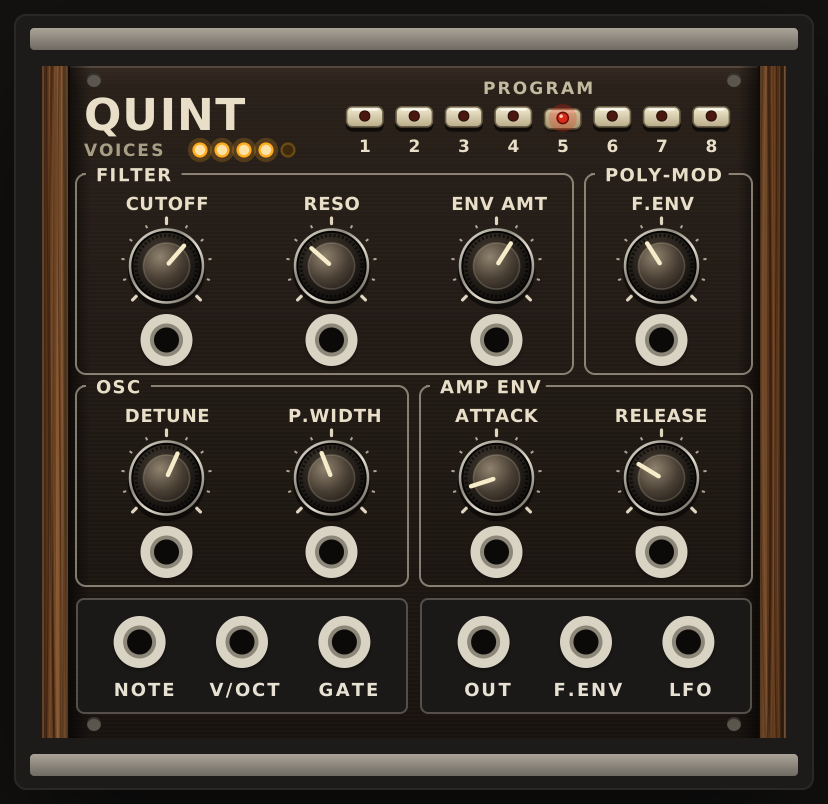
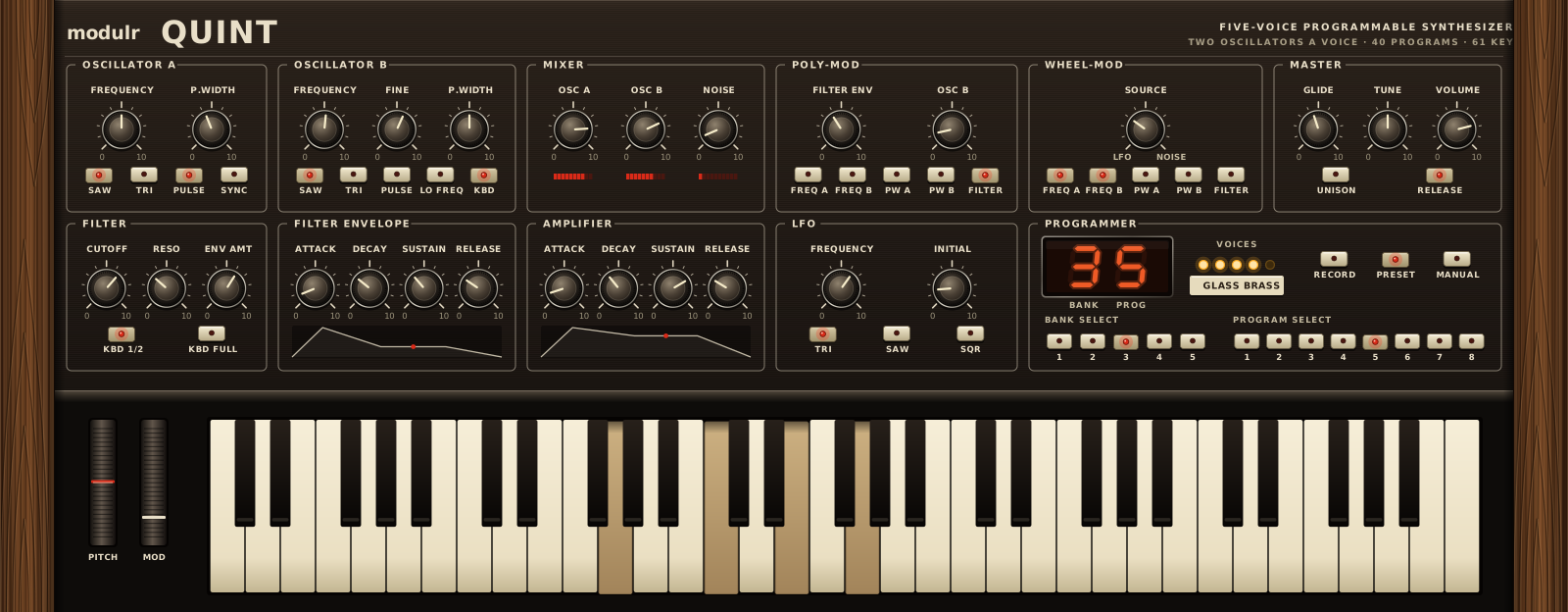
after the Prophet-5 · 1978 · 28 HP
Two oscillators, poly-mod and a five-voice programmer, with a filter contour and a loudness contour of their own.
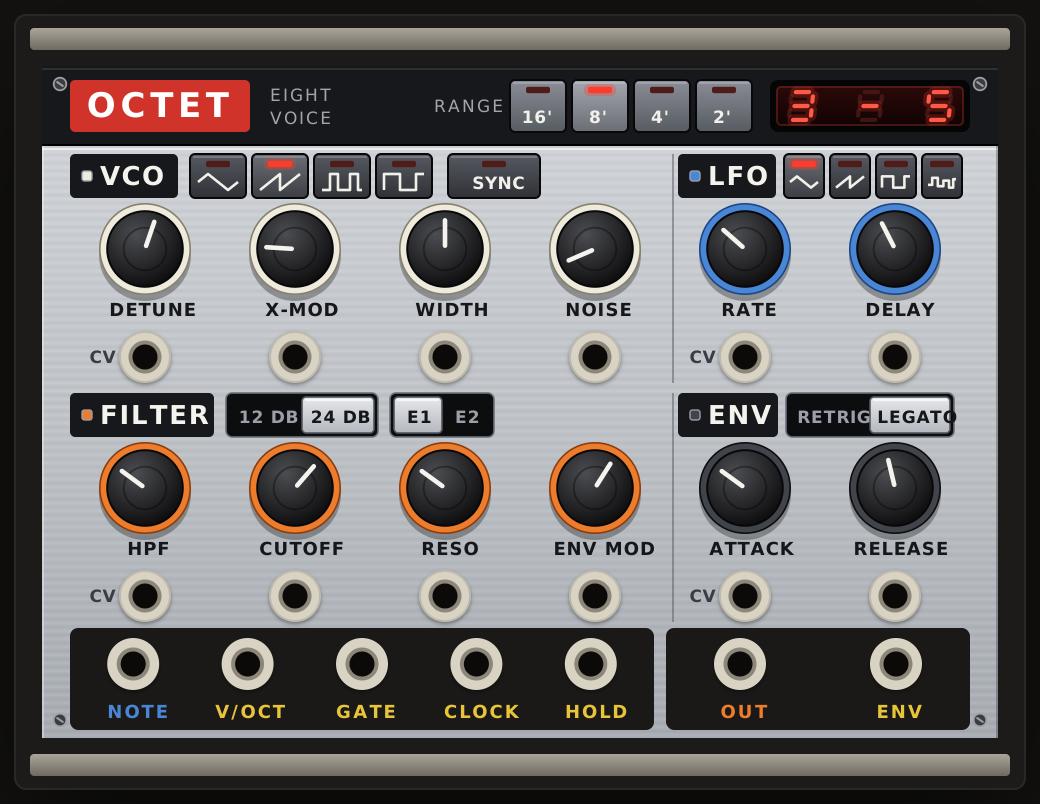
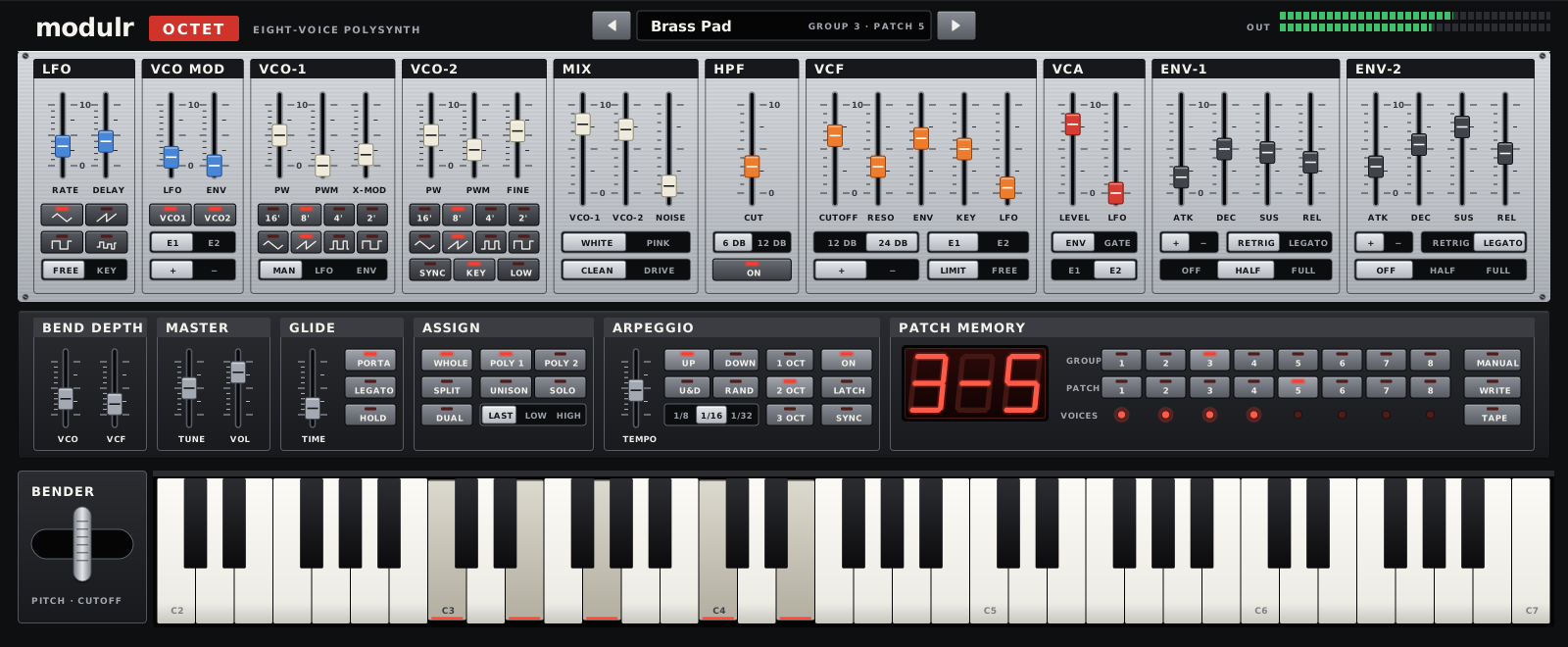
after the Jupiter-8 · 1981 · 36 HP
Eight voices of two oscillators each, a split and a dual mode, and a red display over a bed of coloured sliders.
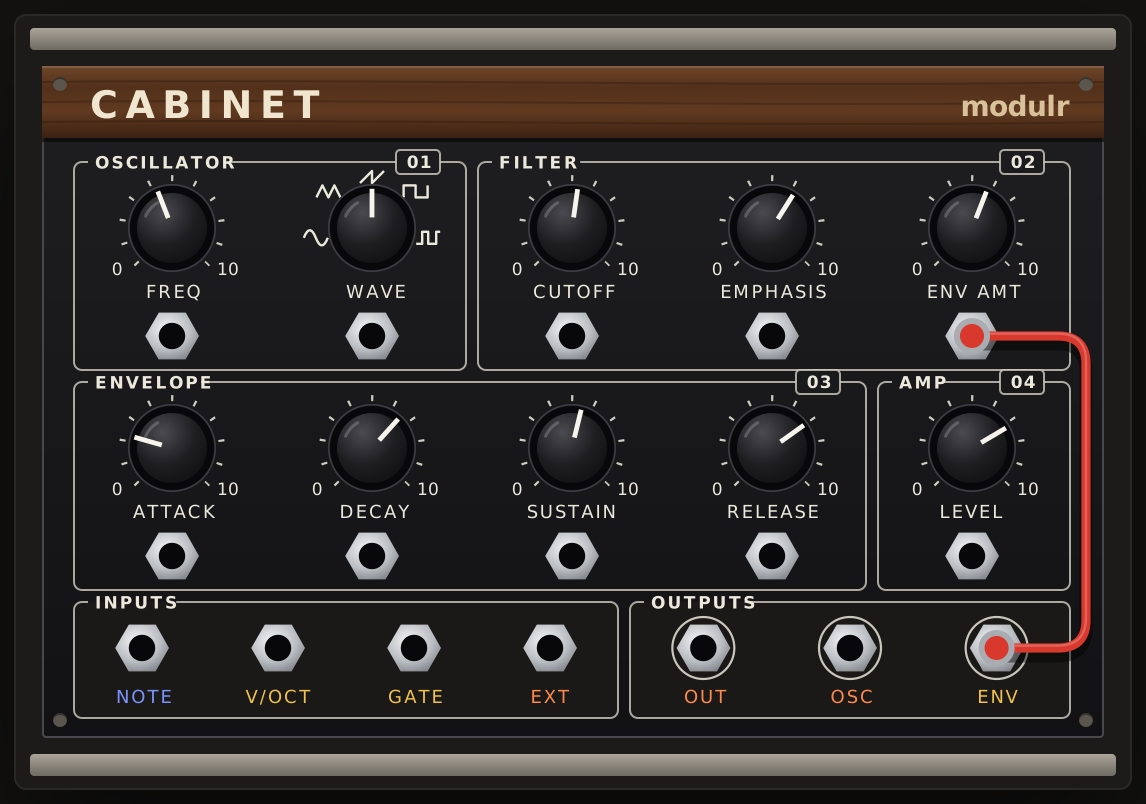
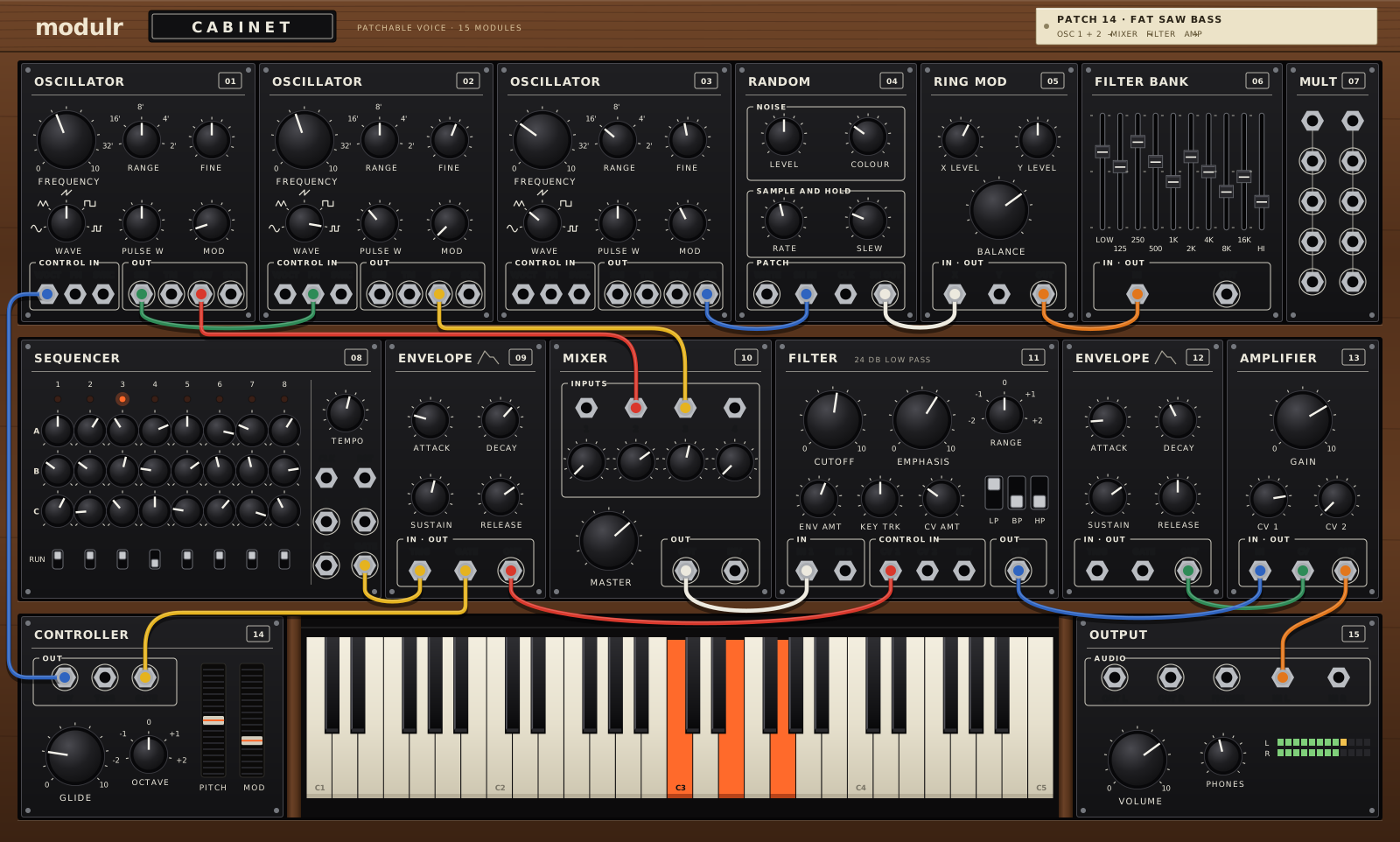
after the Moog modular · 1965 · 40 HP
A cabinet of numbered modules: oscillators, a filter bank, amplifiers, envelopes, a sequencer and a ring modulator, patched by hand.
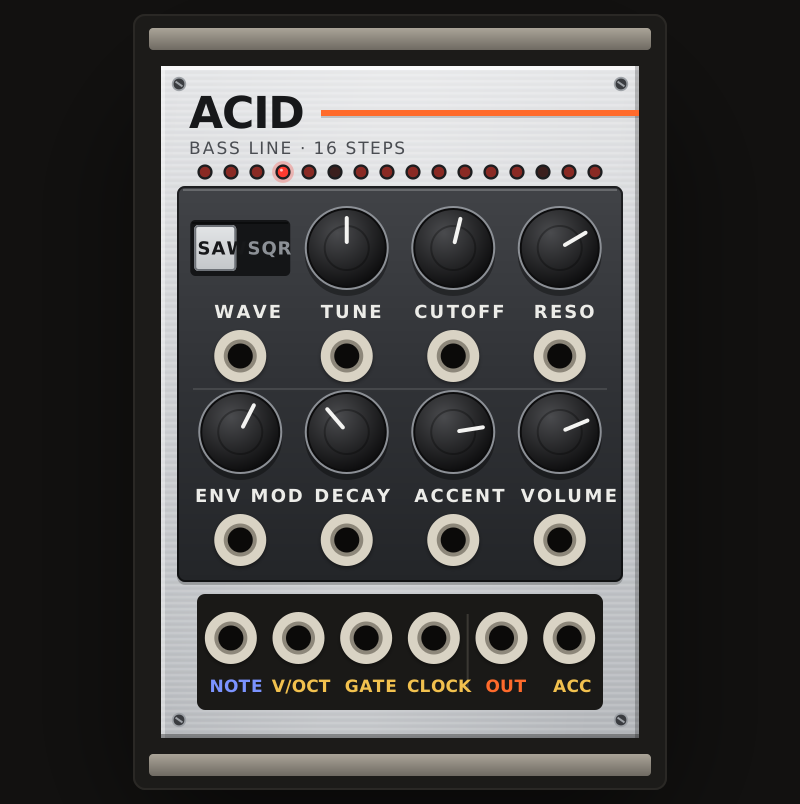
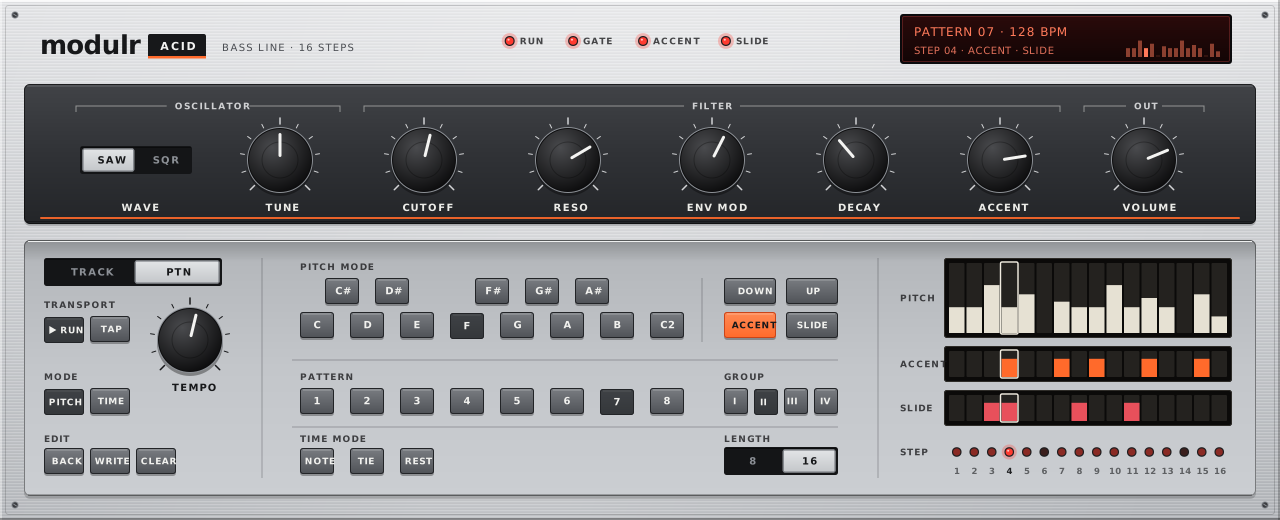
after the TB-303 · 1981 · 18 HP
Sixteen steps, one sawtooth, a resonant filter and an accent, in a case with a ribbon controller across the front.
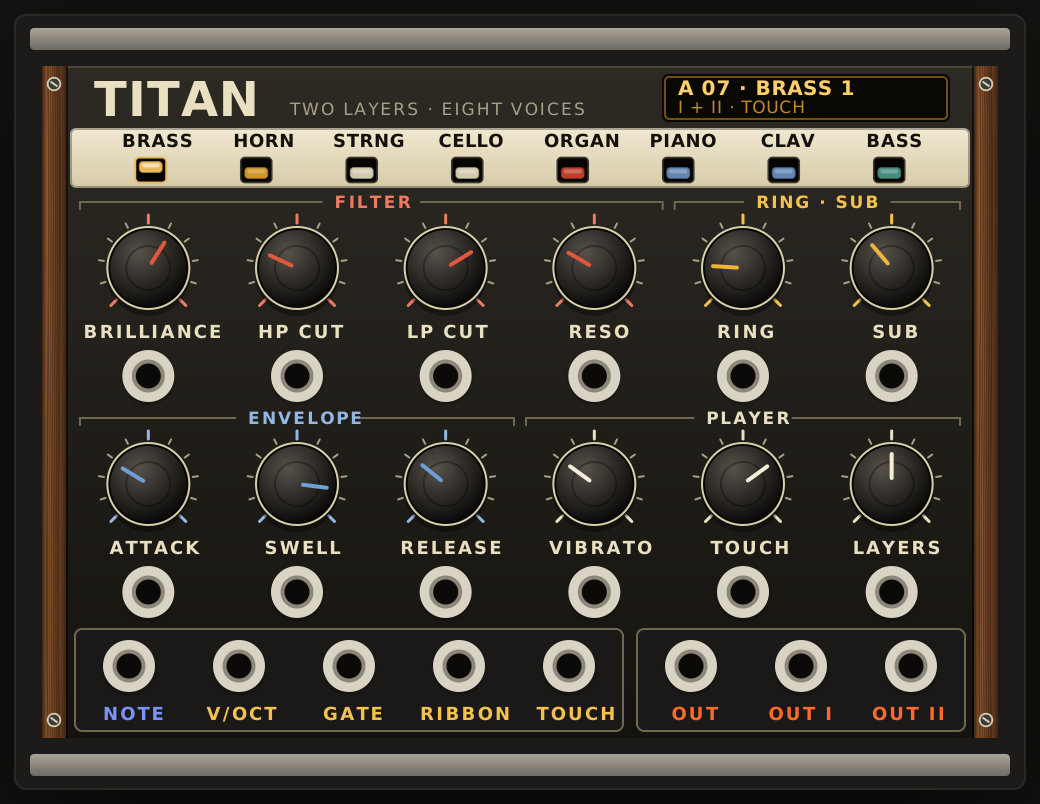
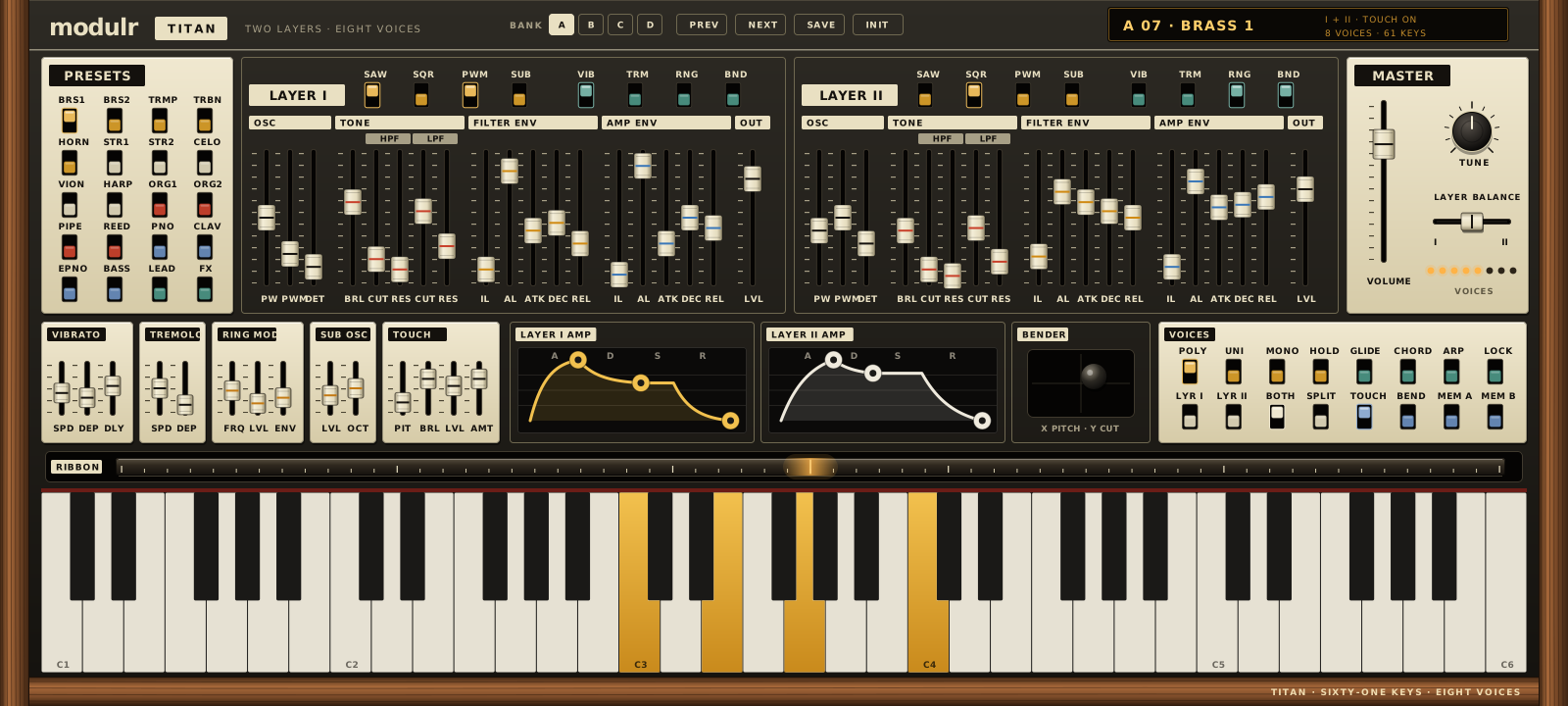
after the CS-80 · 1977 · 36 HP
A weighted keybed, a ribbon and a joystick, with a brass layer and a string layer over one shared voice.
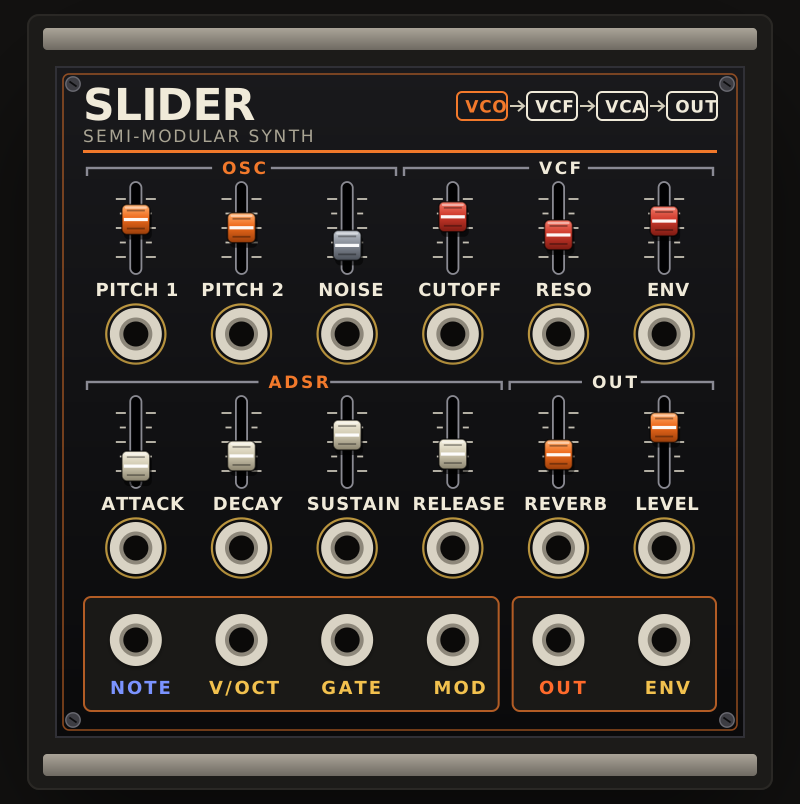
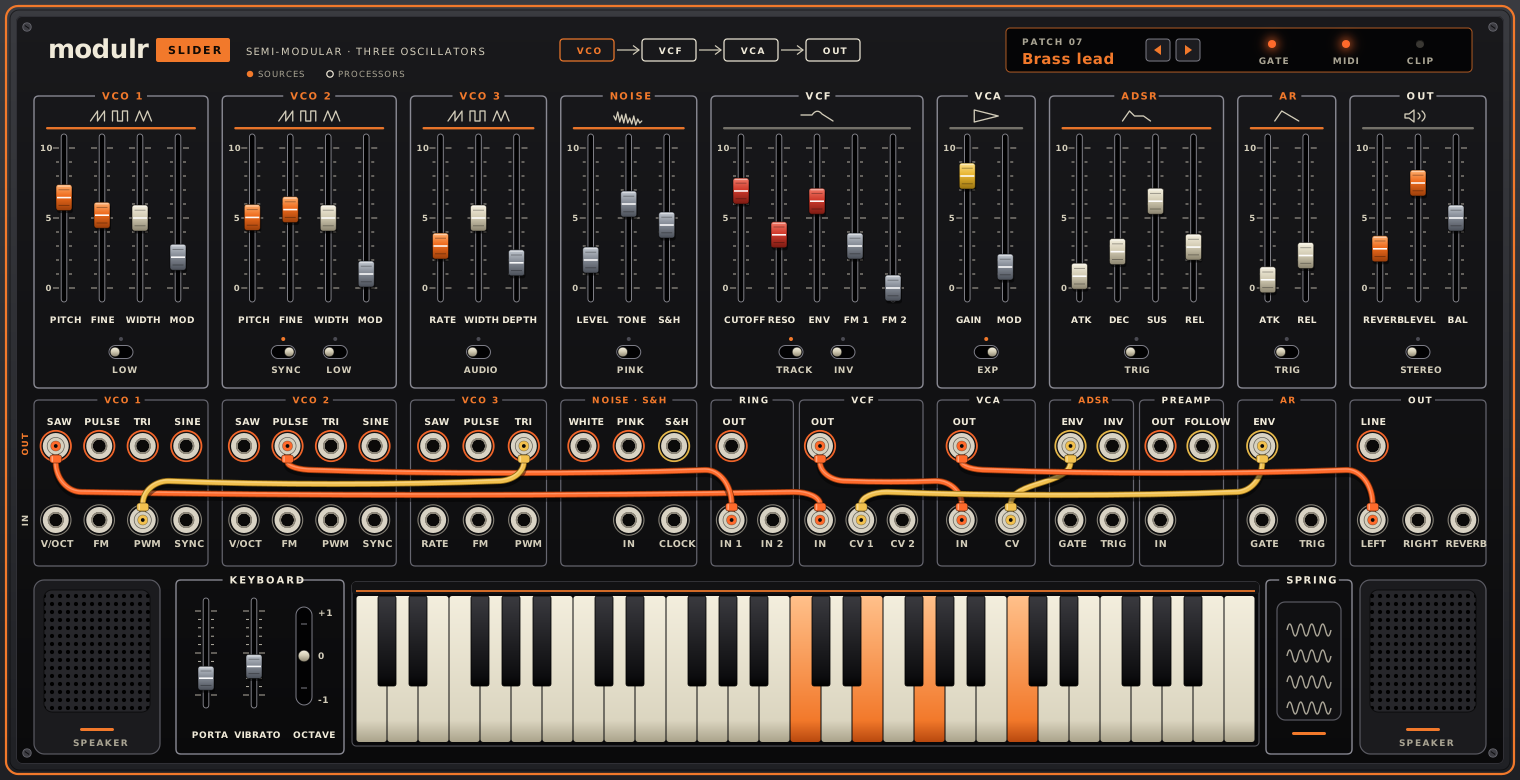
after the ARP 2600 · 1971 · 26 HP
Three oscillators, a ring modulator and a spring reverb, every control a slider over a field of patch jacks.
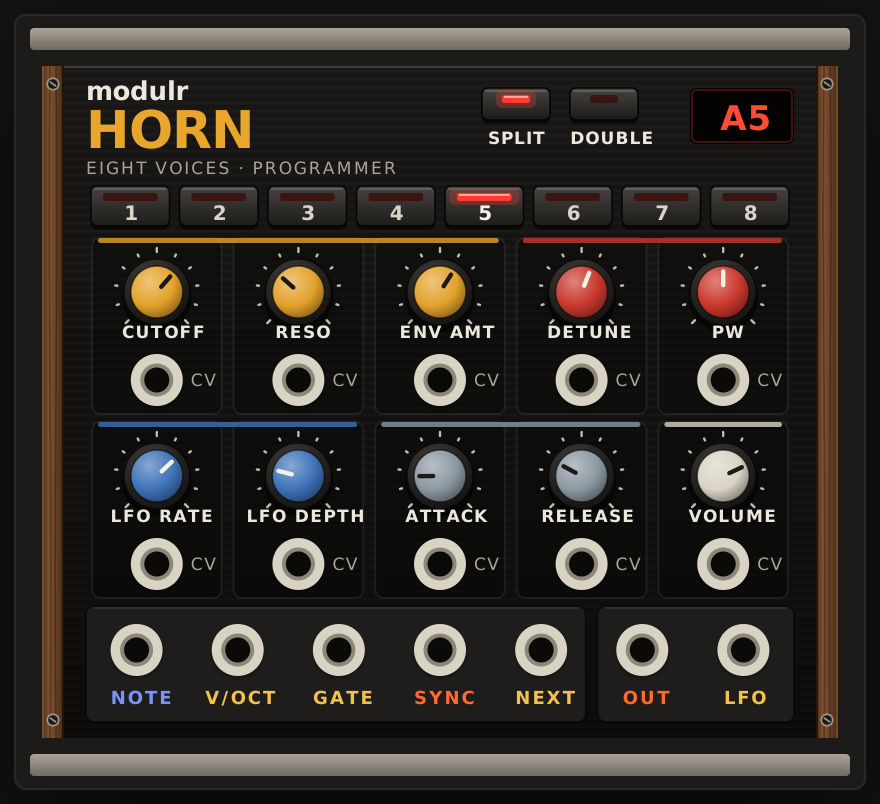
after the OB-Xa · 1981 · 30 HP
Two oscillators a voice, a filter that switches between two and four poles, and eight patches a bank on coloured knobs.
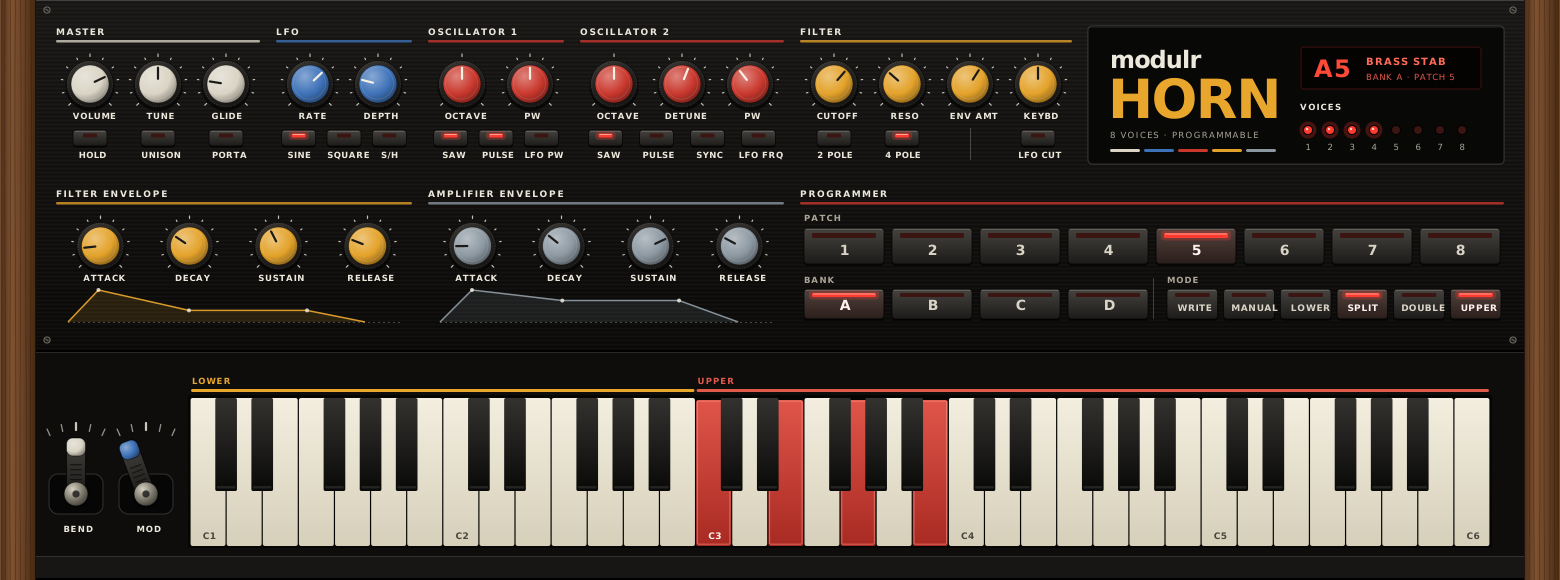
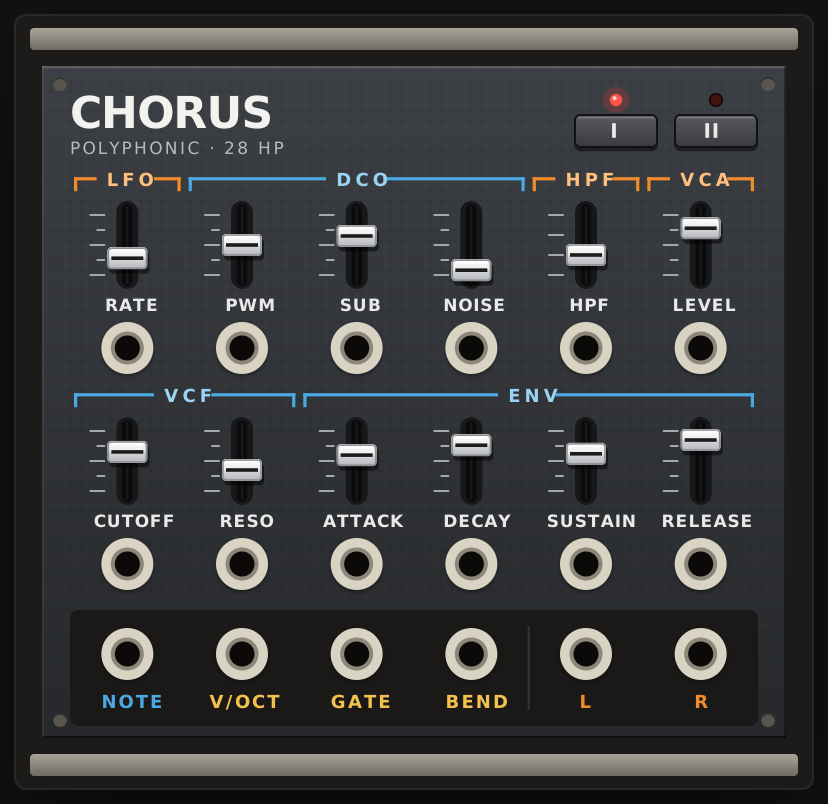
after the Juno-106 · 1984 · 28 HP
One oscillator with a sub and noise, a slider filter, and two chorus stages over a bank of eight patches.
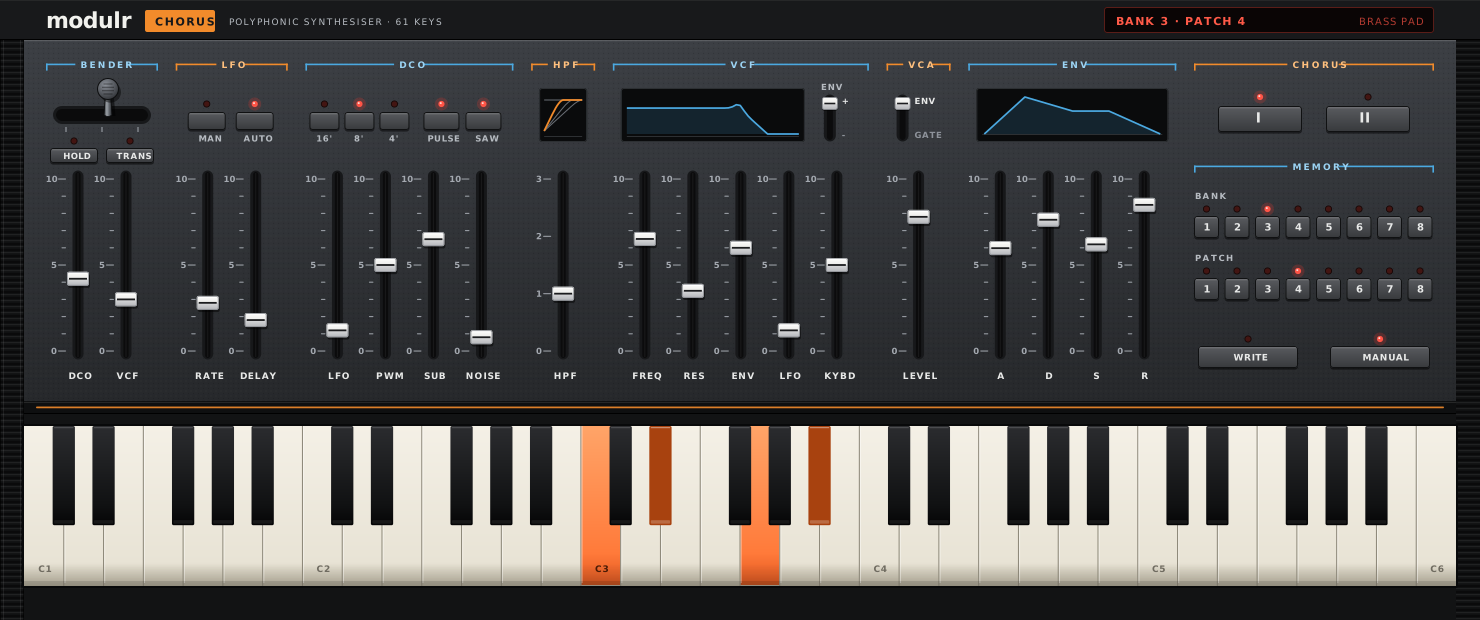
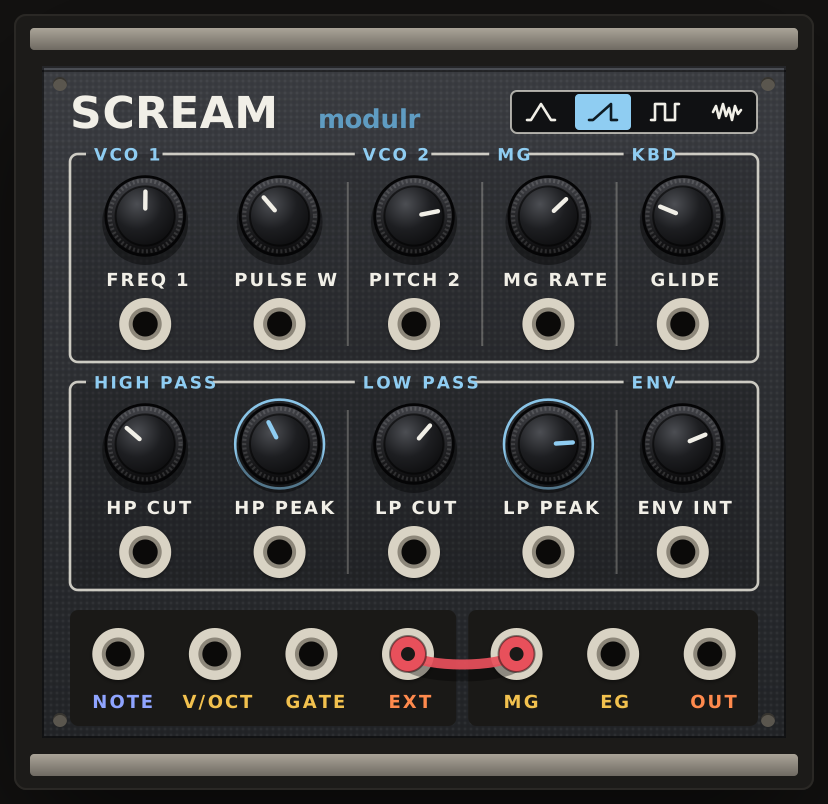
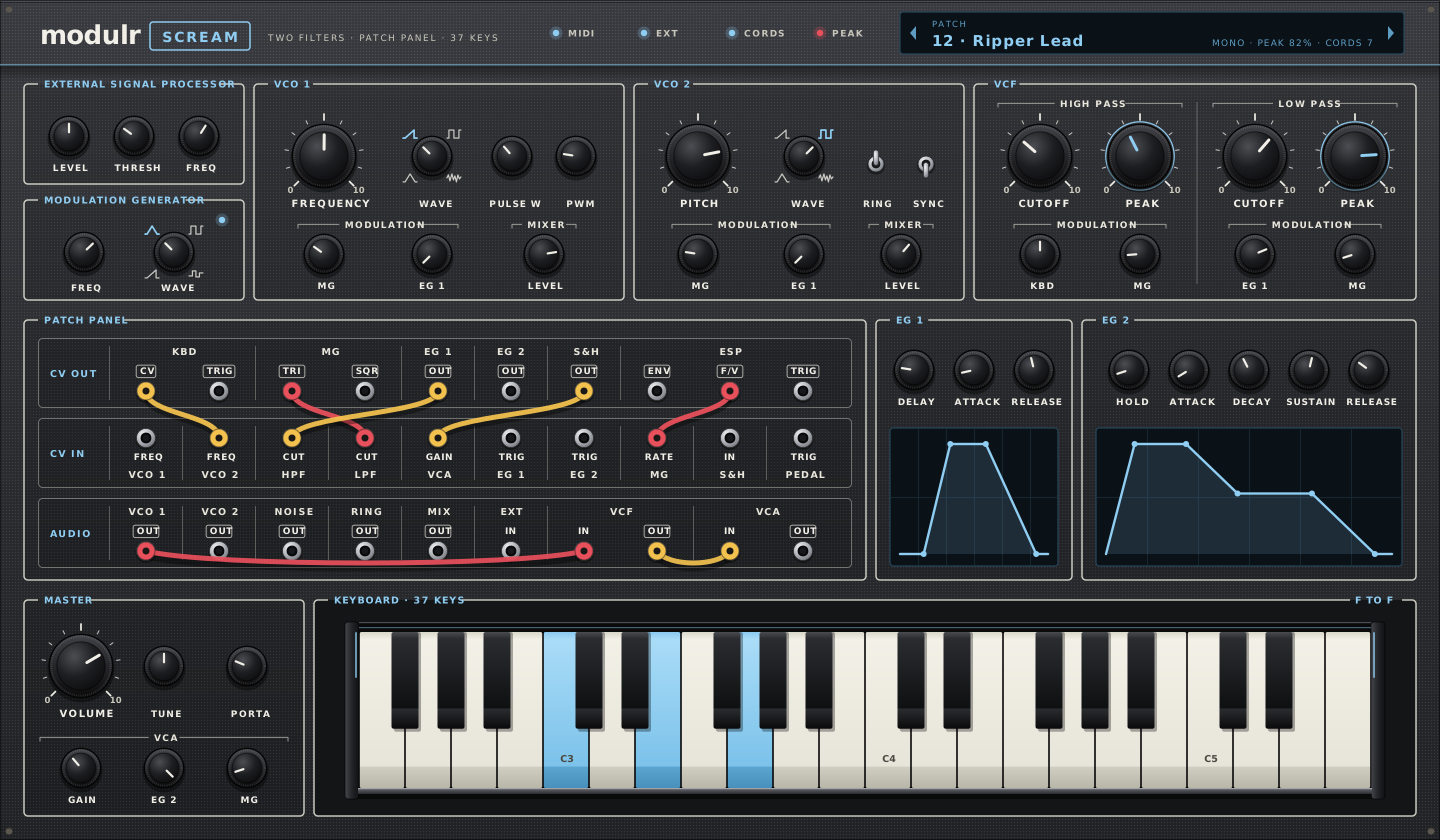
after the MS-20 · 1978 · 28 HP
Two oscillators, a high-pass and a low-pass filter with a peak, and a patch panel of its own.
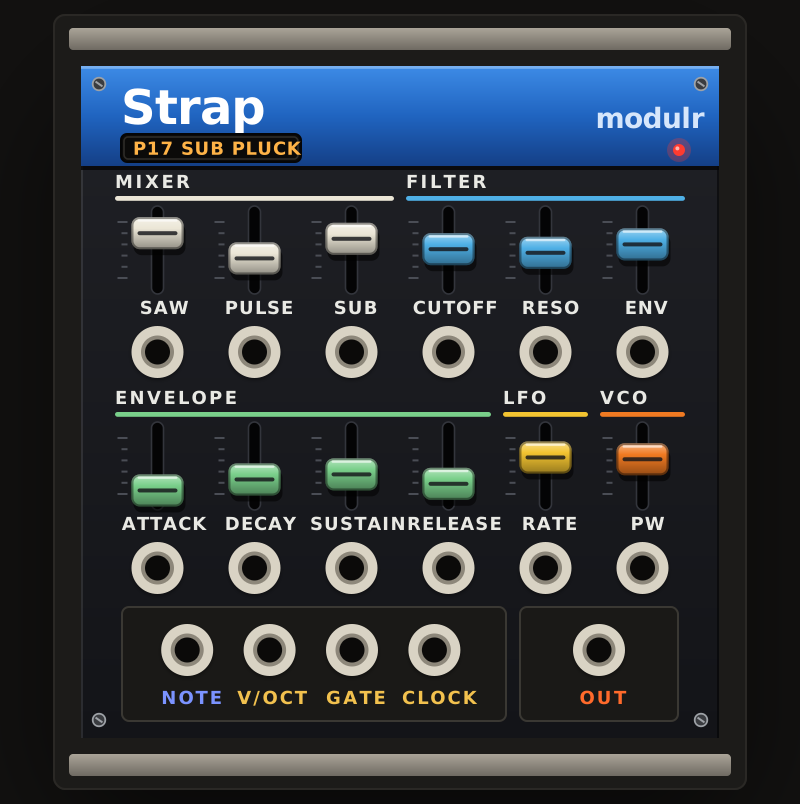
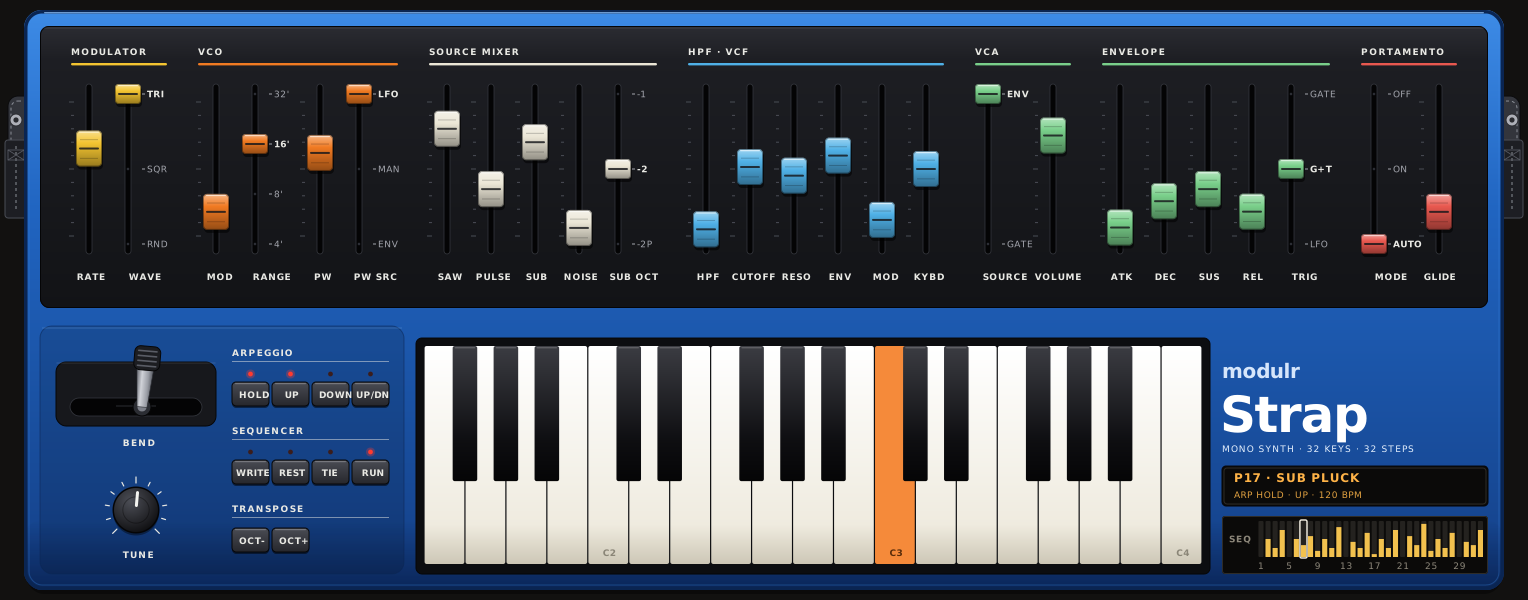
after the SH-101 · 1982 · 24 HP
One oscillator with a sub and noise, a low-pass filter, a thirty-two step sequencer and a keybed of thirty-two keys.
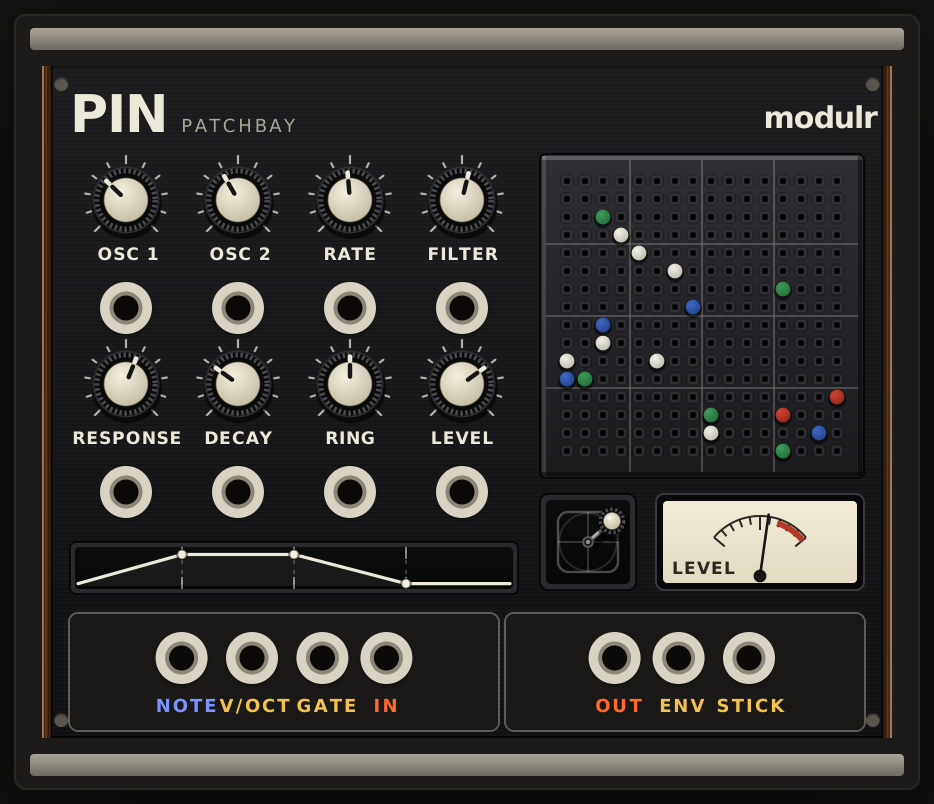
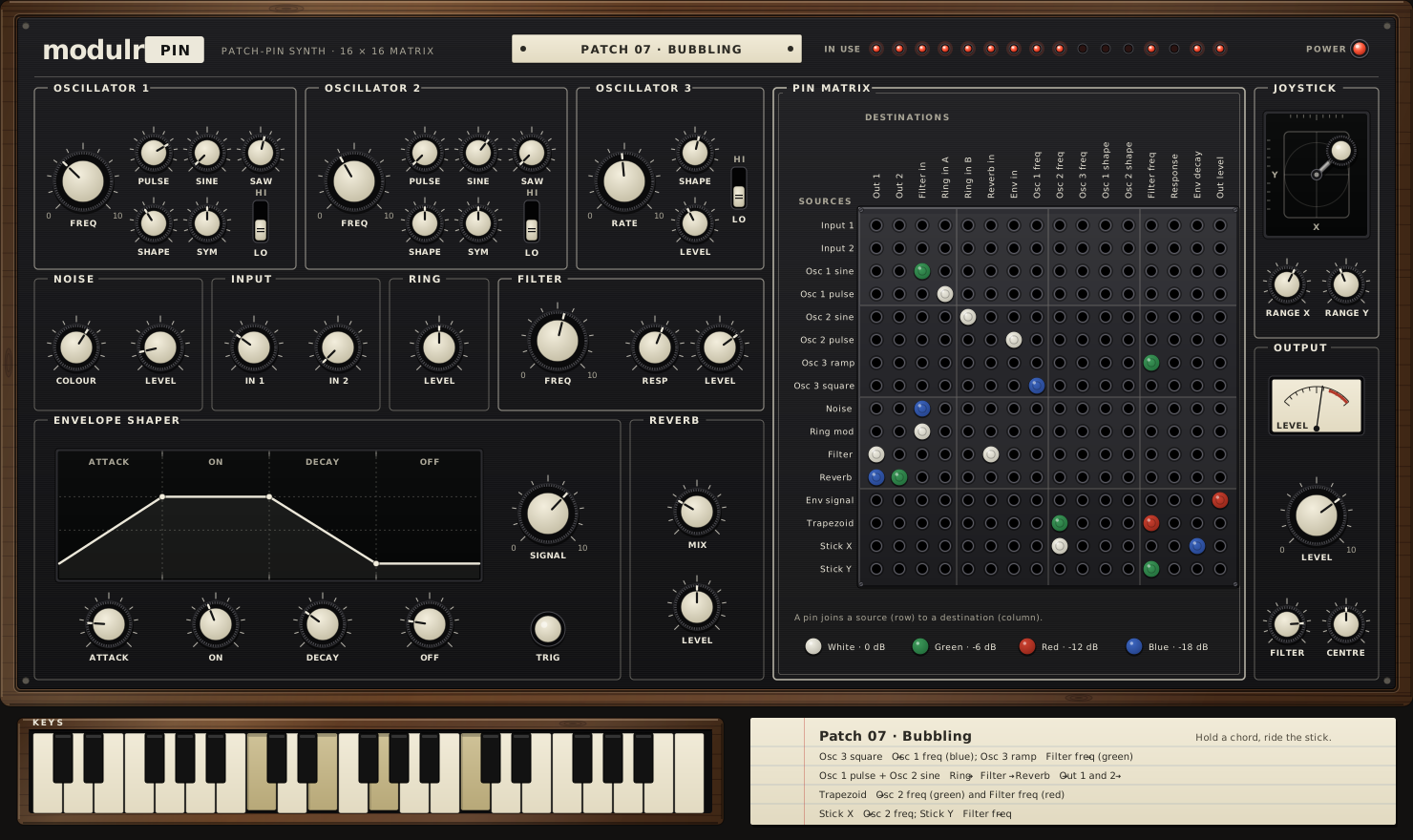
after the VCS 3 · 1969 · 32 HP
A pin matrix of sixteen by sixteen holes, three oscillators and a joystick, in a briefcase.
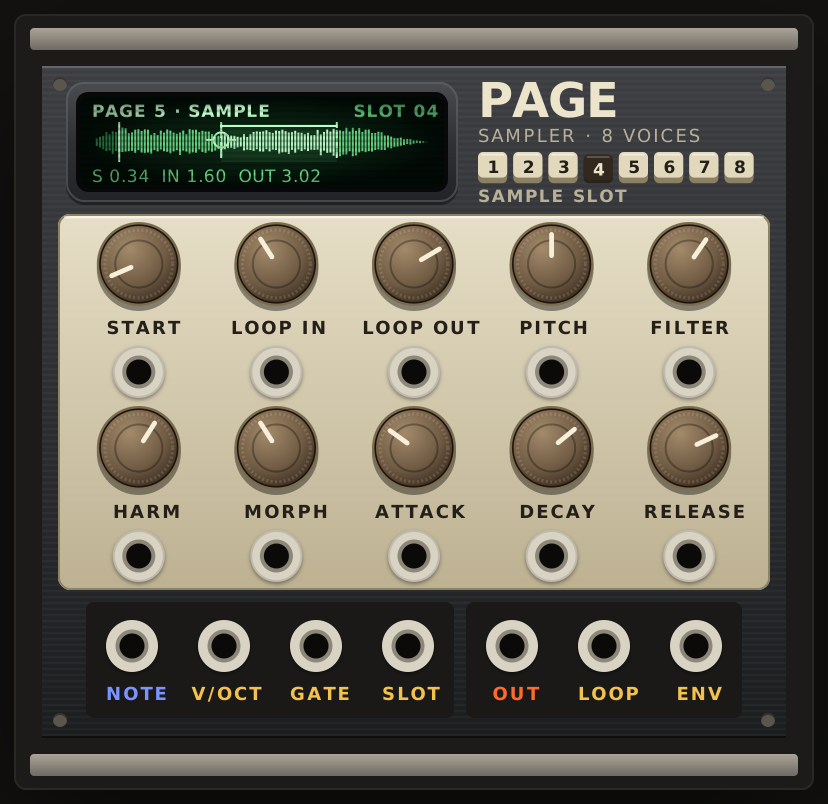
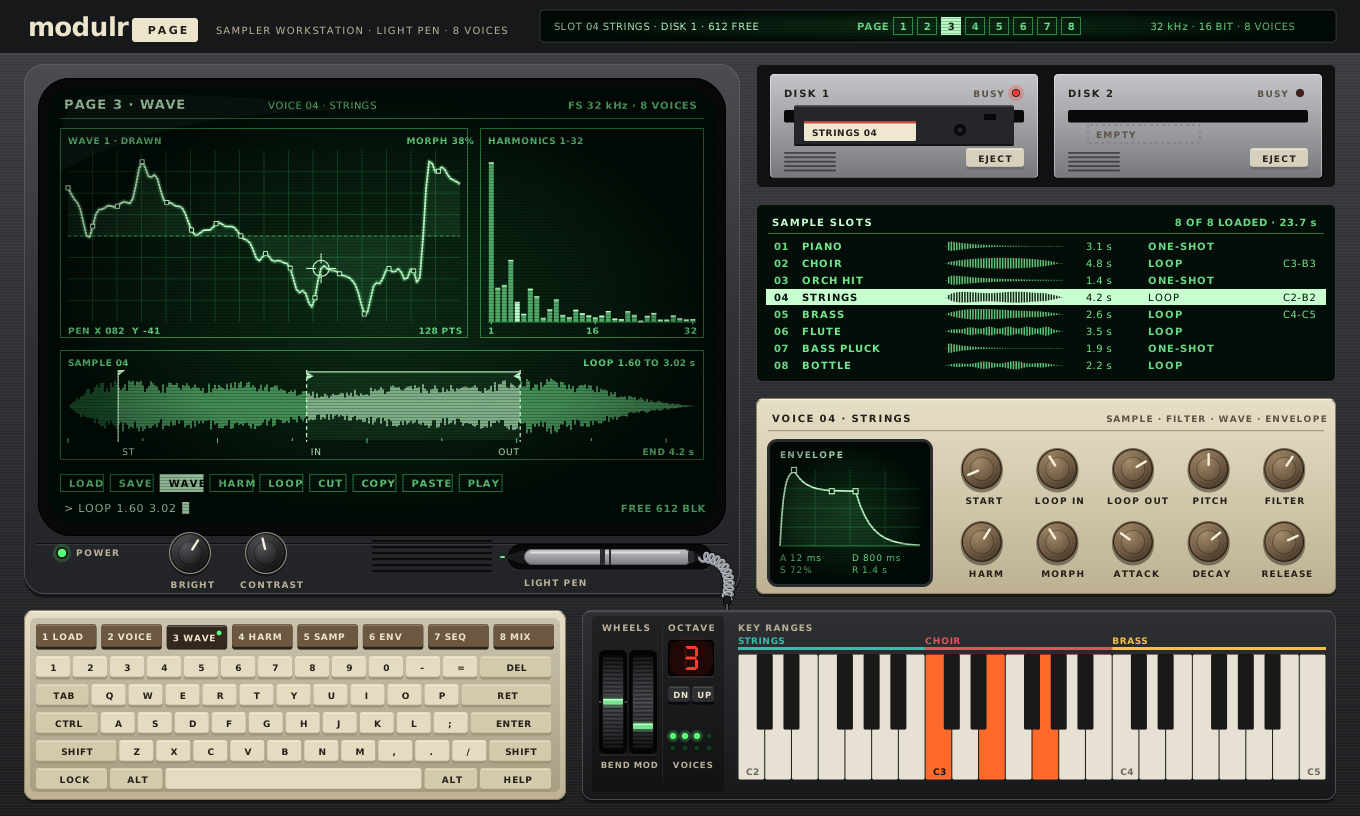
after the Fairlight CMI · 1979 · 28 HP
A sampler with a light pen, a monitor for drawing waveforms, and two drives for the library.
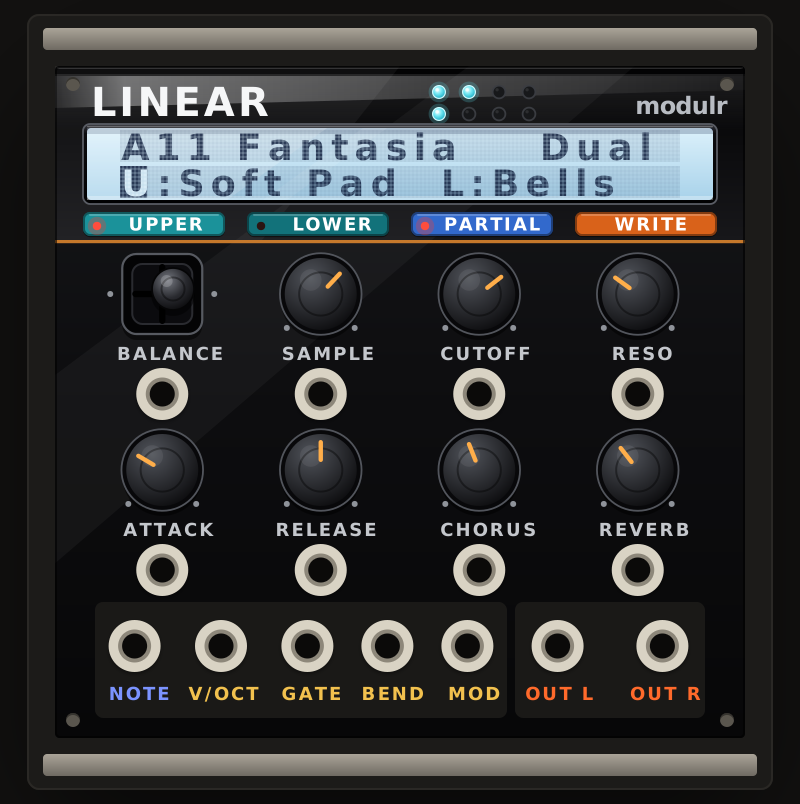
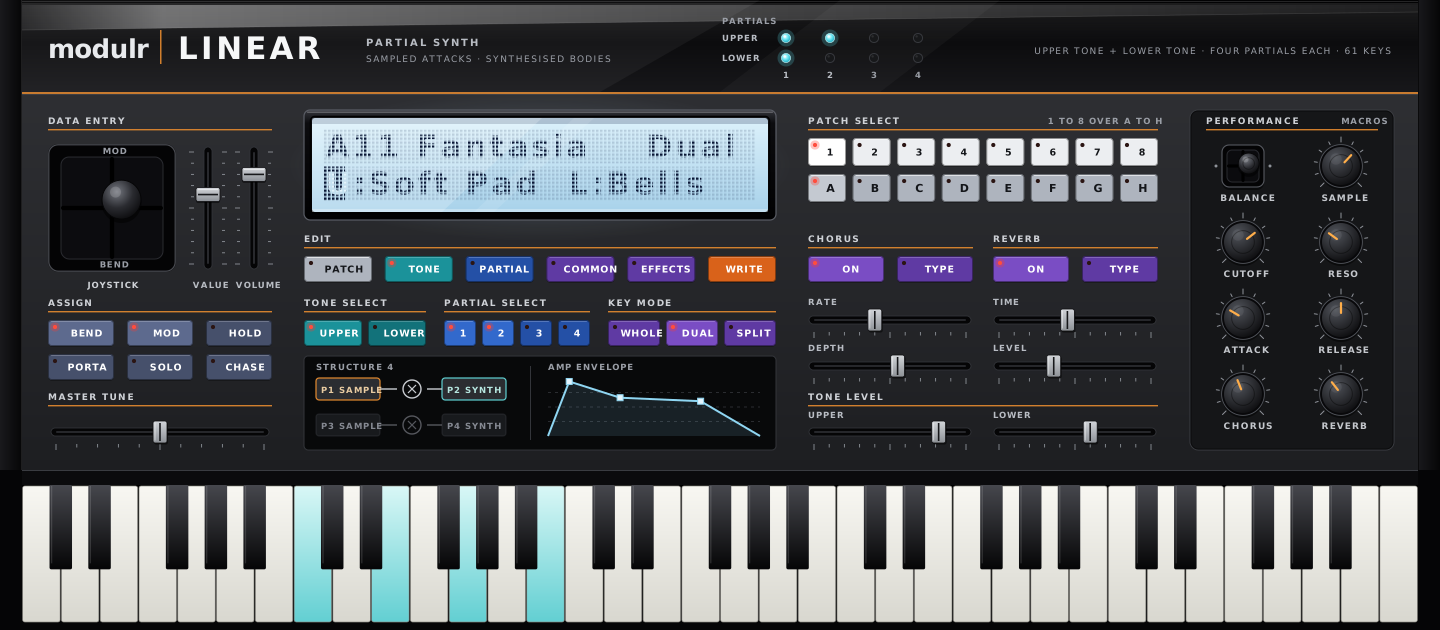
after the D-50 · 1987 · 26 HP
A tone of upper and lower partials, edited from a joystick and a membrane panel, in dual key mode.
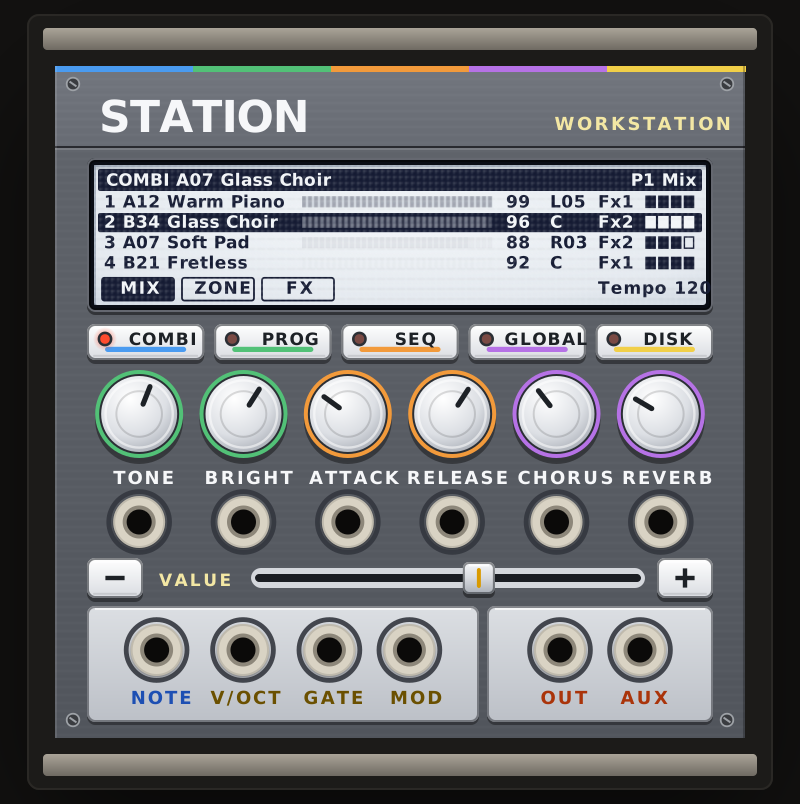
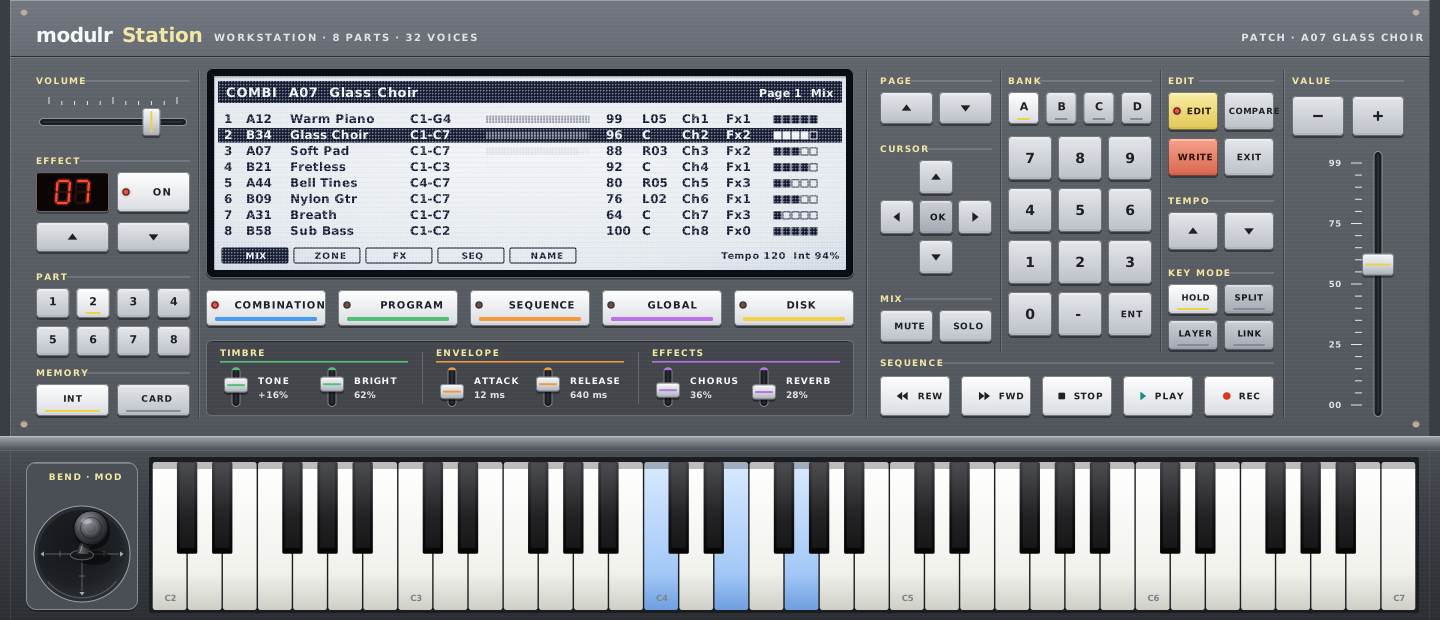
after the M1 · 1988 · 26 HP
Eight parts, a large display, and a page of parameters behind a data slider and a ten-key pad.
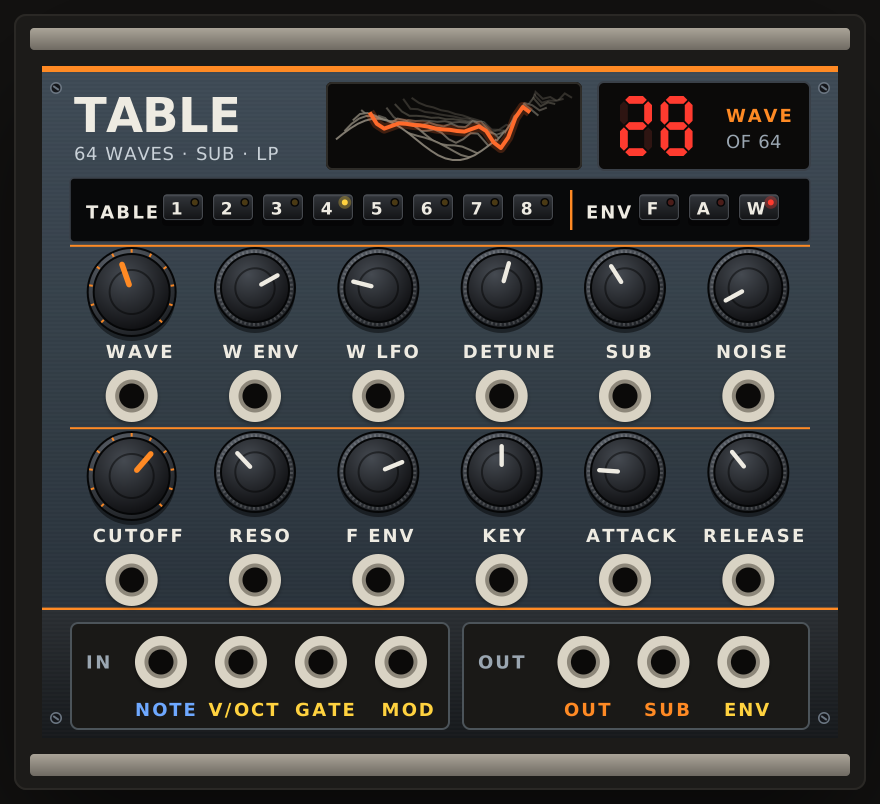
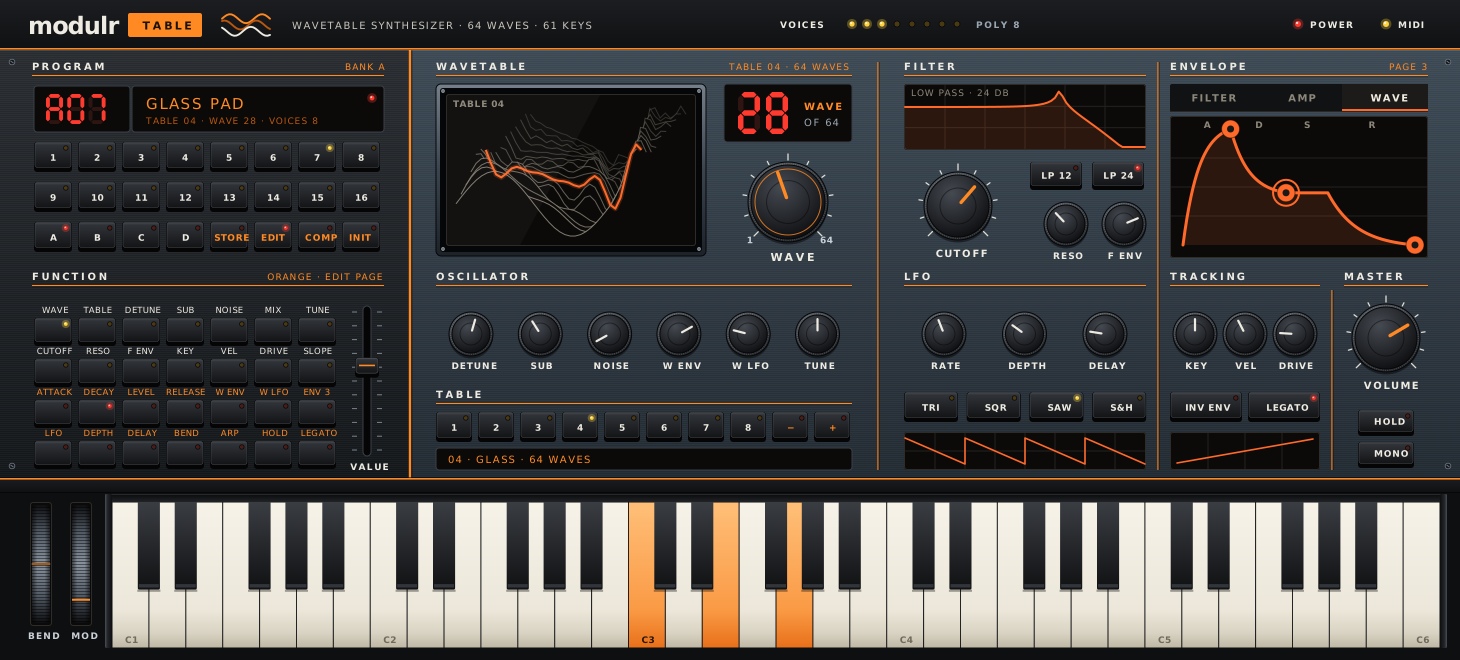
after the PPG Wave 2.2 · 1982 · 30 HP
Sixty-four waves on a table, a position knob for them, and an analogue-style filter with its own envelope.
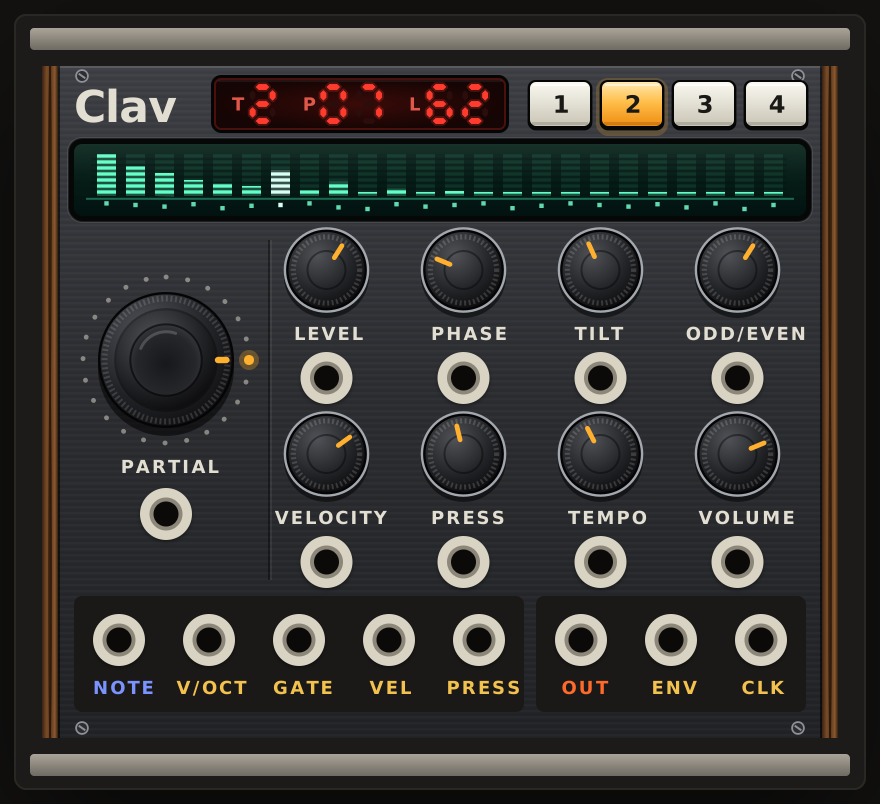
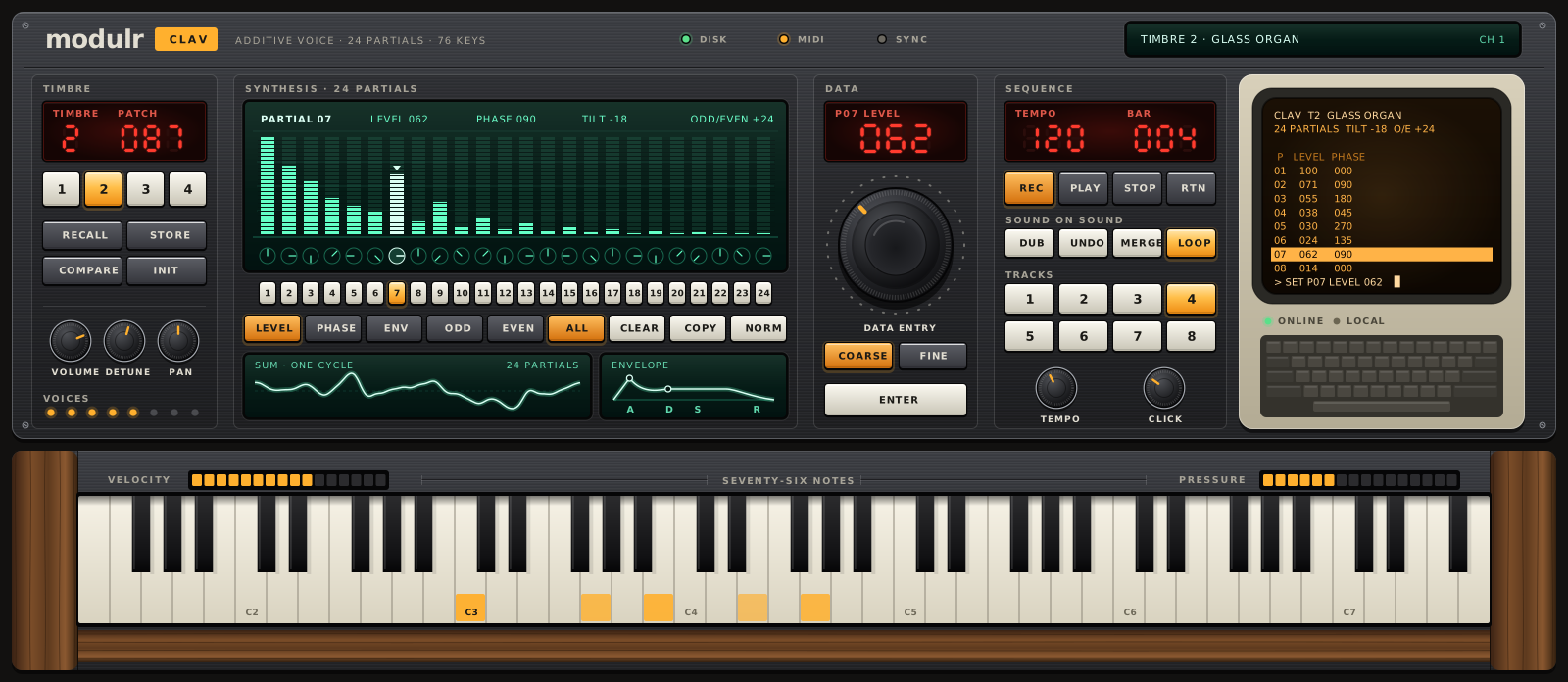
after the Synclavier · 1977 · 30 HP
Twenty-four partials set by level and phase, a large display, and rows of numbered keys.
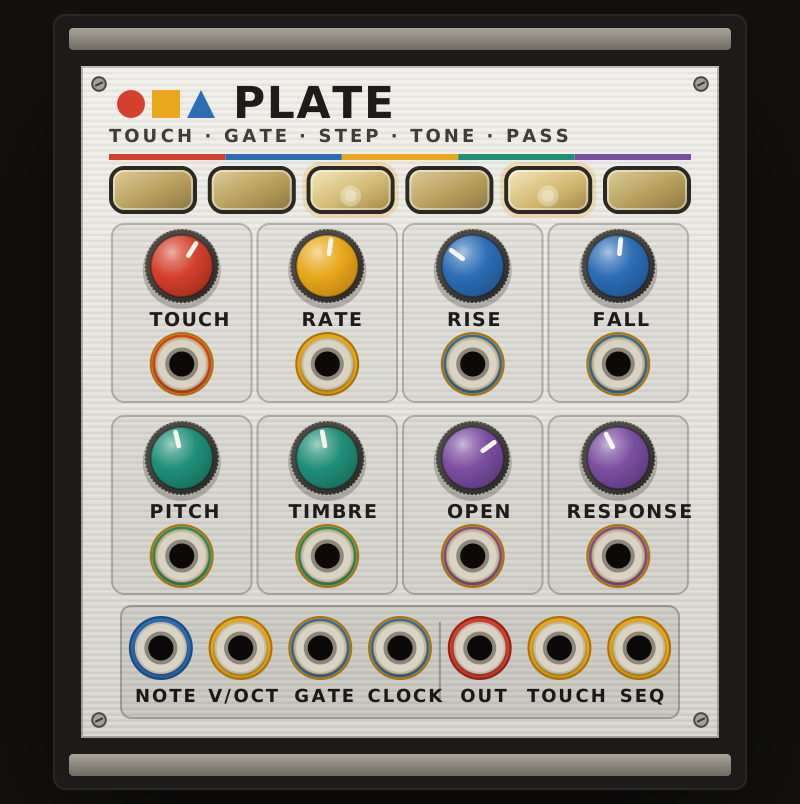
after the Buchla 100 series · 1963 · 24 HP
Touch plates, a dual envelope and gate, a sequential voltage source and banana jacks, with no keyboard.
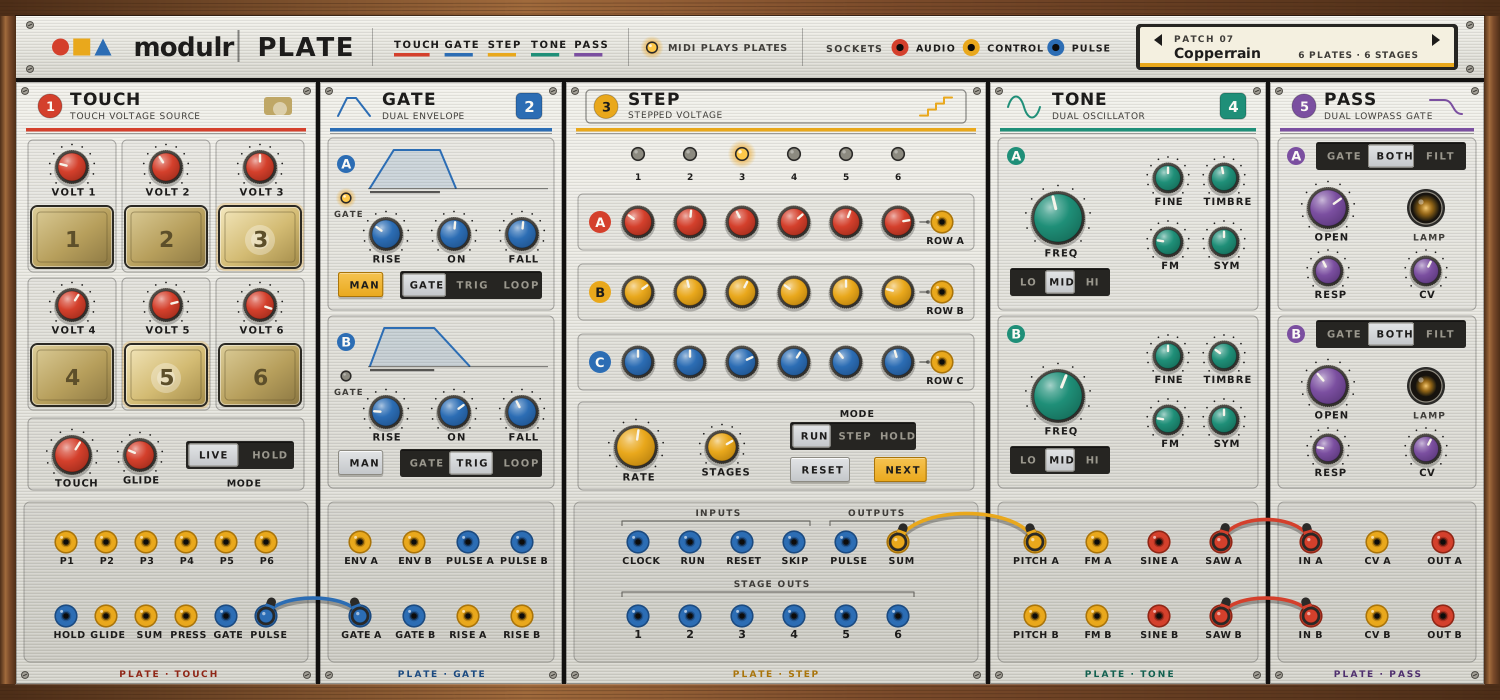
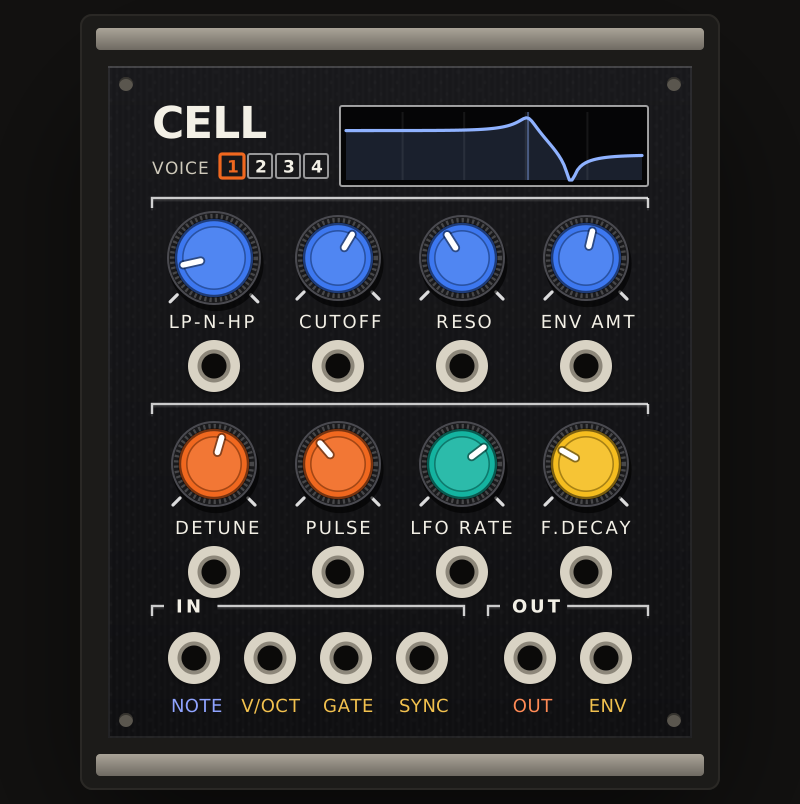
after the SEM · 1974 · 22 HP
One voice: two oscillators, a filter that sweeps from low-pass to notch to high-pass, and two envelopes.
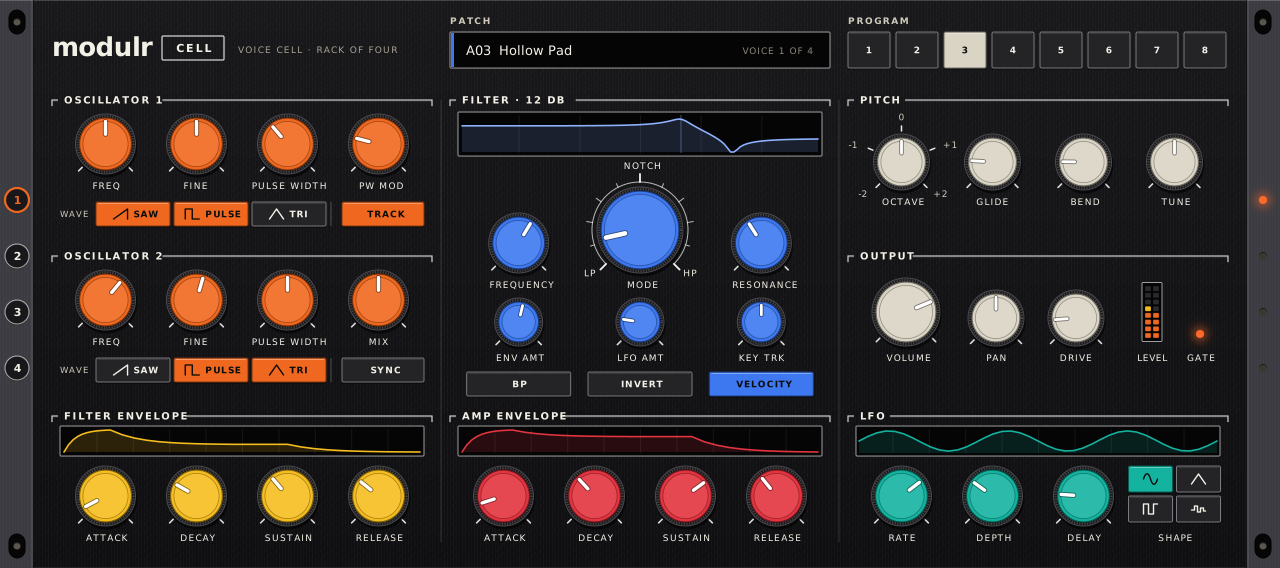
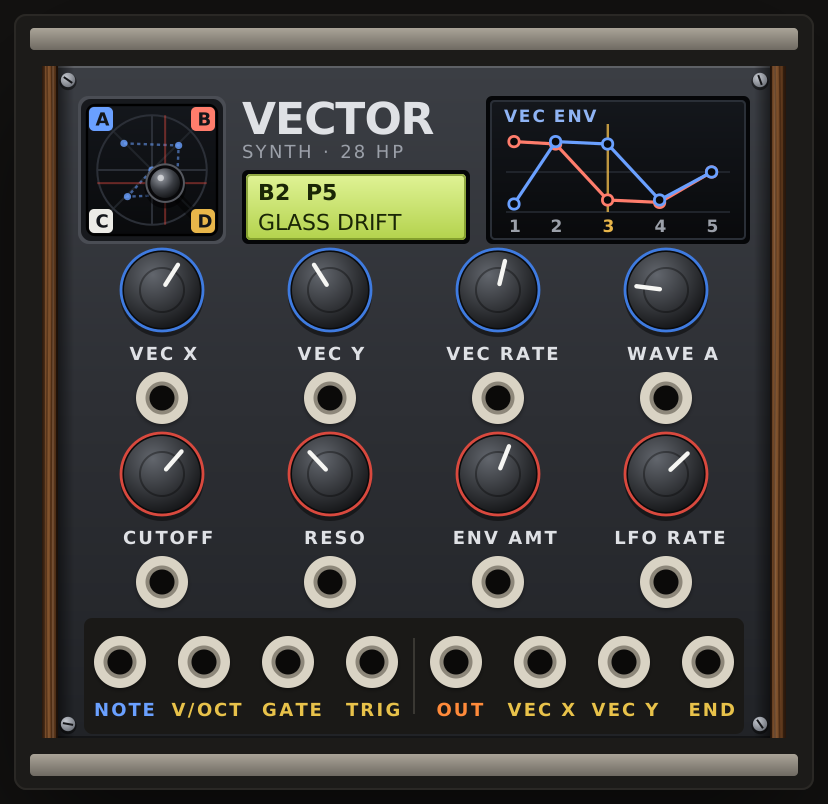
after the Prophet VS · 1986 · 28 HP
Four waves mixed around a square by a vector joystick, with the mix drawn as a shape in a display.
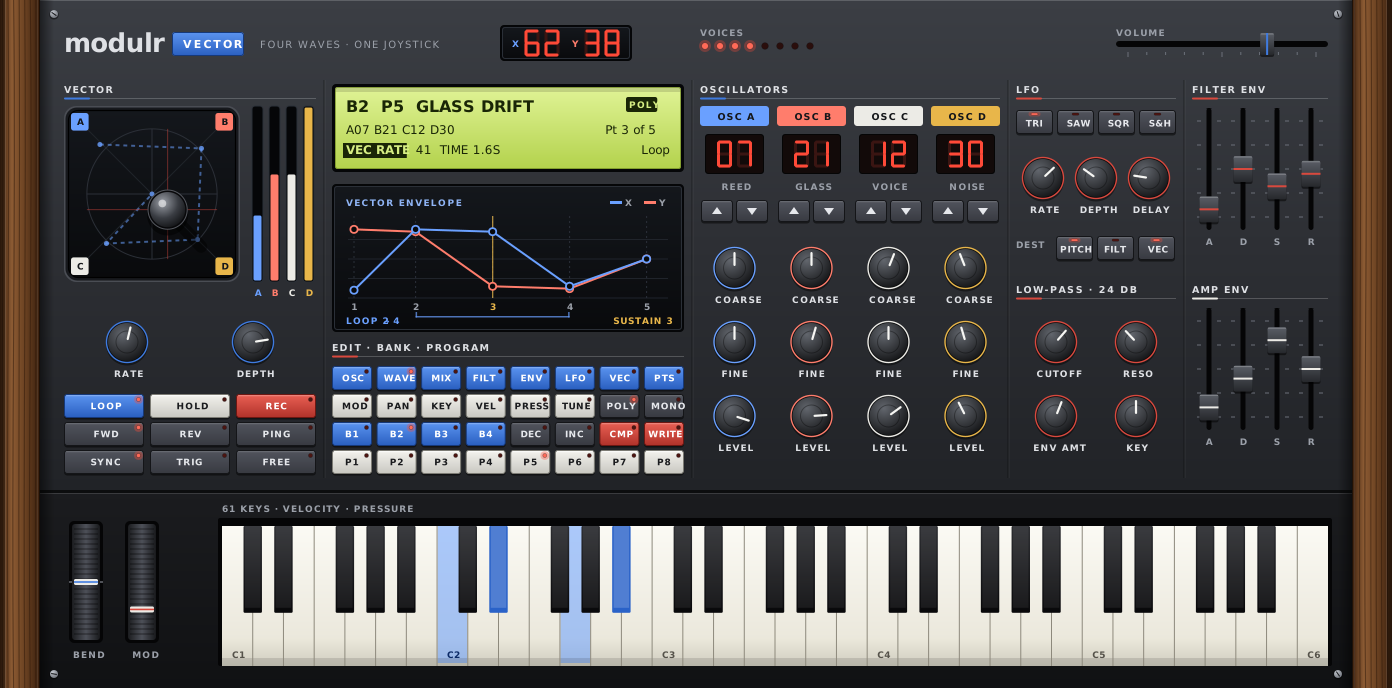

after the Microwave · 1989 · 22 HP
One wavetable oscillator, a digital filter and two envelopes, with a wave select and a data wheel.

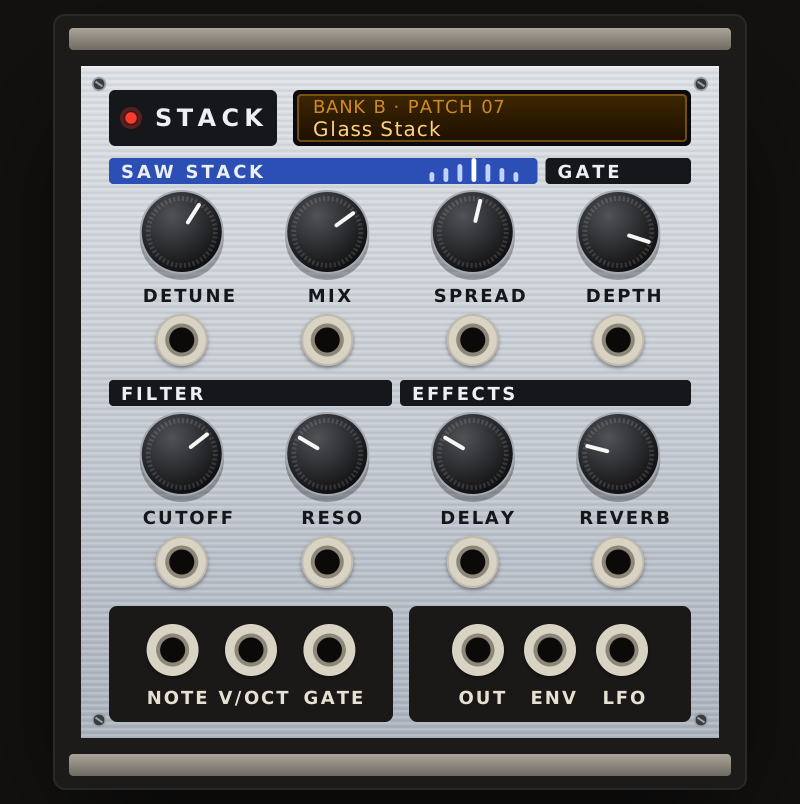
after the JP-8000 · 1996 · 24 HP
Eight voices of seven saws each, a filter with four types, and a ribbon that bends the whole stack.
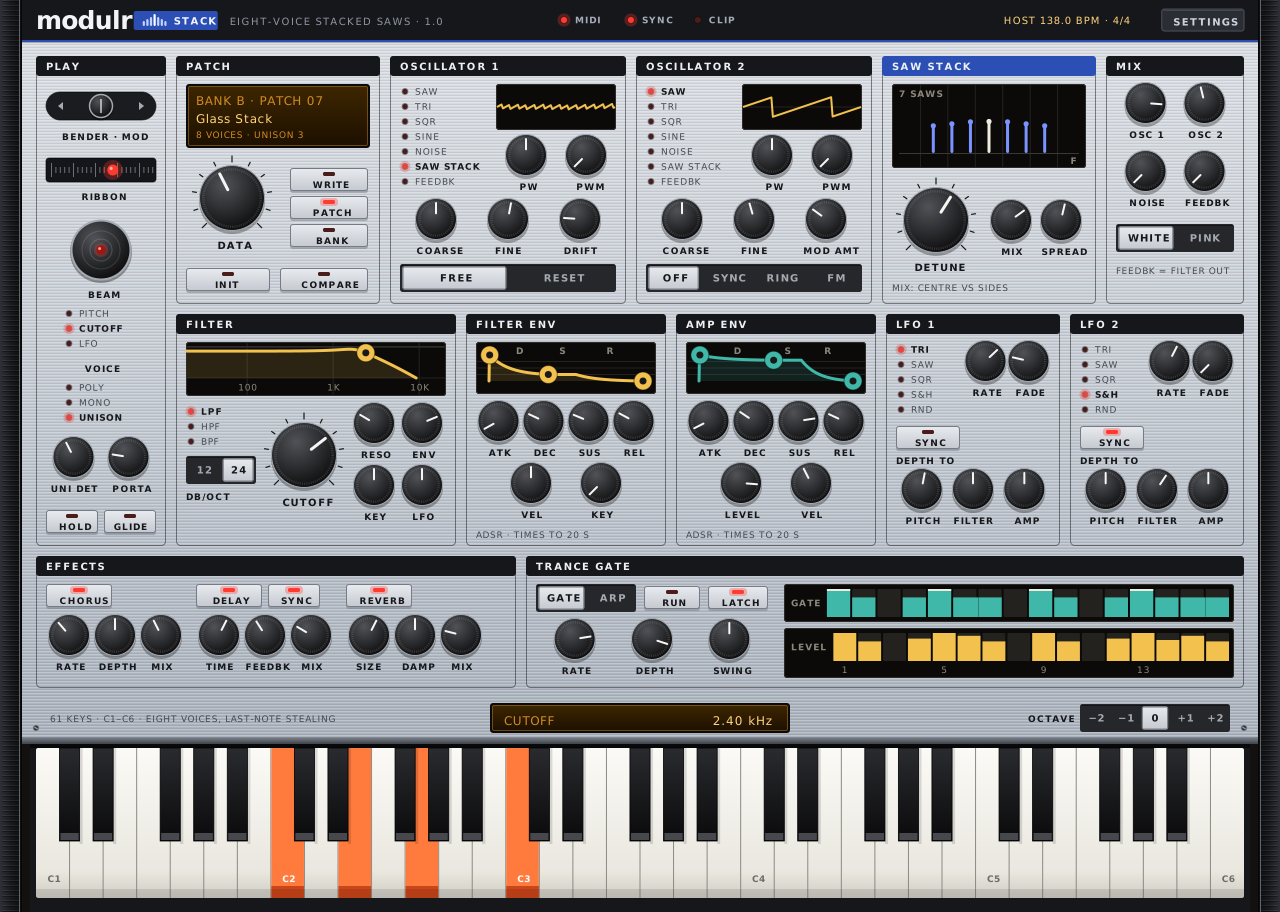
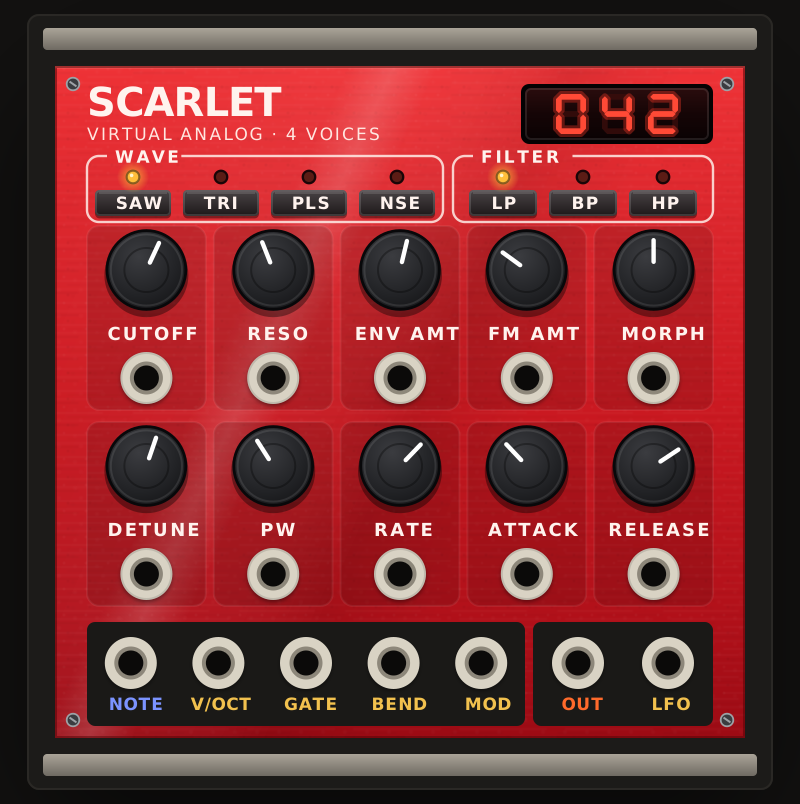
after the Nord Lead · 1995 · 26 HP
Four morph groups, two oscillators and a filter that changes type, with an arpeggiator and a three-digit program.
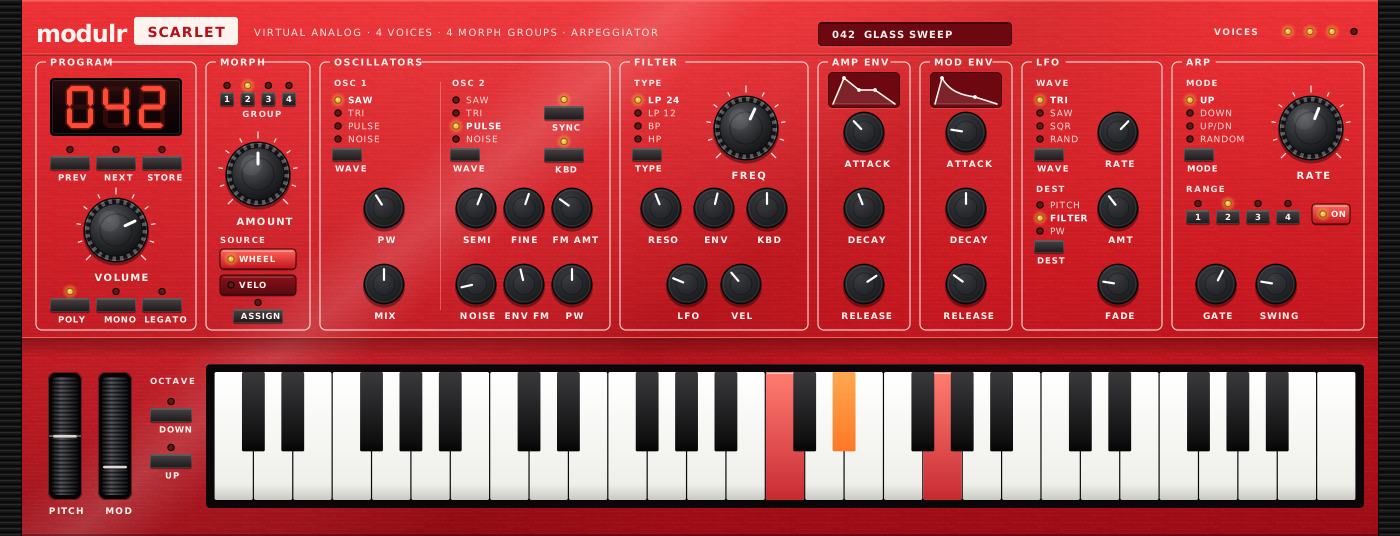
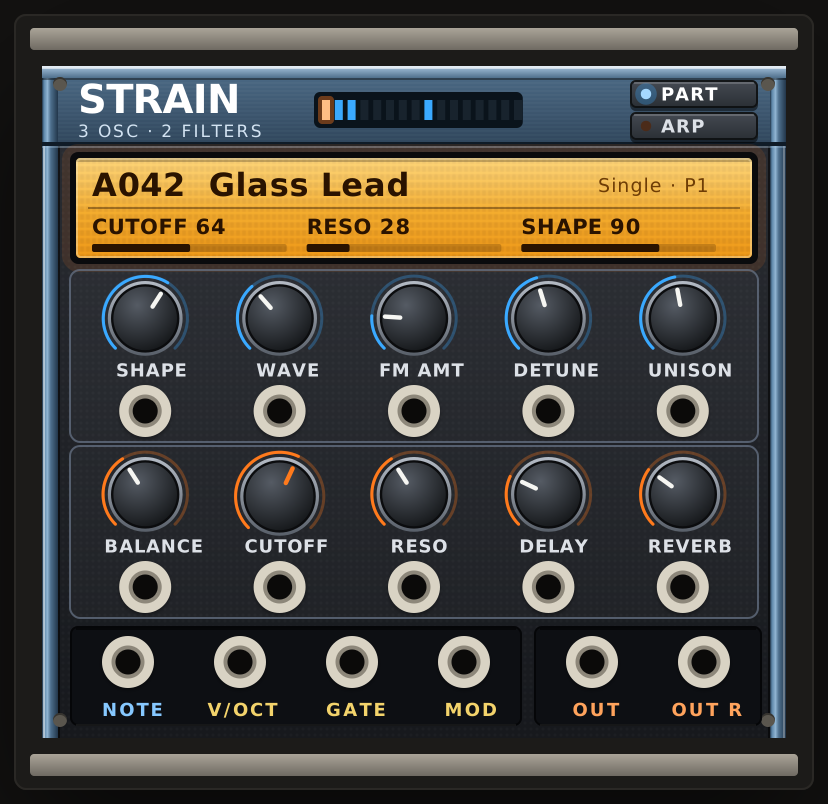
after the Virus · 1997 · 28 HP
Three oscillators and a sub, two filters with a routing mode, a modulation matrix and a two-line display.
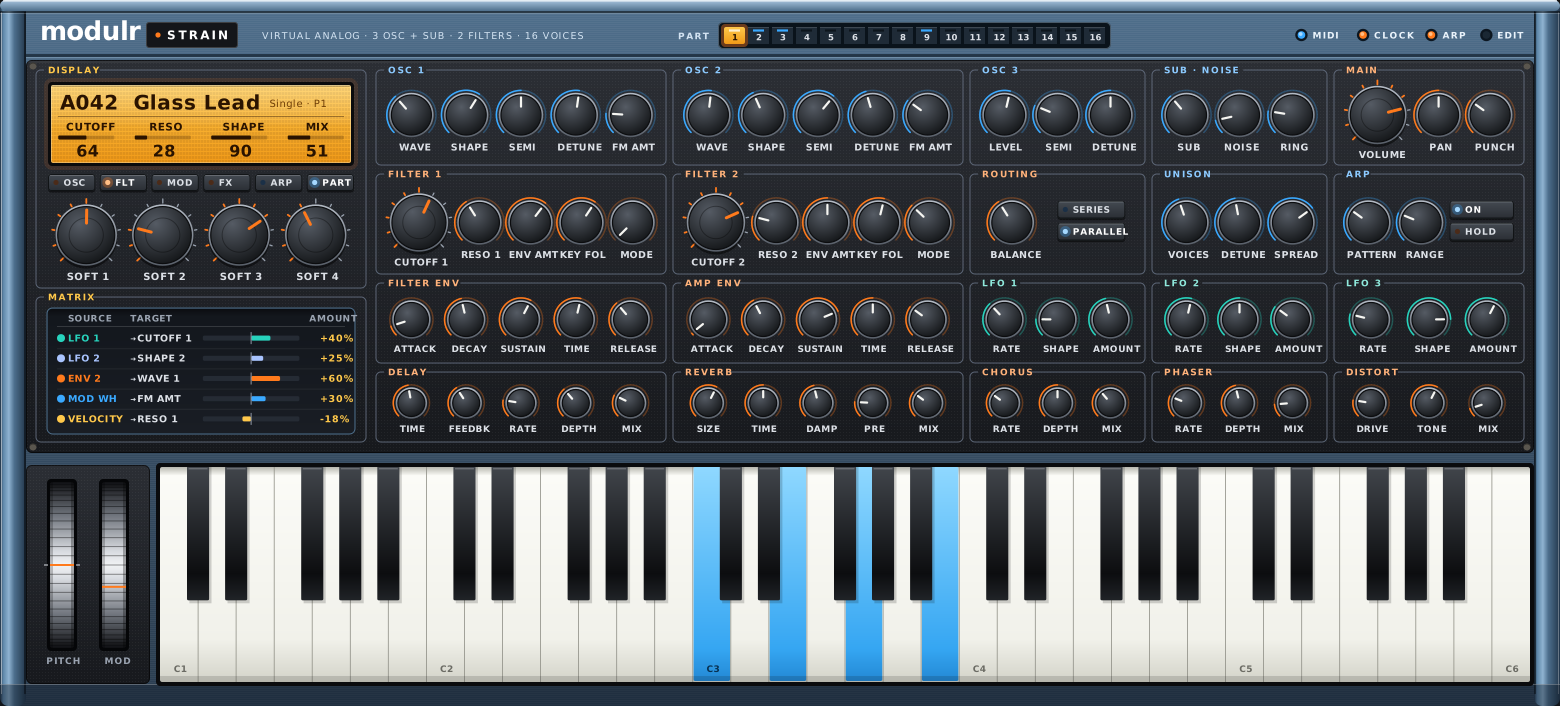
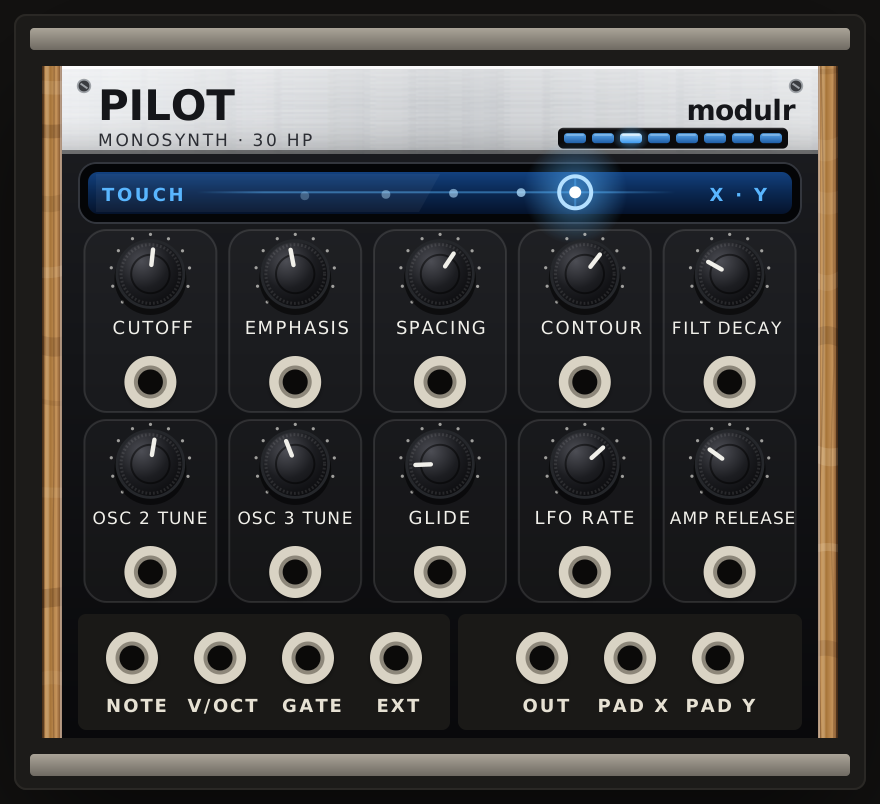
after the Voyager · 2002 · 30 HP
Three oscillators, two filters with a spacing control, and a touch surface with an X and a Y.
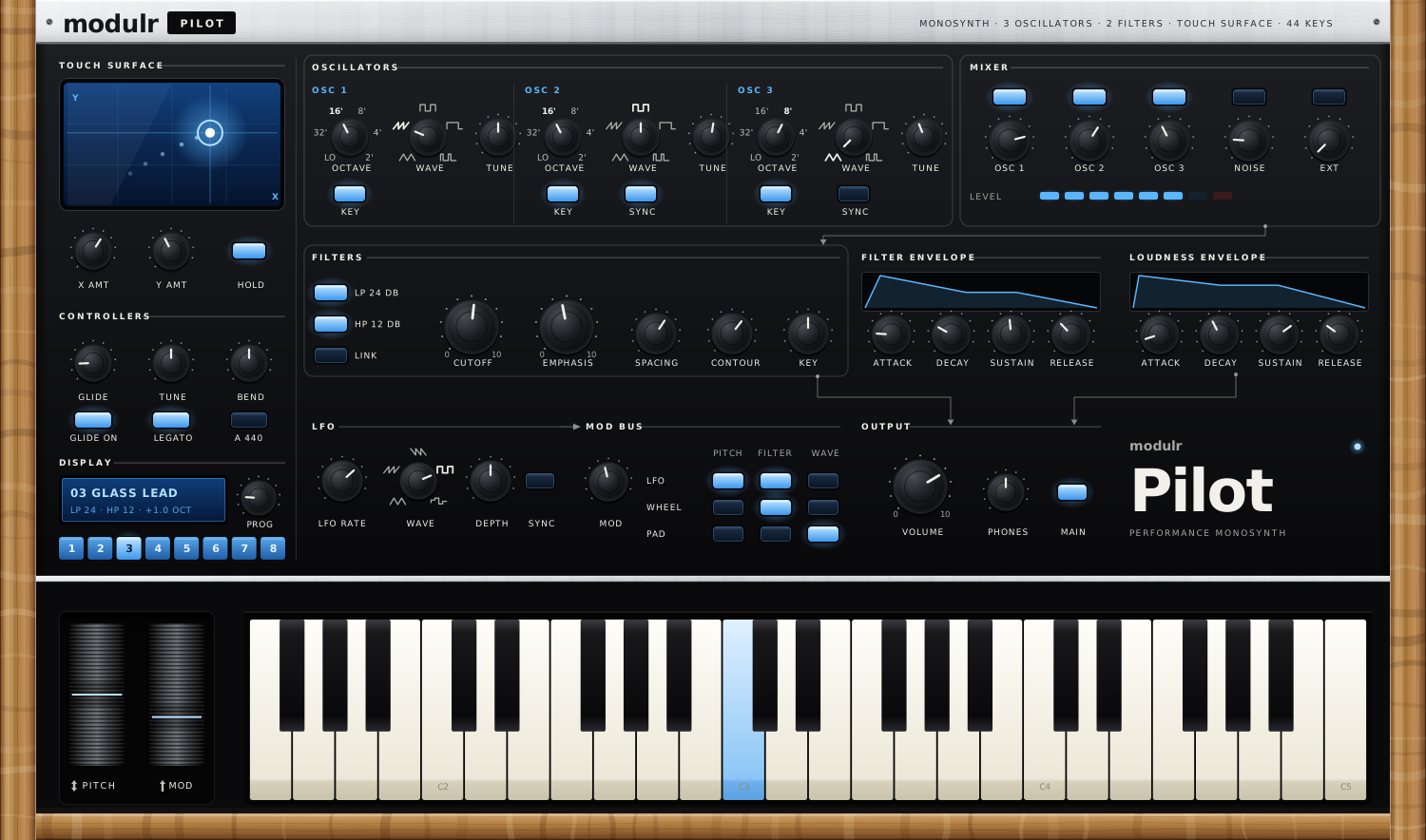
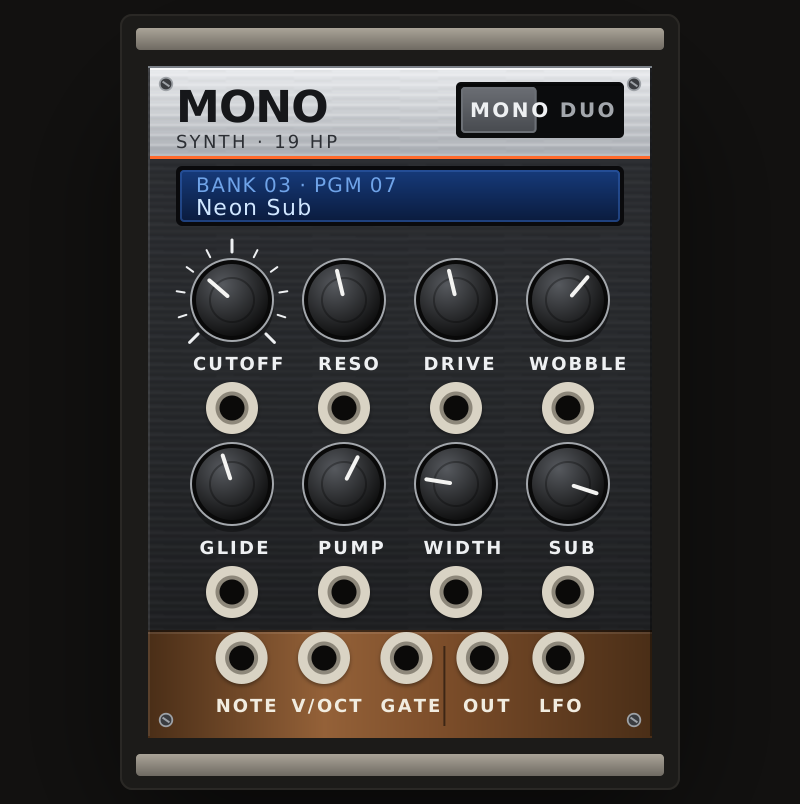
after the Sub 37 · 2014 · 19 HP
One control per function: two oscillators, a ladder filter with a selectable slope, and two envelopes.
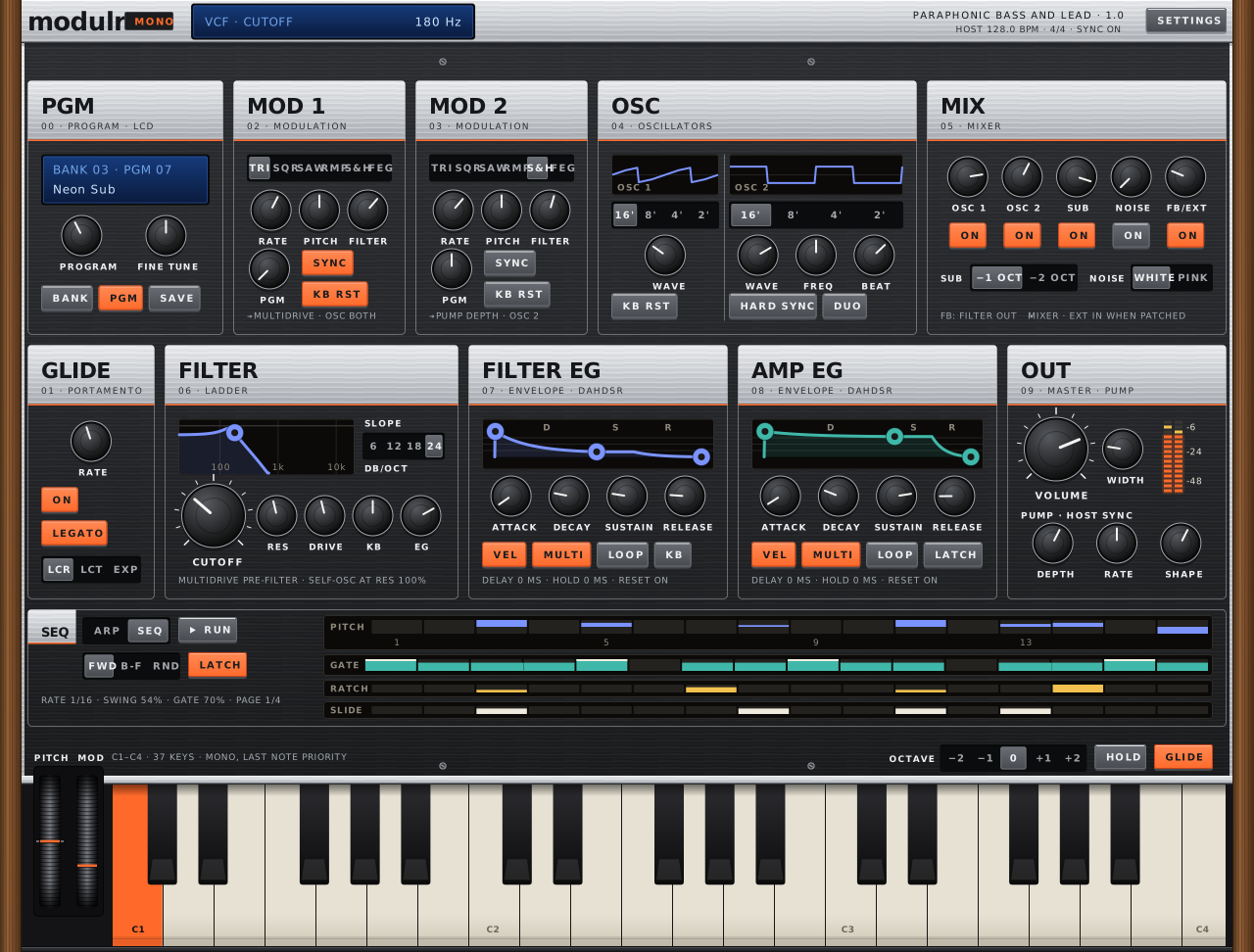
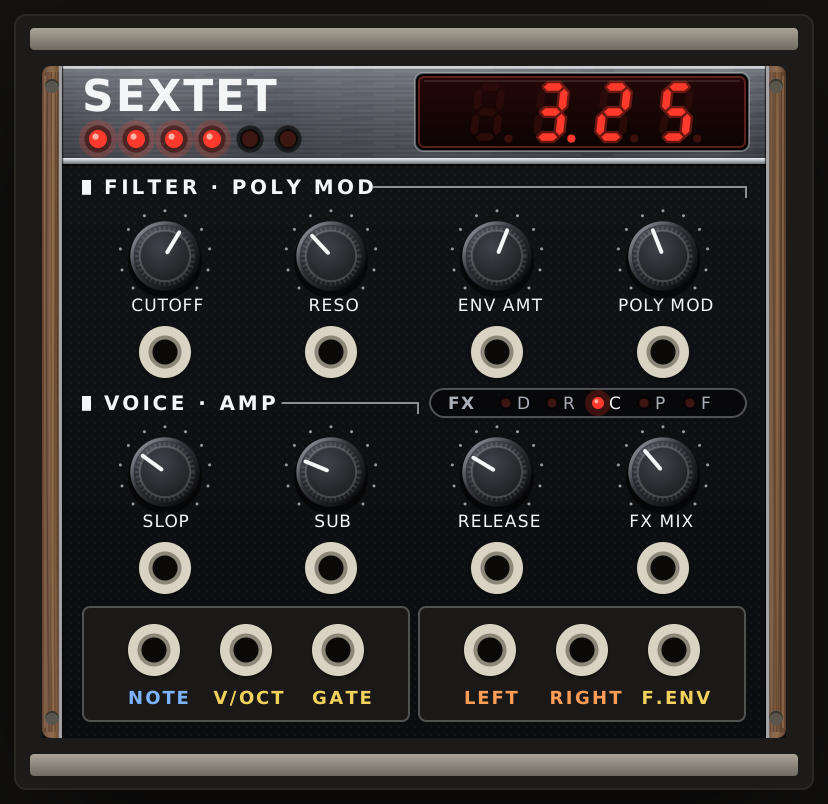
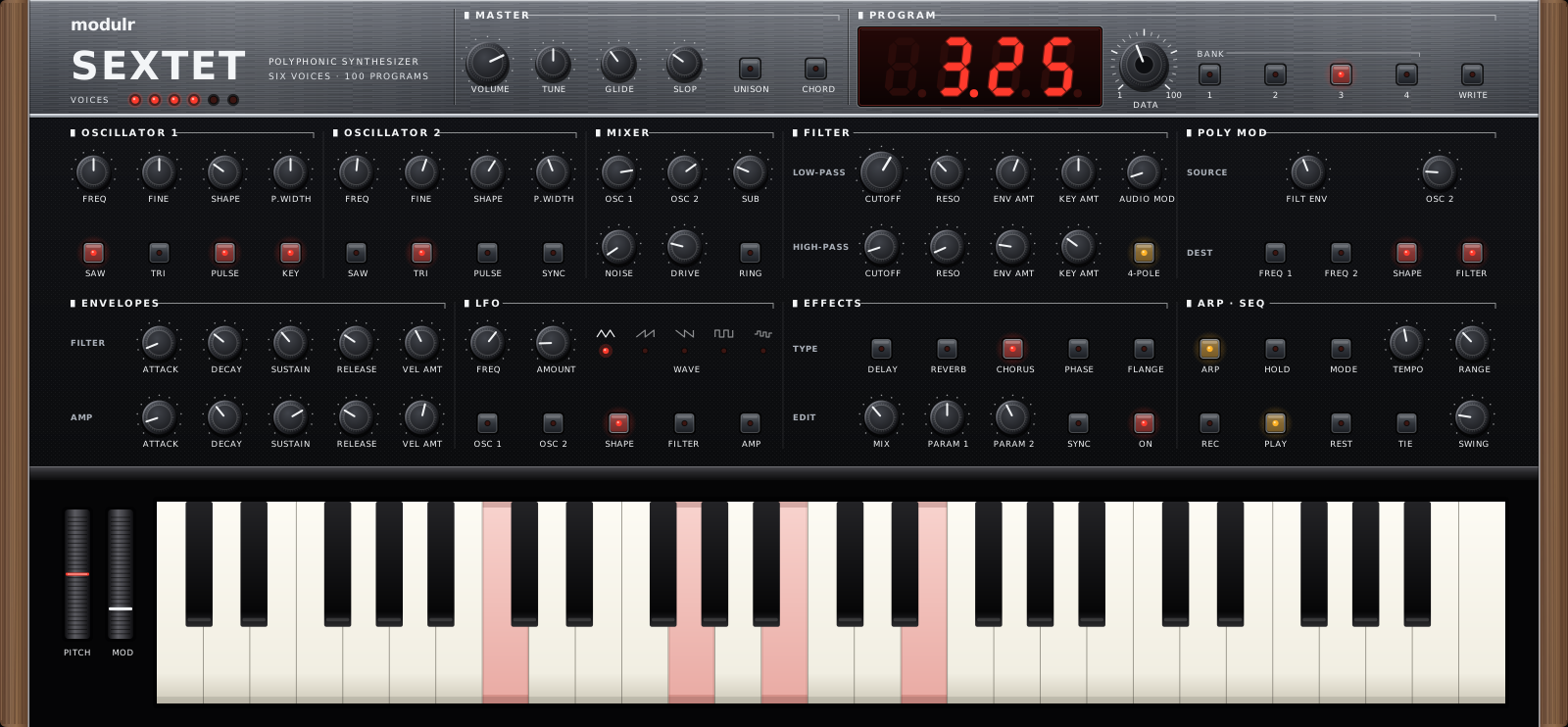
after the Prophet-6 · 2015 · 28 HP
Two oscillators and a sub, a low-pass and a high-pass filter, a poly mod and a digital effects section.
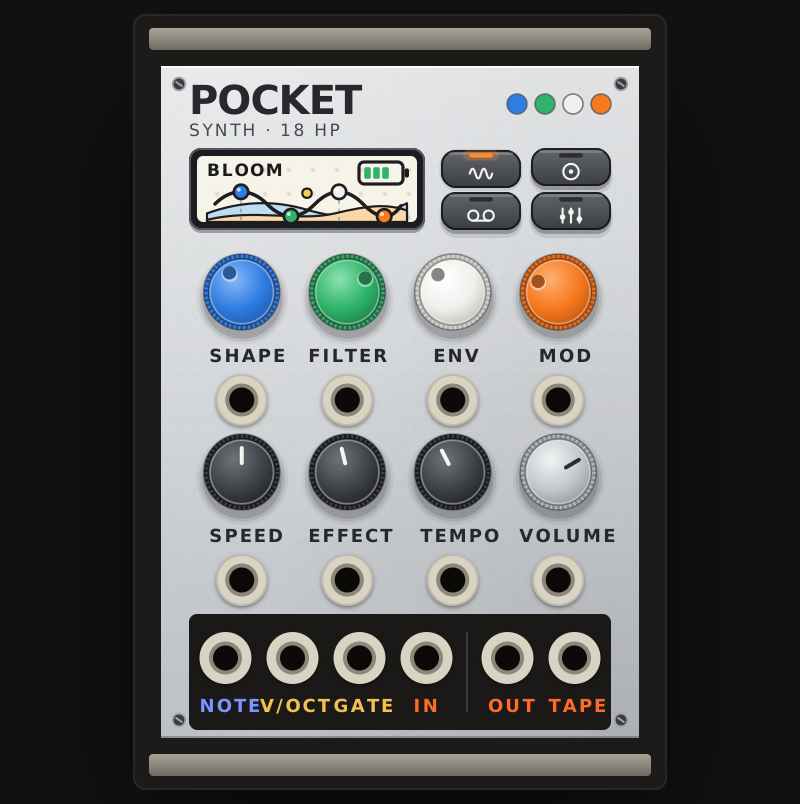
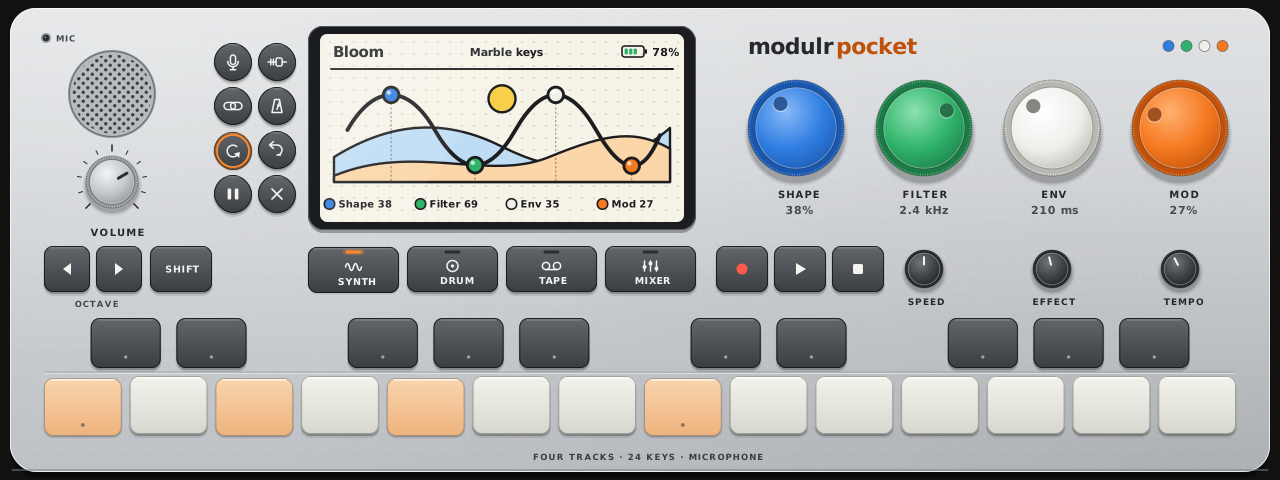
after the OP-1 · 2011 · 18 HP
Four encoders in four colours and one small screen, drawn over a single synth voice with nine patches.
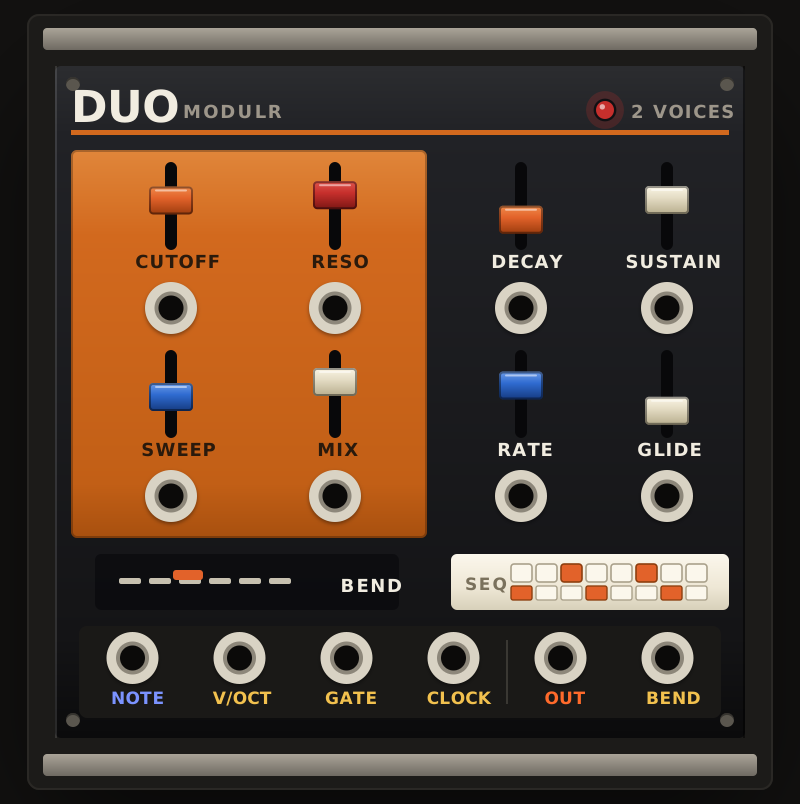
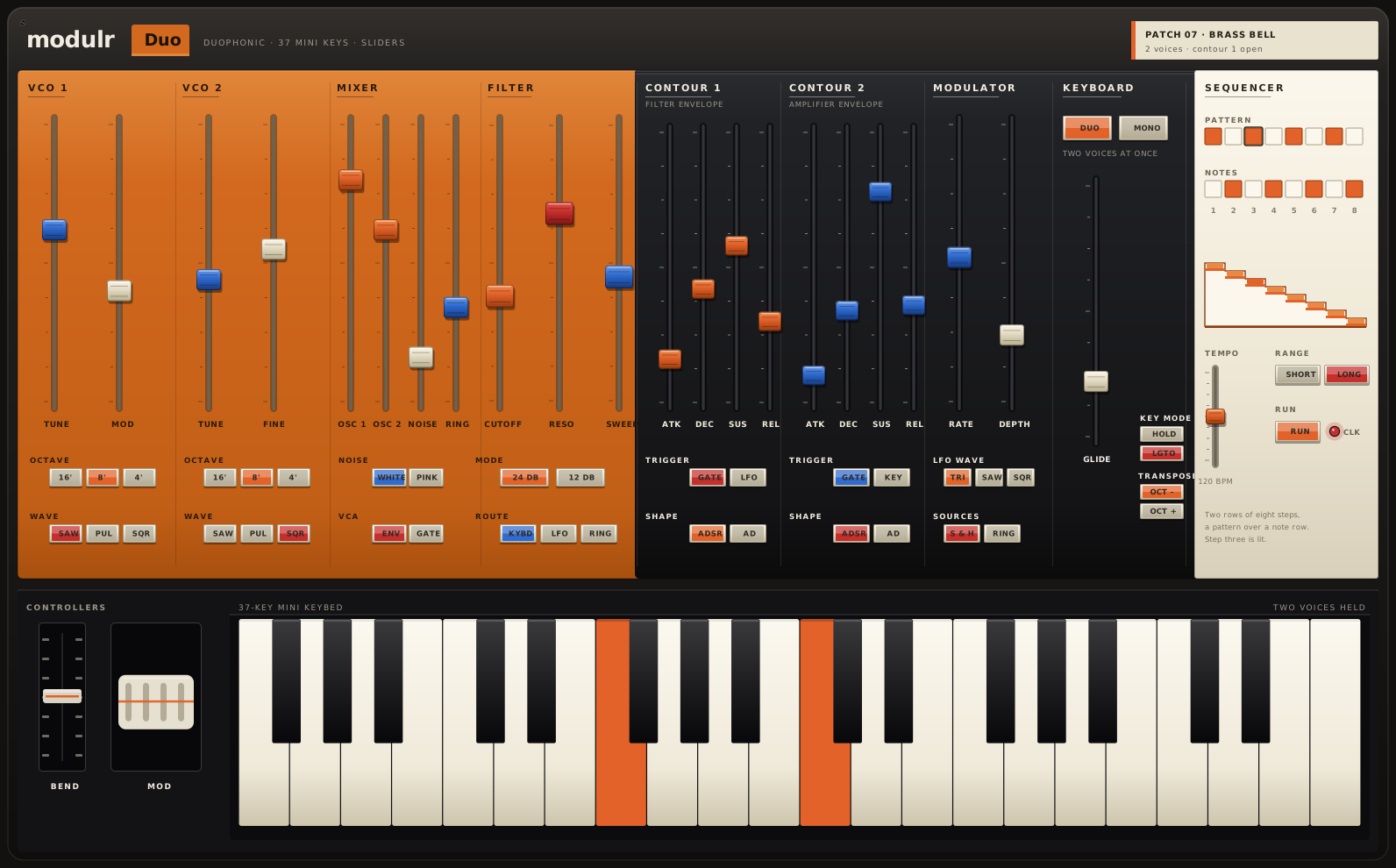
after the Odyssey · 1972 · 26 HP
Two voices at once, sliders throughout the panel, and a step sequencer with an accent and a slide.
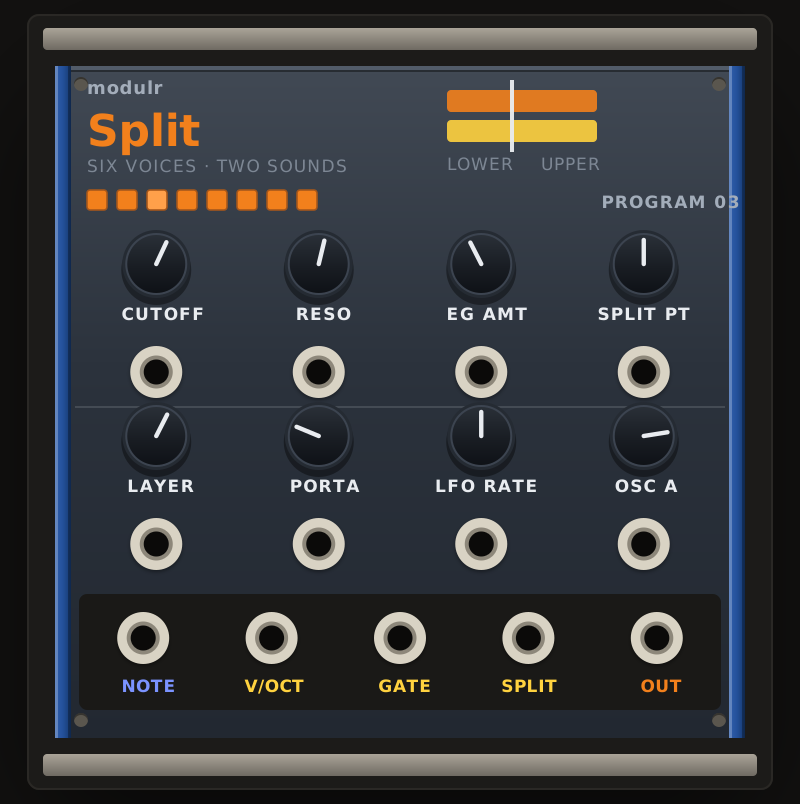
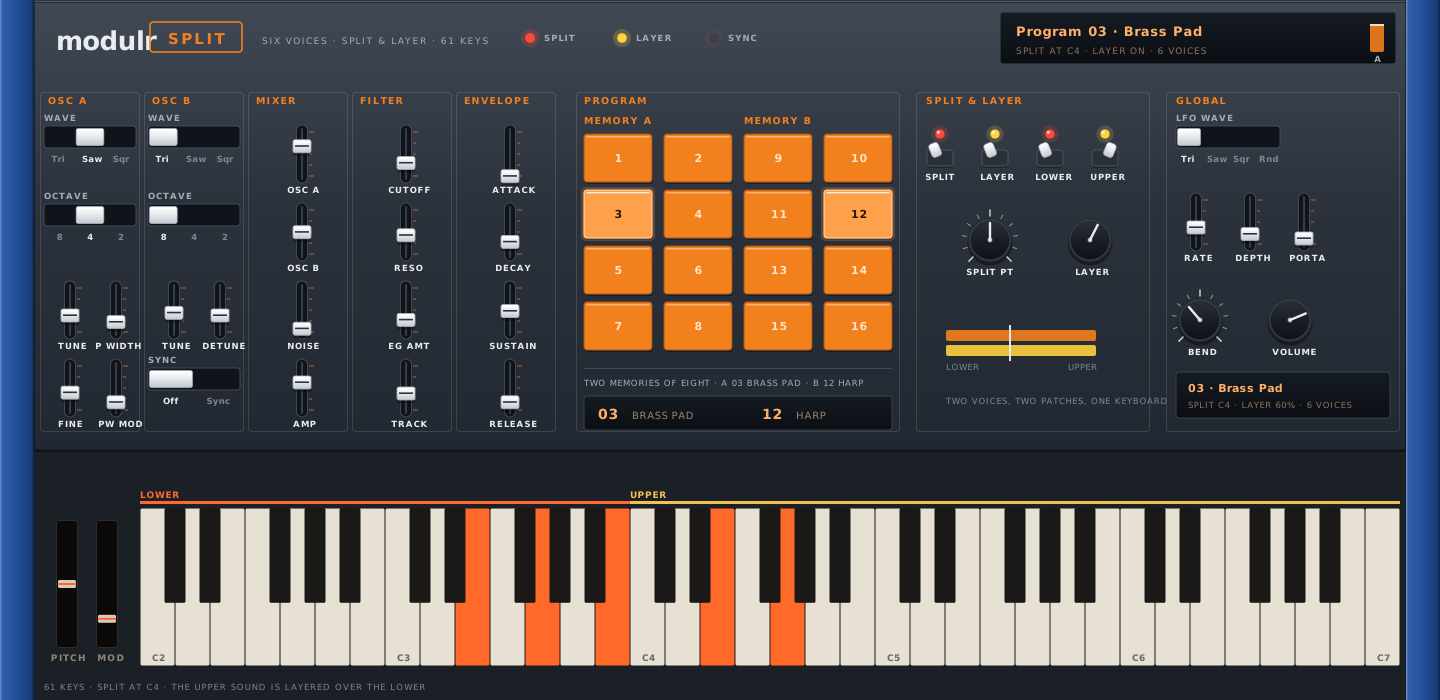
after the Polysix · 1981 · 26 HP
Six voices, a keyboard split in two, and a panel of sliders with a bank of patch buttons.
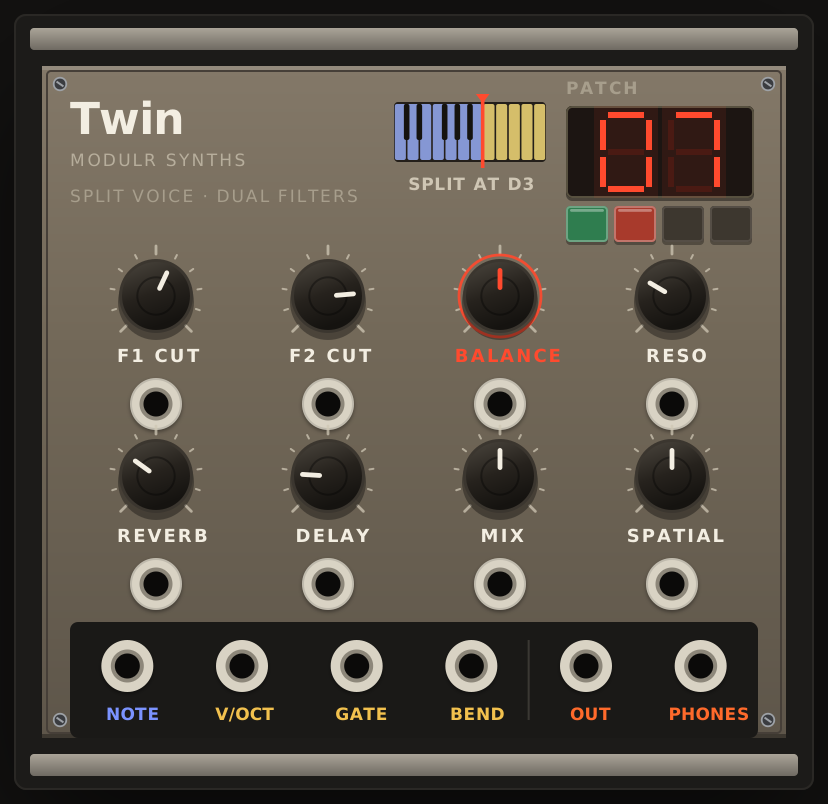
after the Poly-800 · 1983 · 28 HP
Two filters with a balance between them, a digital reverb and delay, and a two-digit display.
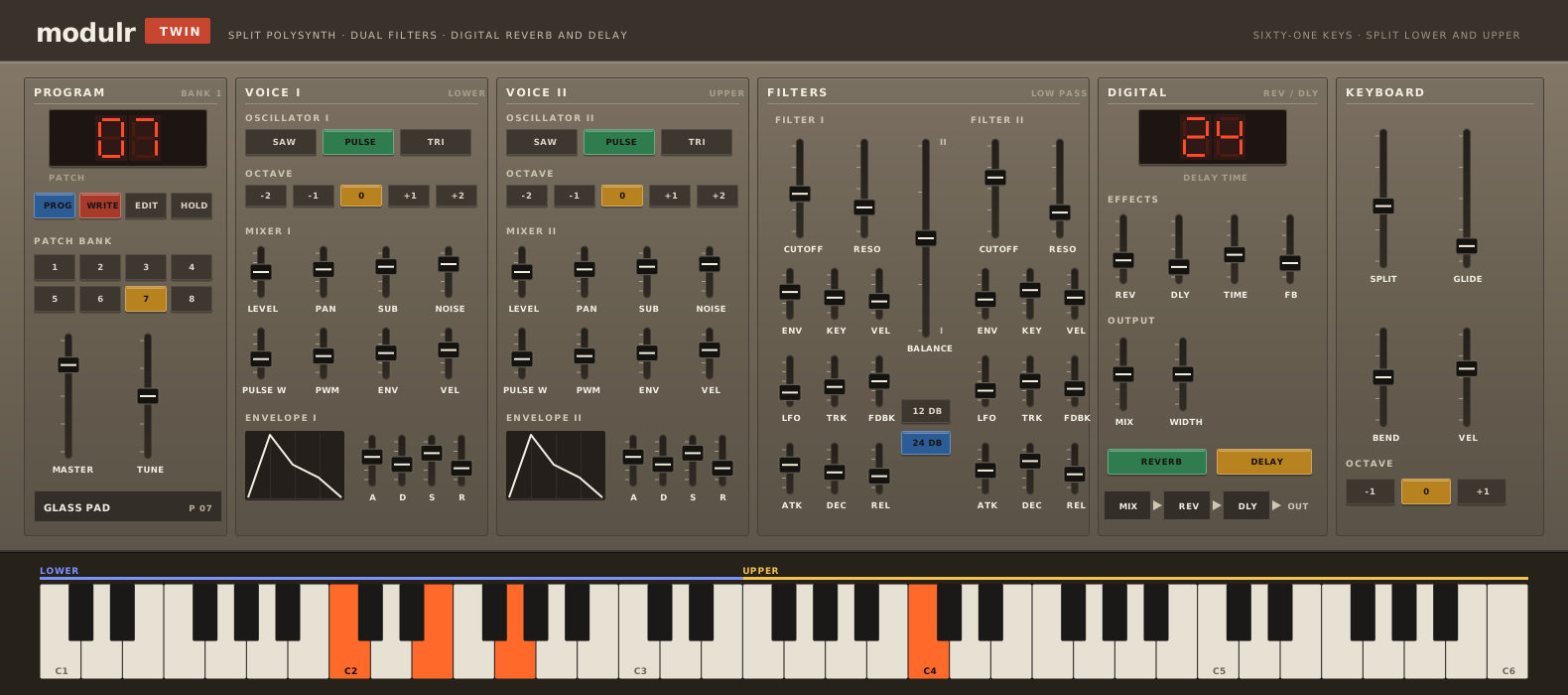
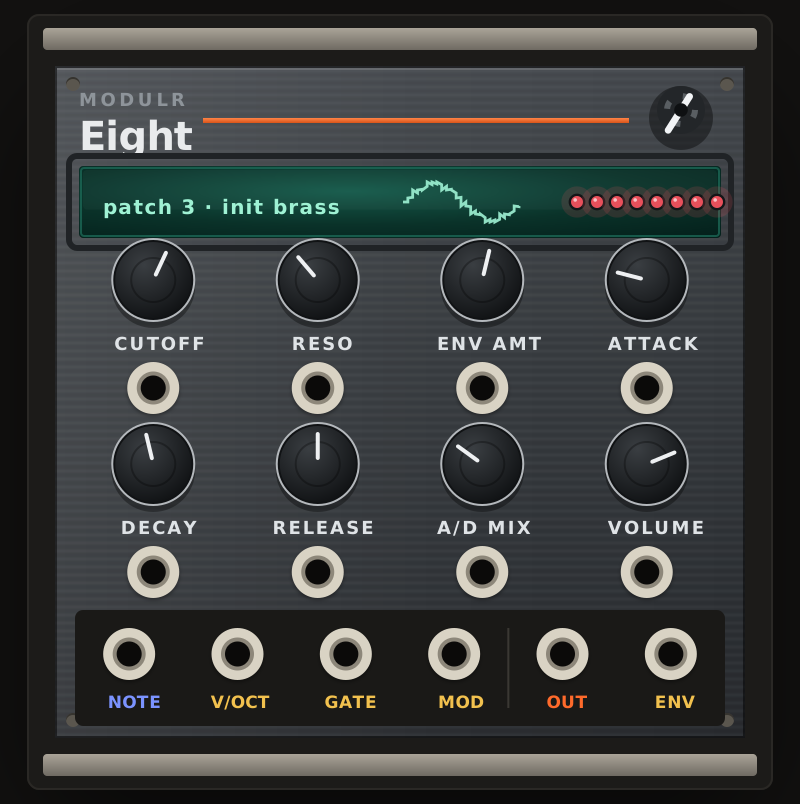
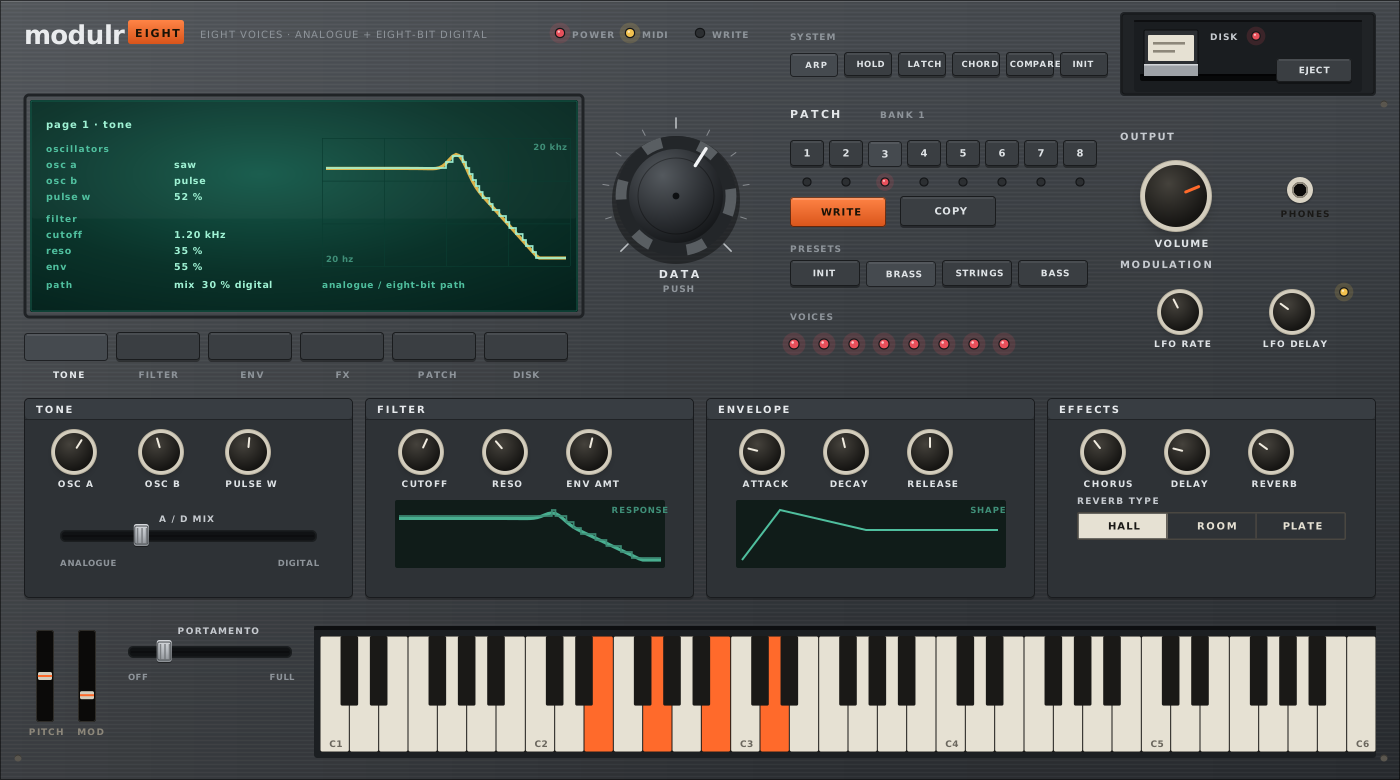
after the ESQ-1 · 1985 · 26 HP
Eight voices of analogue oscillators with an eight-bit digital filter, and a disk for the patches.
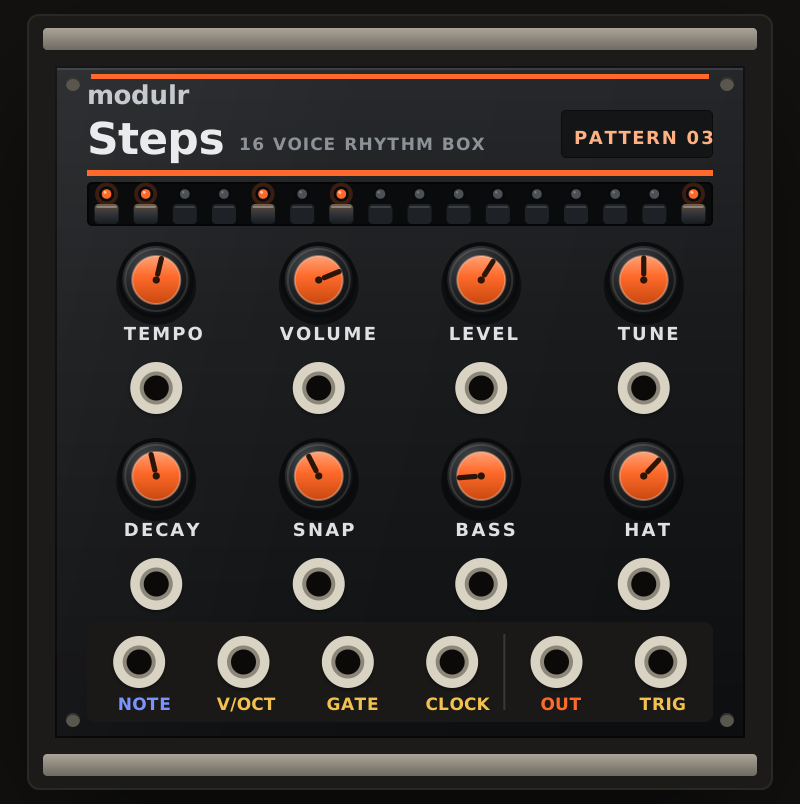
after the TR-808 · 1980 · 26 HP
Sixteen lit buttons, a field of sliders for level, tune and decay, and a bass drum that swaps its own tone for the conga's.
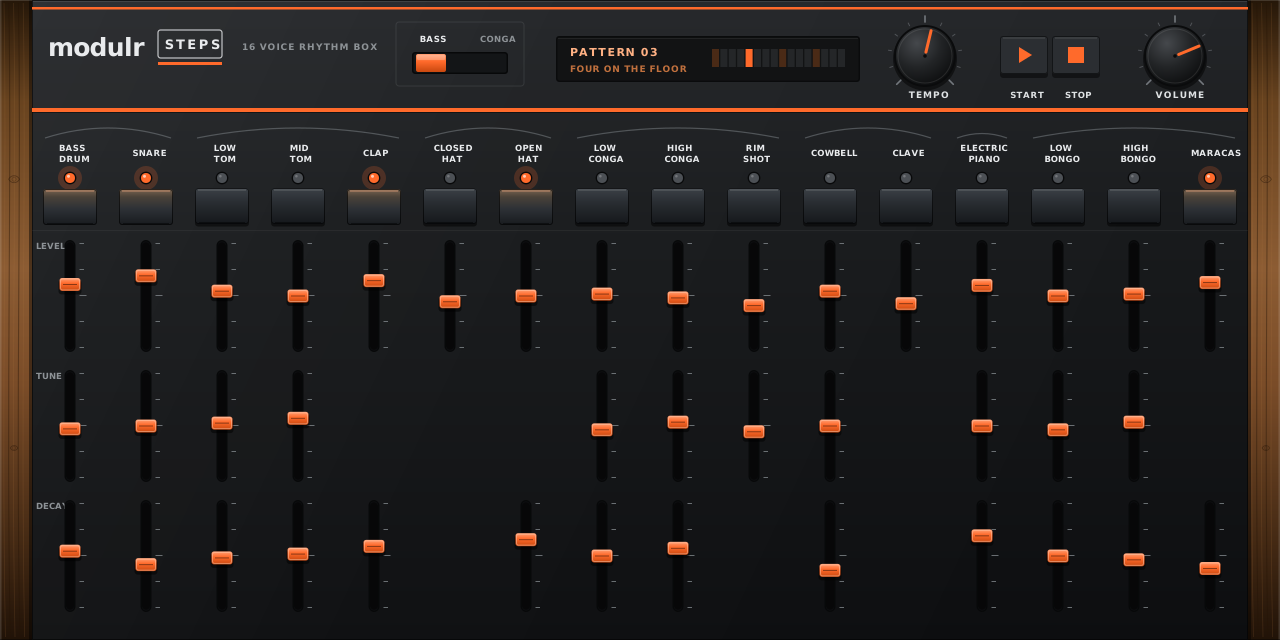
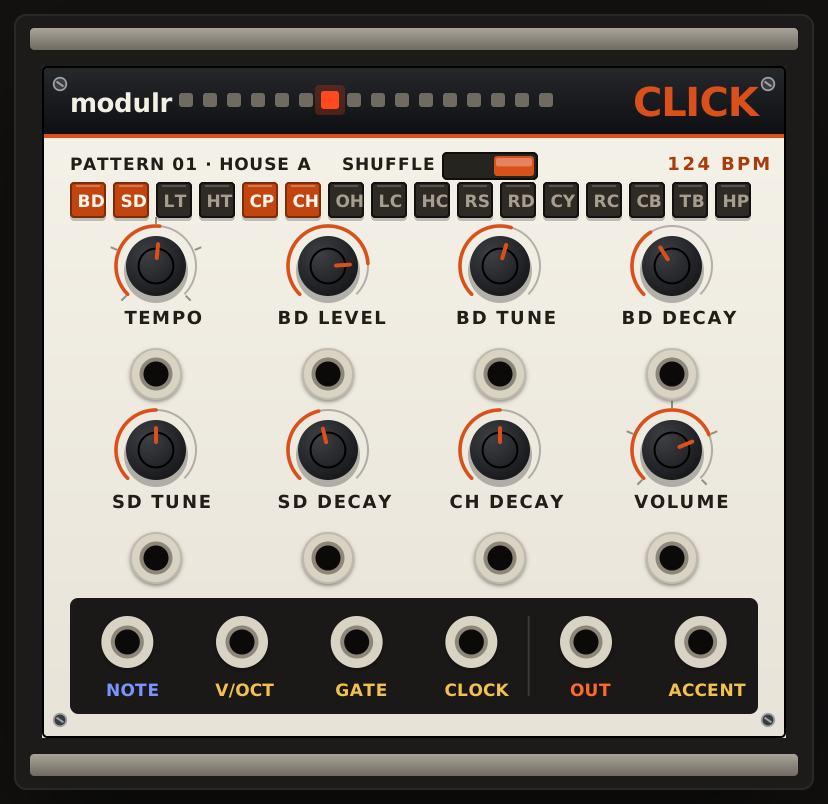
after the TR-909 · 1983 · 28 HP
Sixteen buttons over a step sequencer, with a shuffle, a pattern memory and a bass drum that sweeps its own pitch.
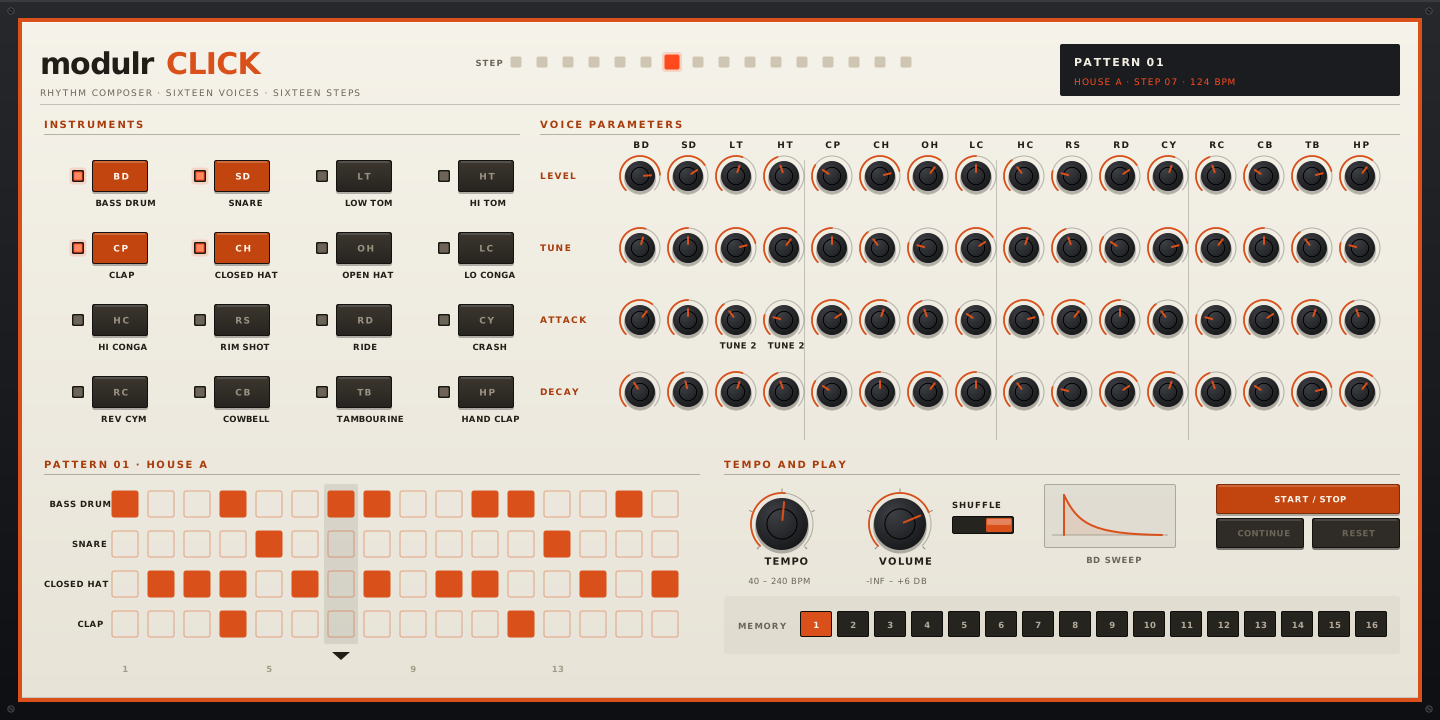
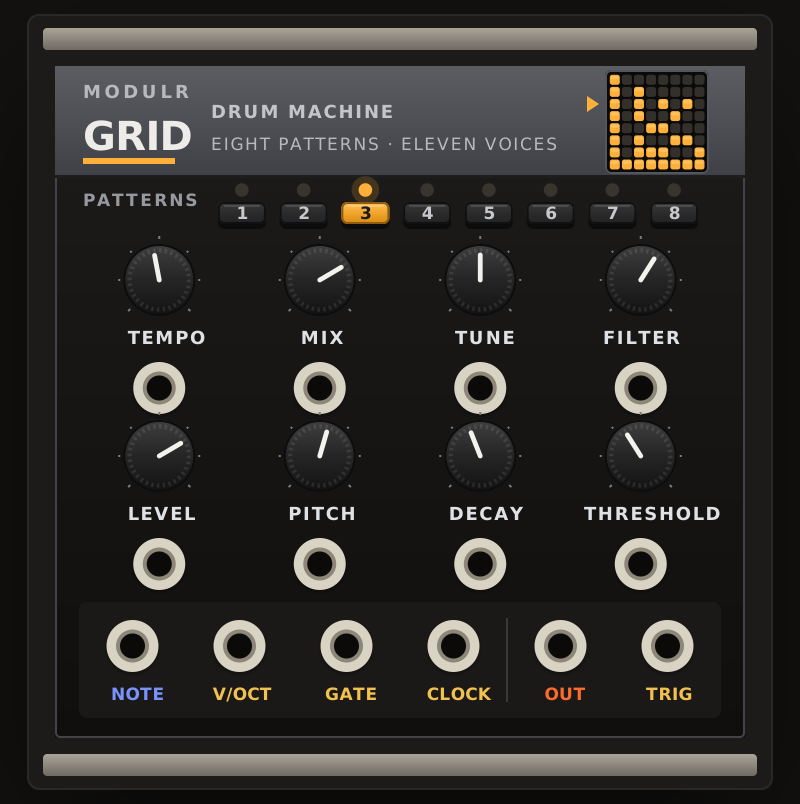
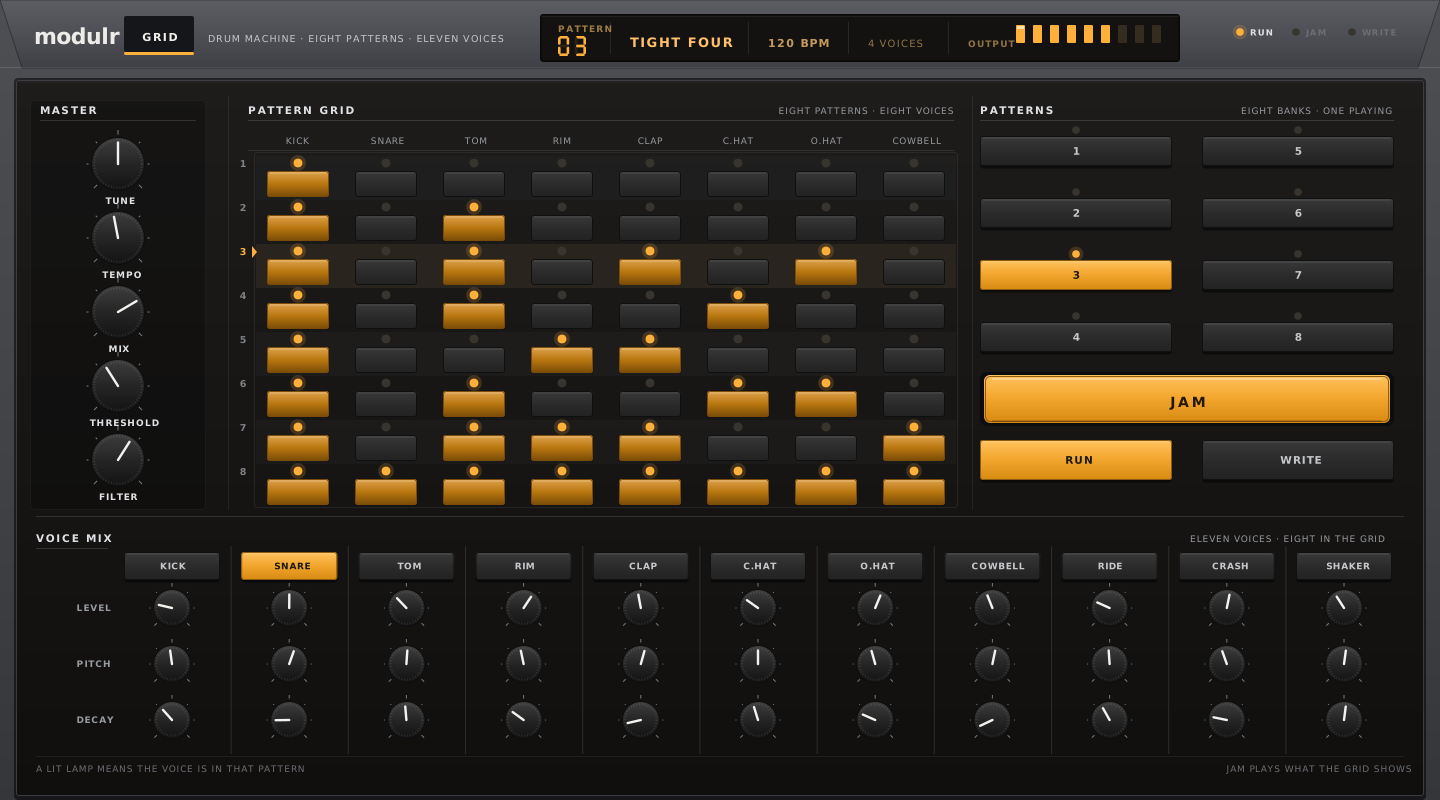
after the LinnDrum · 1982 · 26 HP
A grid of eight voices by eight patterns, read straight off the lamps, with a jam button that plays what the grid shows.
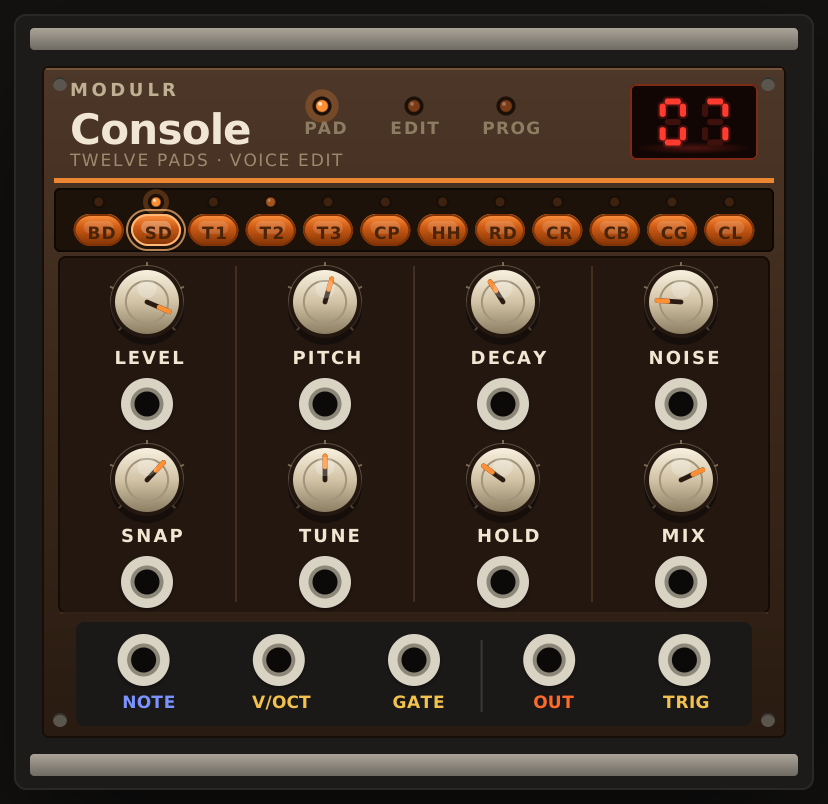
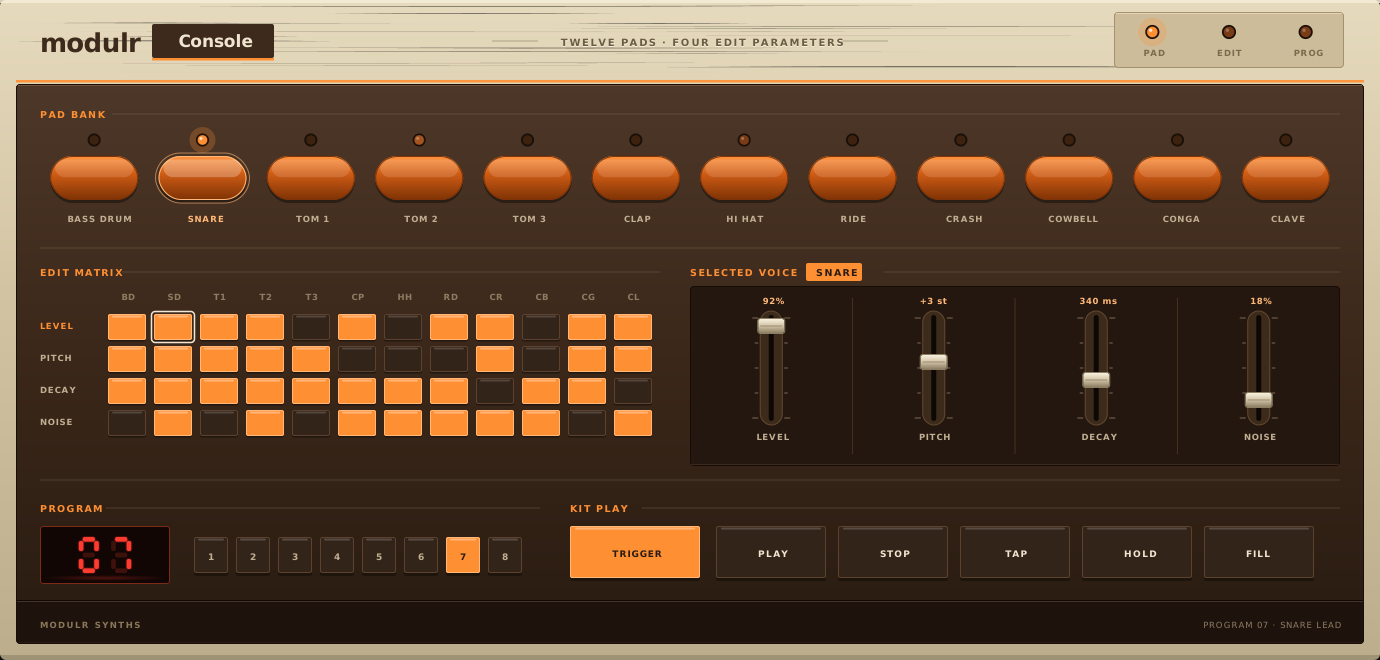
after the DMX · 1980 · 28 HP
Twelve membrane pads over a display and a parameter matrix, with the level, pitch, decay and noise of the selected voice on sliders.
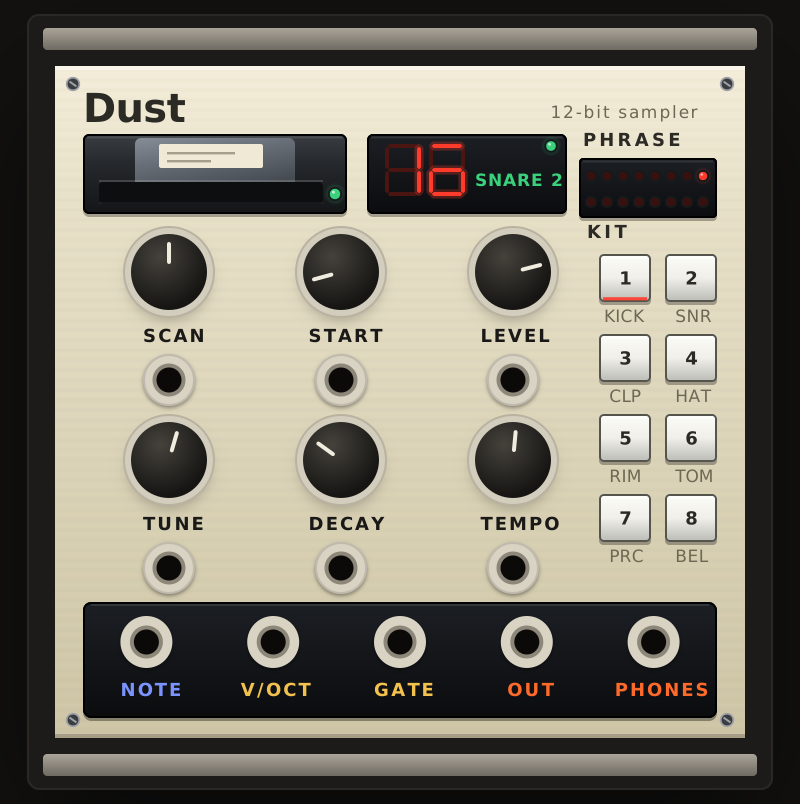
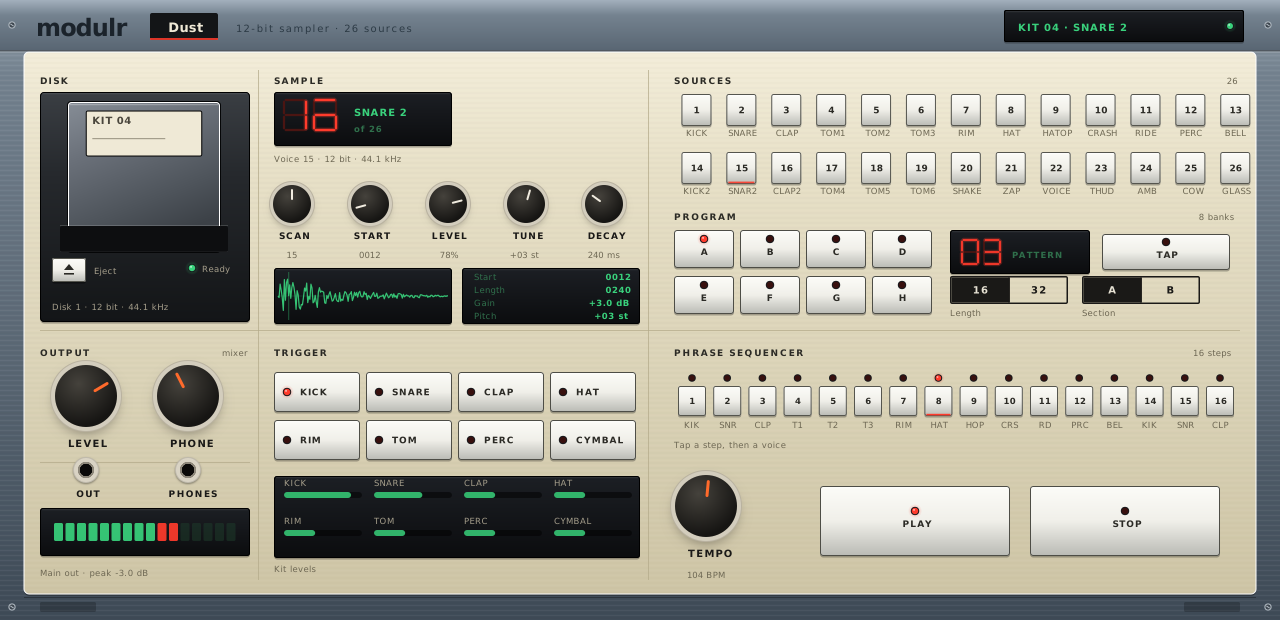
after the SP-1200 · 1987 · 26 HP
A floppy of twelve-bit samples, a start, a tune, a level and a decay for each, and a phone amplifier for the trigger.
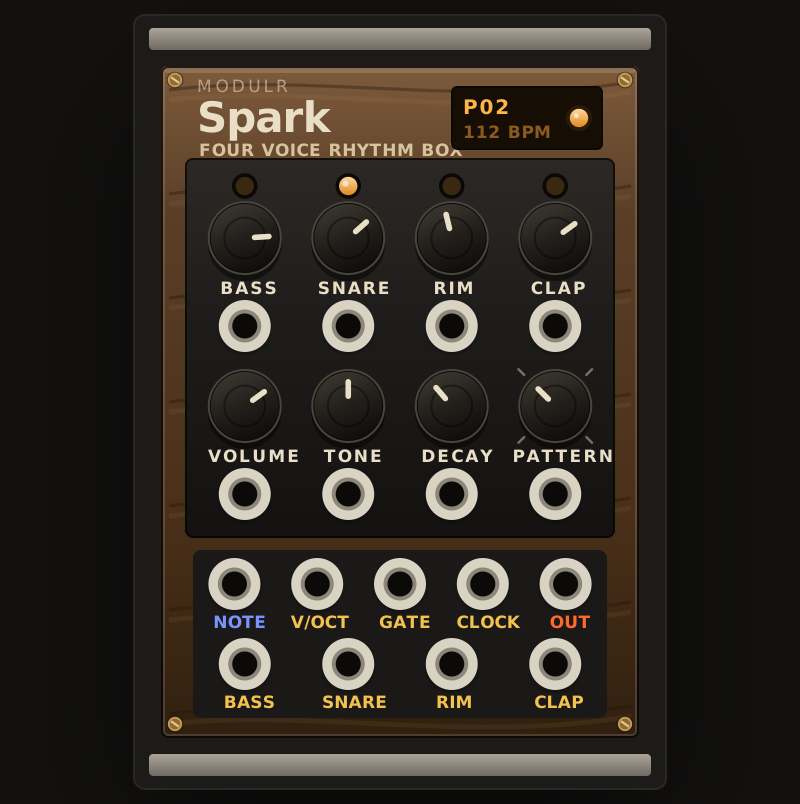
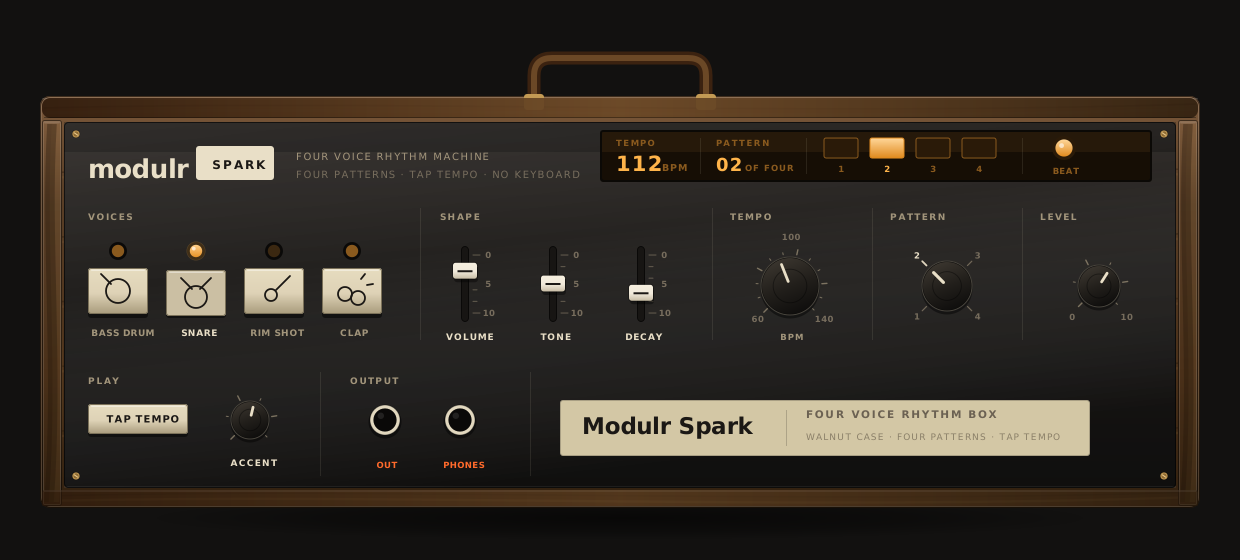
after the CR-78 · 1978 · 18 HP
Four trigger buttons, three sliders and a wooden case: the first of them, and the one every later machine answers to.
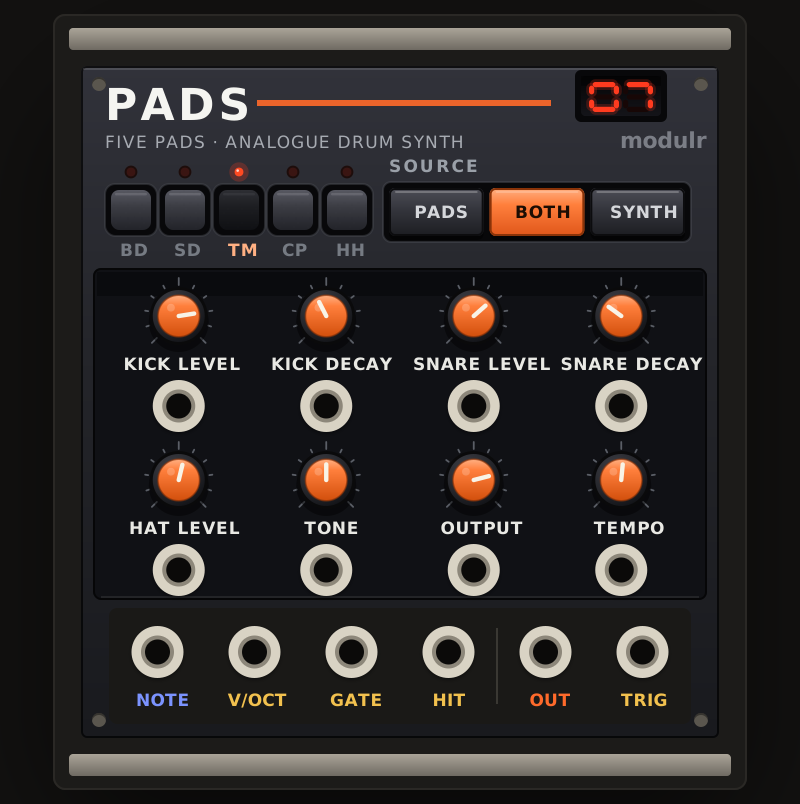
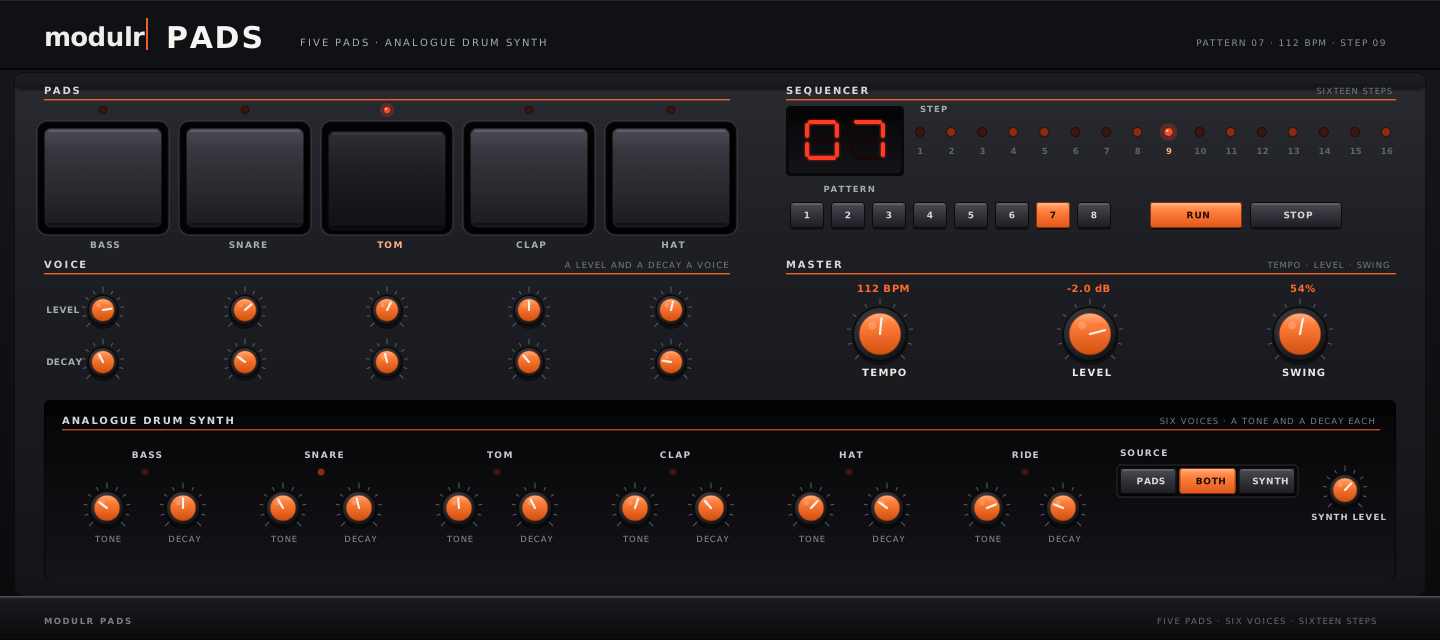
after the SDS-5 · 1981 · 24 HP
Five pads over an analogue drum synth, with a switch that mutes the pads and leaves the synth alone.
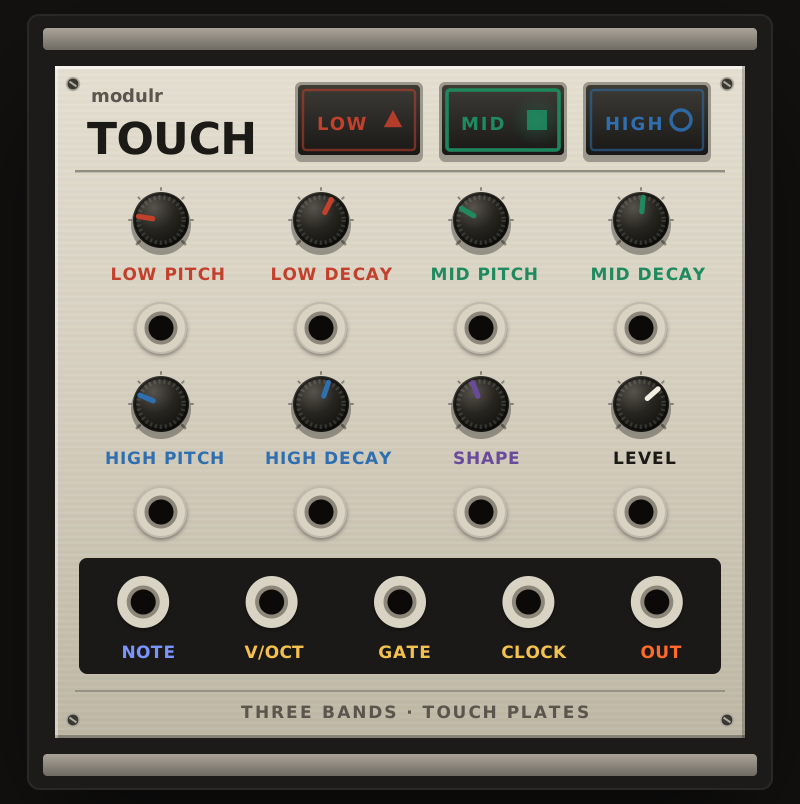
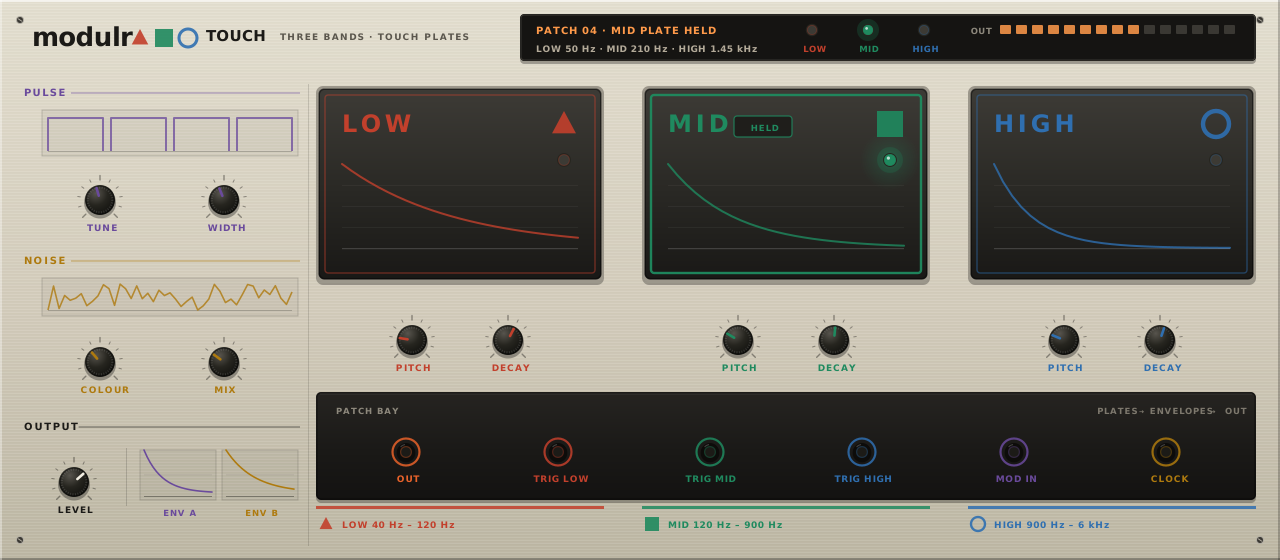
after the Buchla 200 · 1970 · 26 HP
Three touch plates for the low, the middle and the high of a drum sound, with no buttons and no keyboard at all.
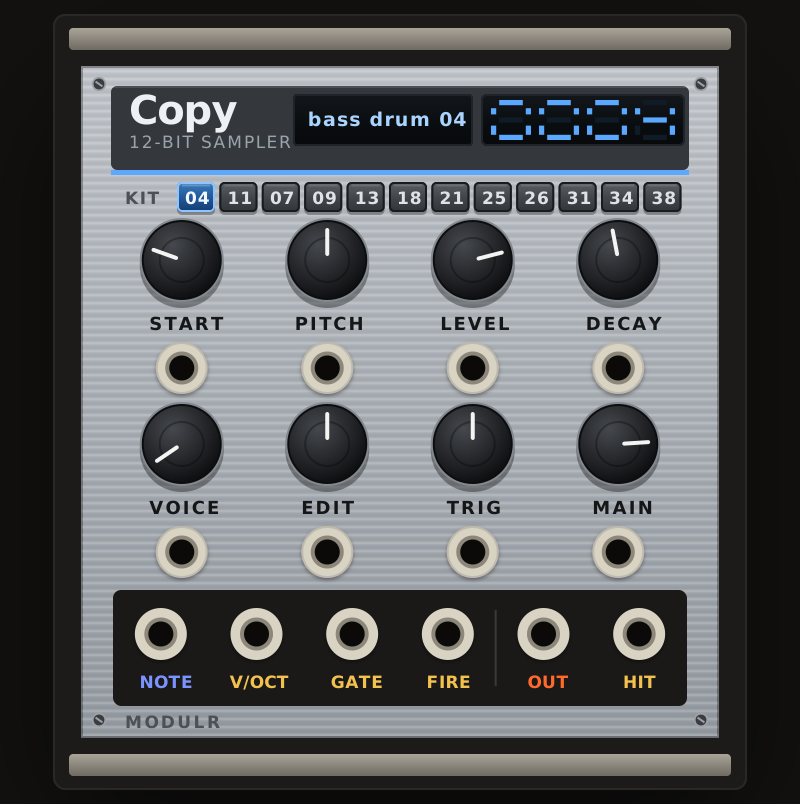
after the S900 · 1985 · 24 HP
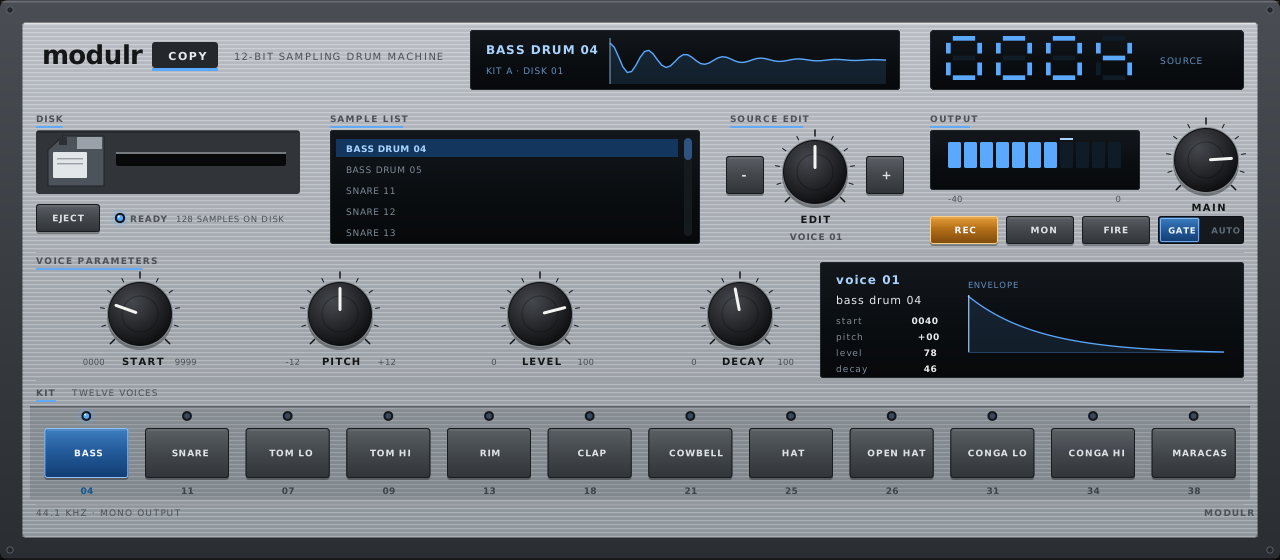
Twelve twelve-bit voices on a disk, a start, a pitch, a level and a decay for each, and a four-digit display.
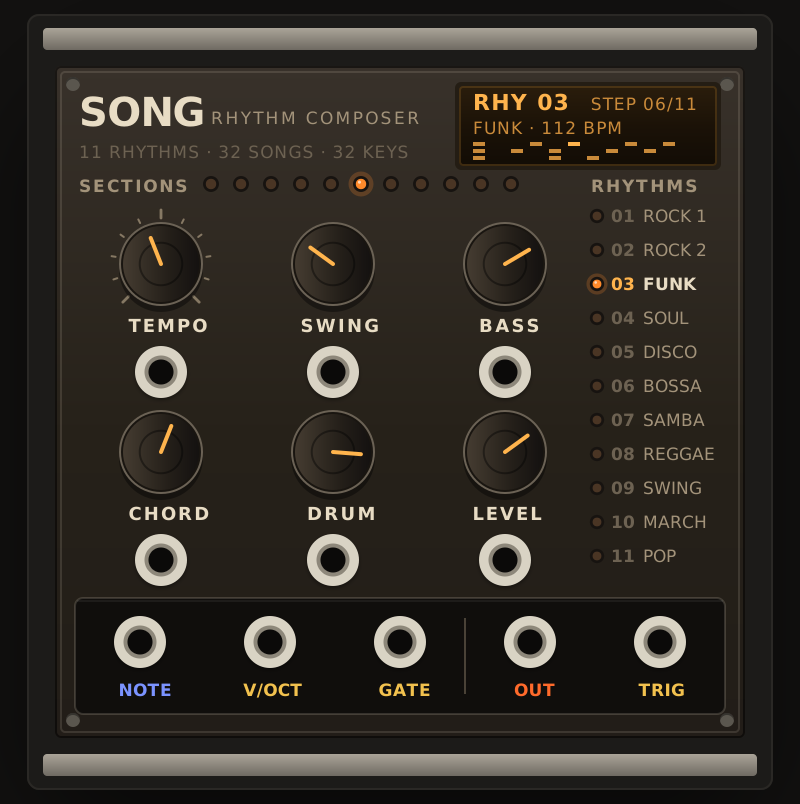
after the RX-7 · 1981 · 26 HP
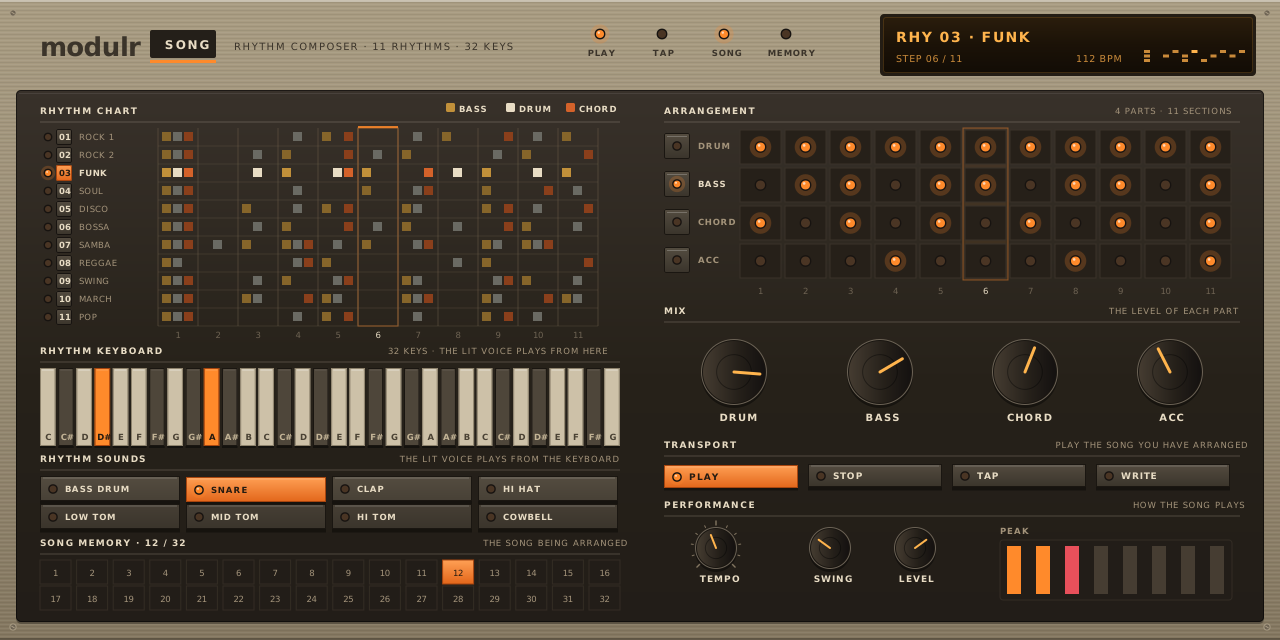
Rhythms with their own bass lines, arranged part by part over eleven steps, and written down as songs.
Legendary is our love letter to the instruments of all time: 43 studies — 33 after the synthesizers, 10 after the drum machines — each drawn twice, once as a plug-in’s screen and once as the rack module it would be, and never a copy. Every image on this page is a drawing, not a photograph of a shipped instrument, and every figure carries this site’s tag.