Study 01
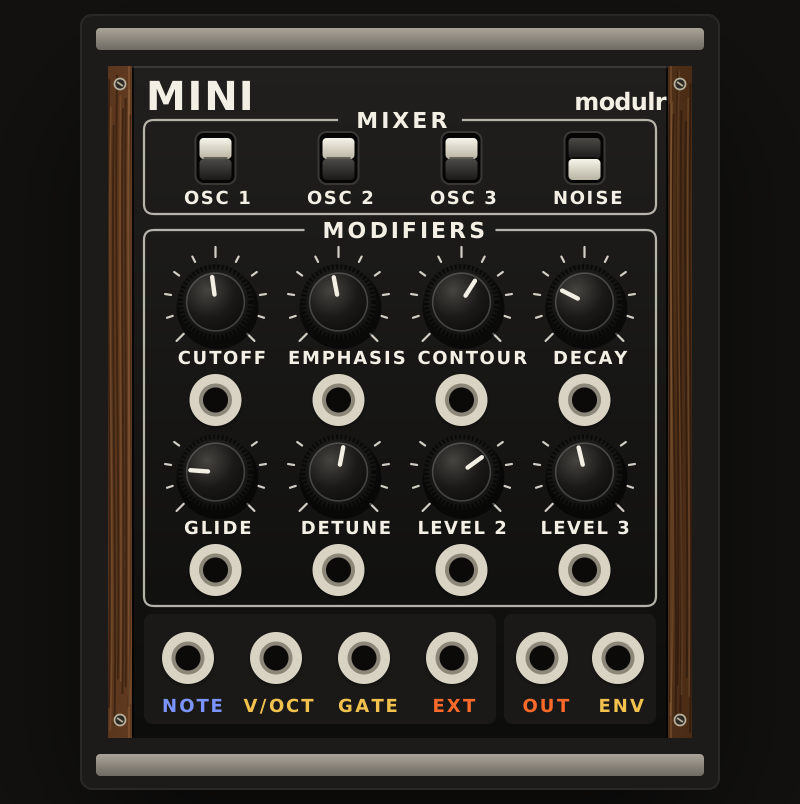
Modulr Mini
after the Minimoog Model D · 1970 · 22 HP
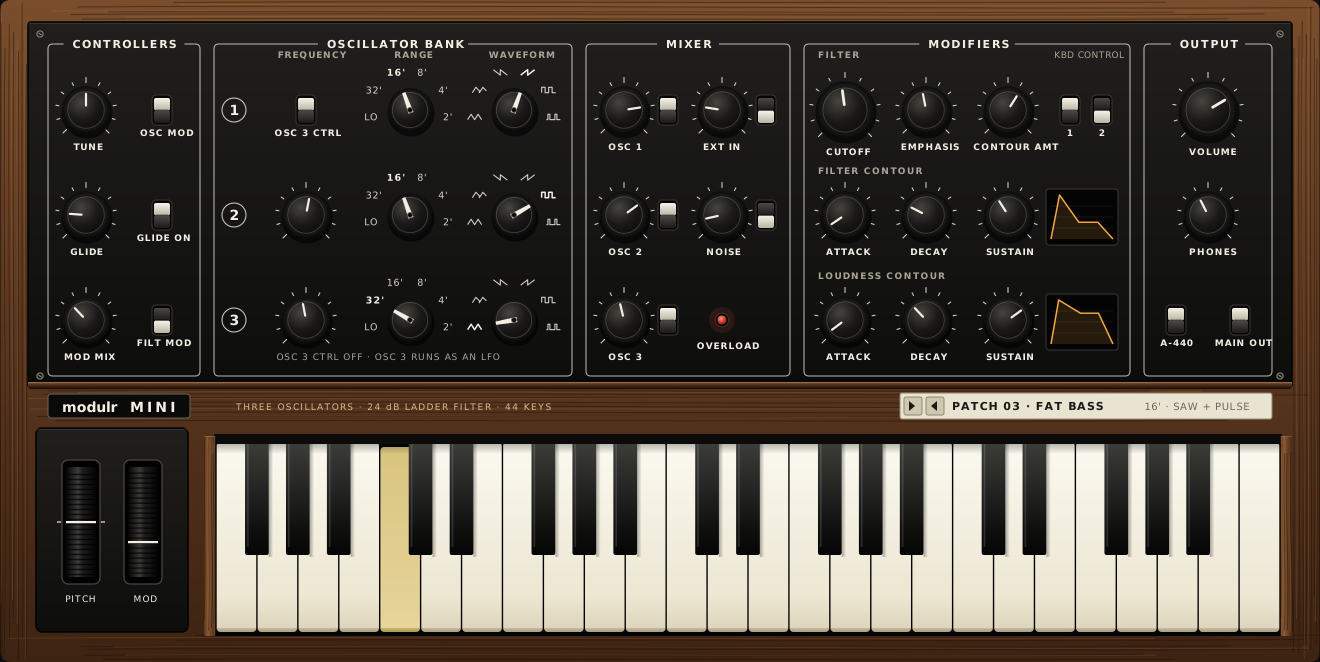
Three oscillators, a mixer and a four-pole ladder filter, with every section boxed and titled on the panel.
33 instruments, twelve effects, a rack and a hub — all on sale, and all made to work together.
Every product shares the same sockets, so sound from one can steer another — patch them like hardware. Everything you do can be undone, one step at a time. Your sounds and settings are saved as plain files you can open, copy and back up. Everything is on sale.
33 instruments, twelve effects, all on sale
31 measured on the synth, the rest as designed
23 of them on the synth
25 of them beat everything compared
A modular synthesiser, a bass line synthesizer, a synthesizer voice, a polyphonic synthesizer, a drum machine, an additive synthesizer, a hybrid synthesizer, a monophonic synthesizer, a polyphonic fm synthesizer, a performance monosynthesizer, a bass and lead synthesizer, a touch-plate patchable synthesizer, a patch-pin synthesizer, a five-voice polysynth, a pocket synthesizer voice, a semi-modular synthesizer, a supersaw synthesizer, a virtual-analog synthesizer, a monosynthesizer, a workstation, a wavetable synth, a vector synthesizer, a sampling drum machine and a drum synthesizer — $25 each, playing in your music software on the Mac.
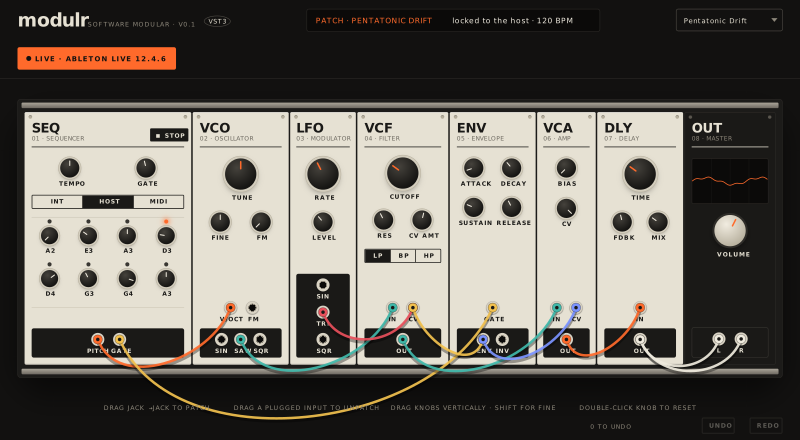
One monophonic modular synthesiser, in eight modules, with ten cables in its opening patch and eight factory patches.
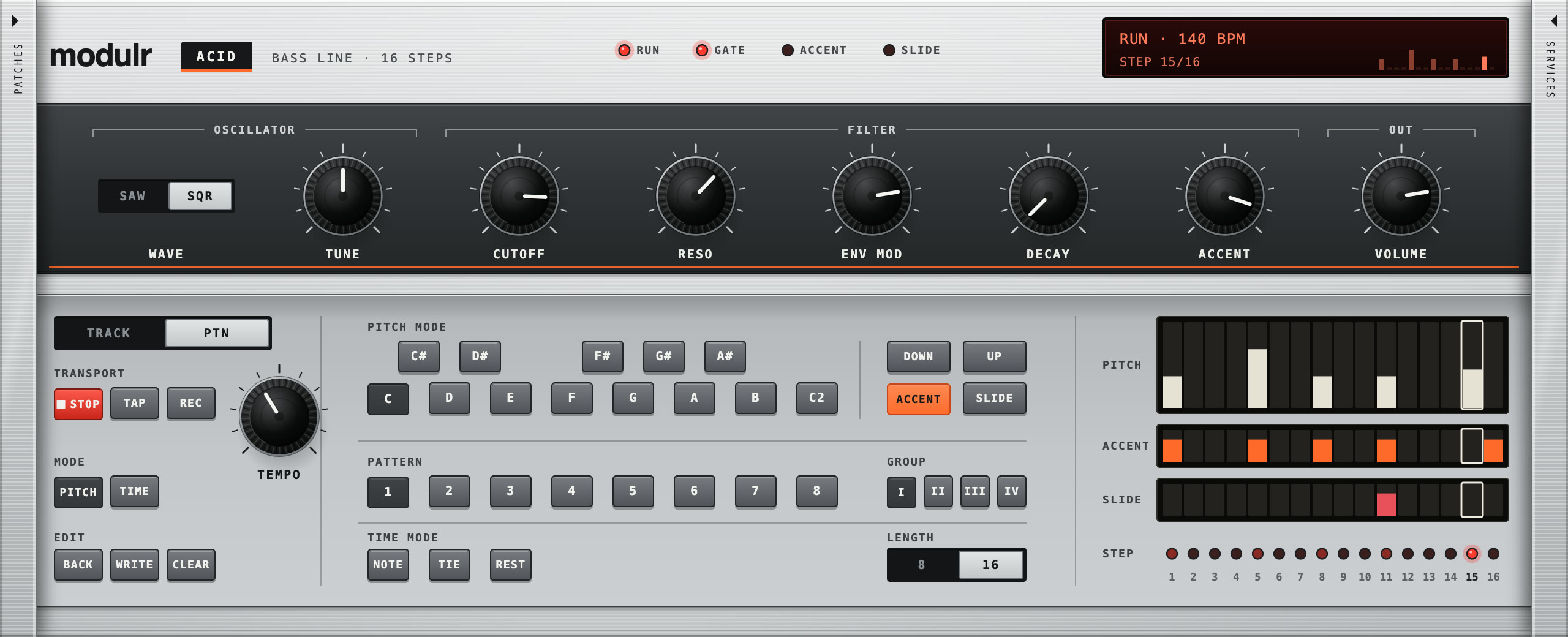
A bass line in a box: sixteen steps, one oscillator, and a filter that sings when you ask it to.
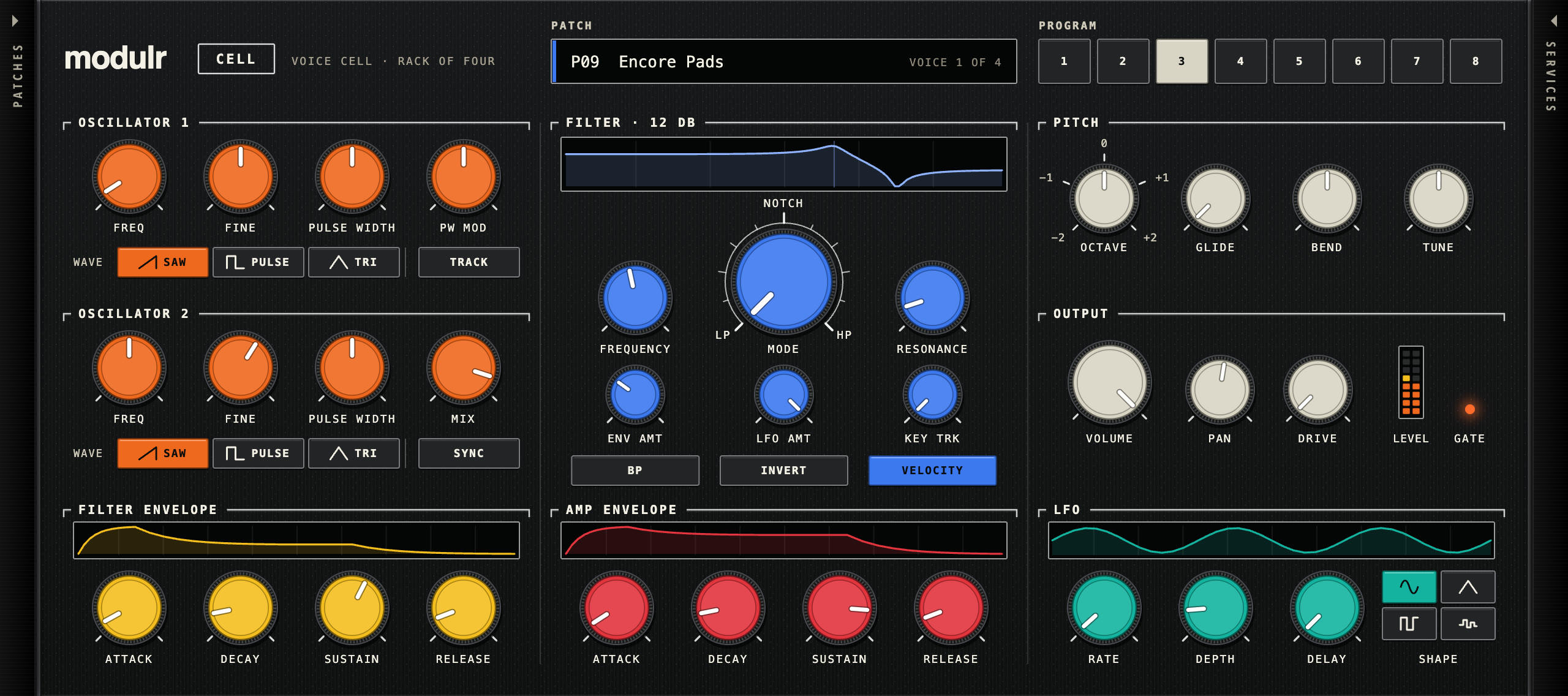
One voice: two oscillators, a filter that sweeps from low-pass to notch to high-pass, and two envelopes.
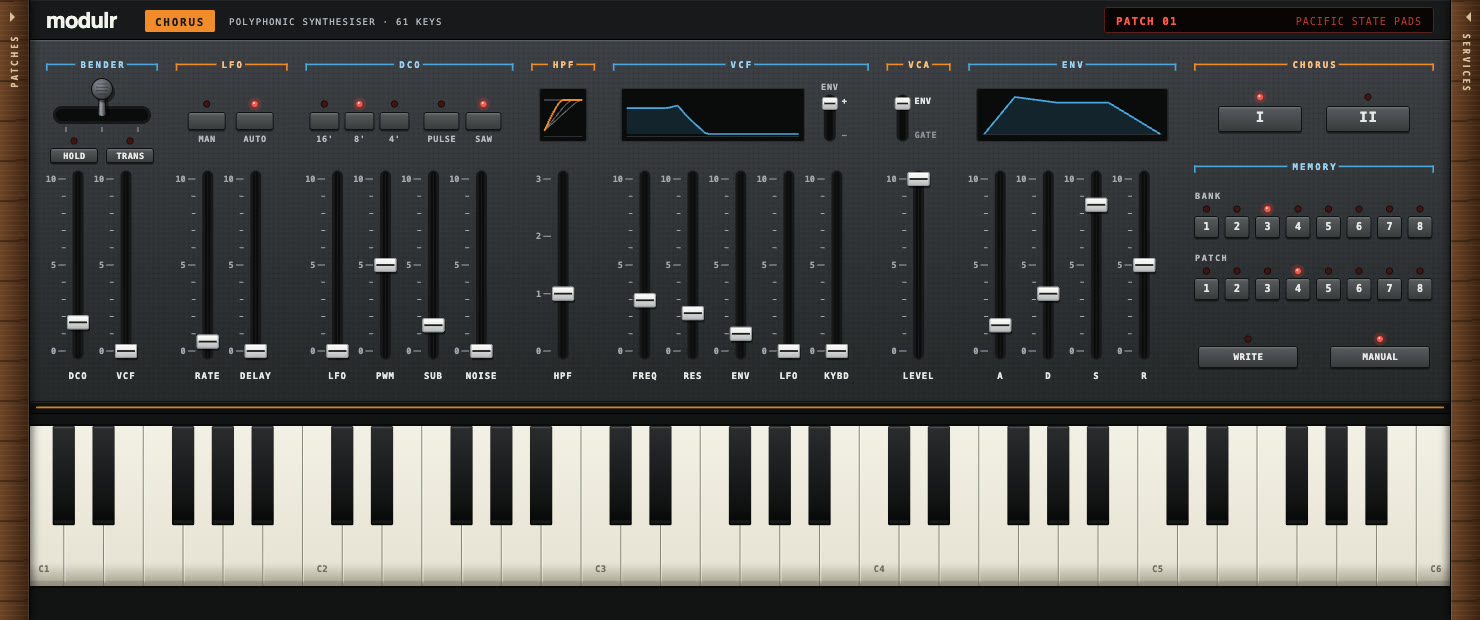
A polyphonic synthesizer after the Juno-106, with its chorus.
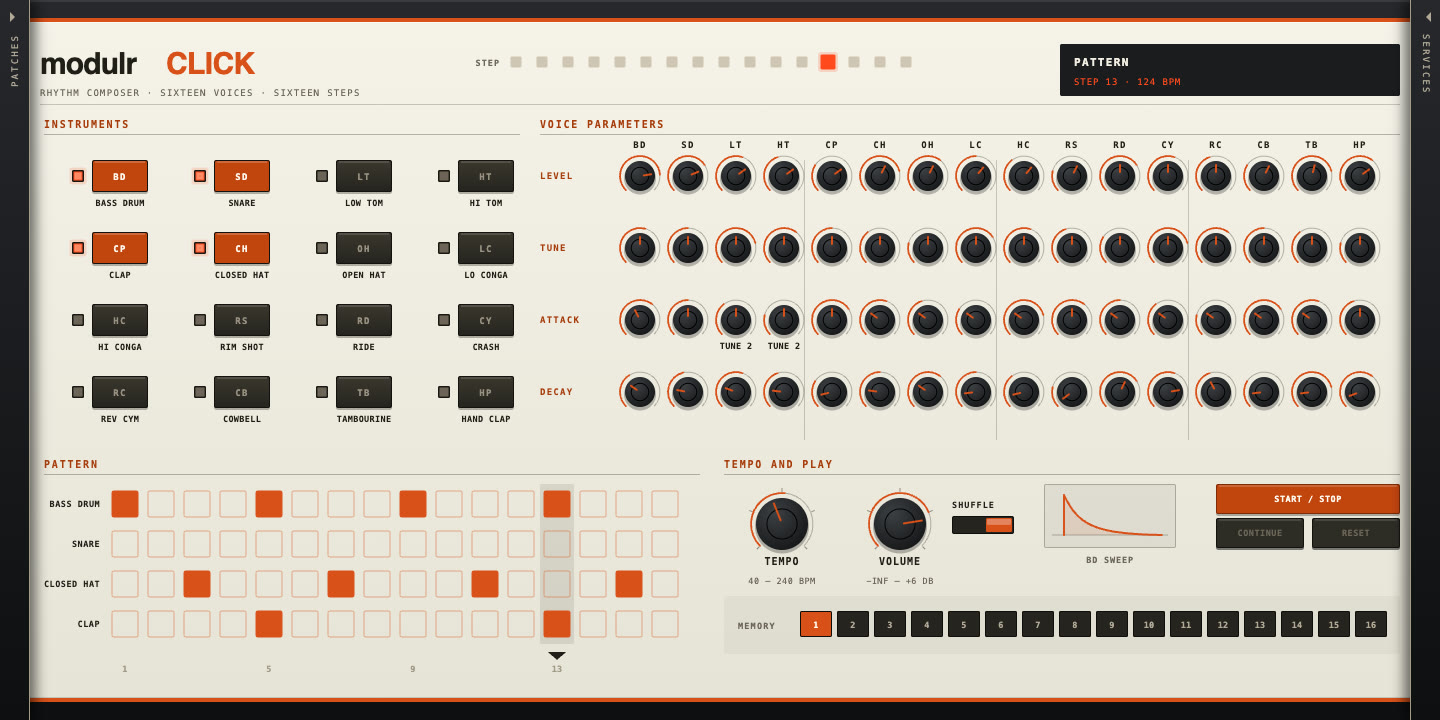
Sixteen drum buttons, a pattern you click in while it runs, and sixteen patches that each load a whole kit.
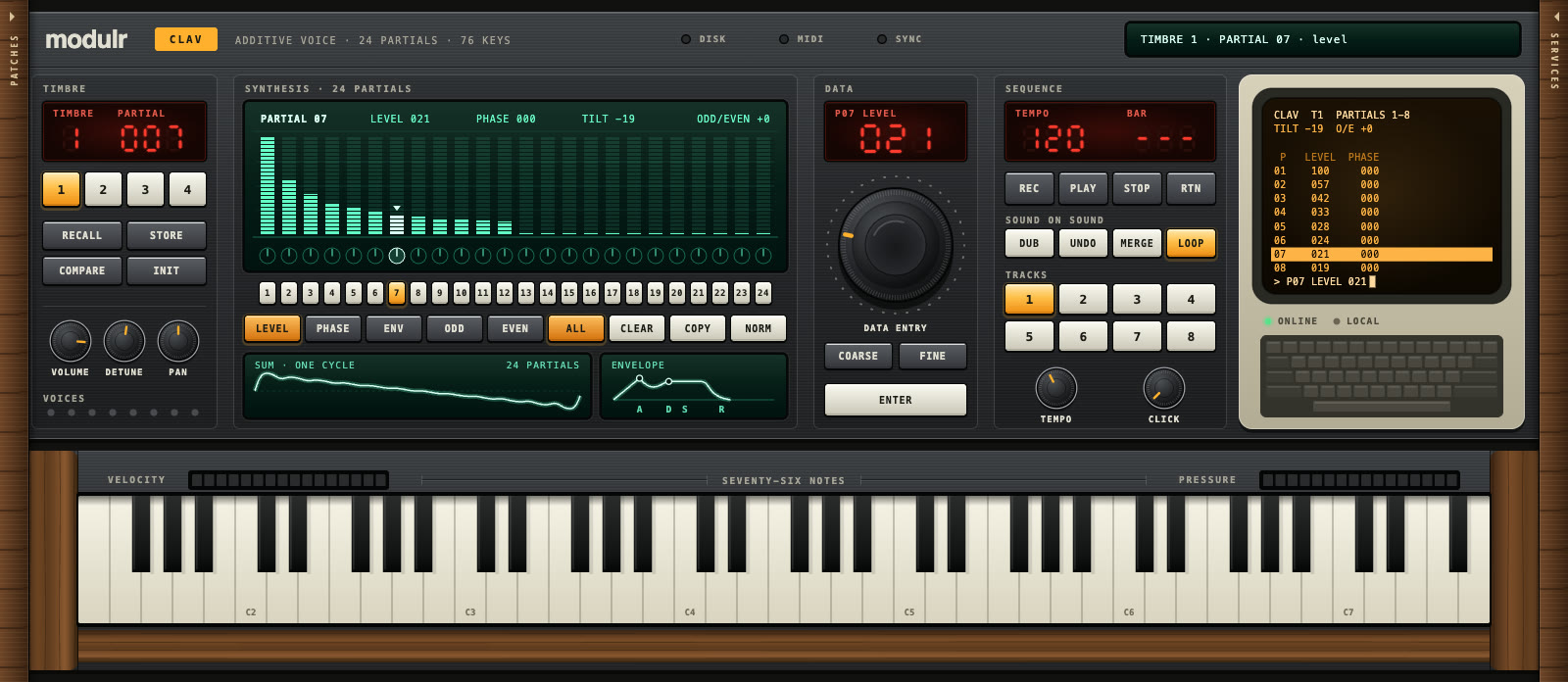
Twenty-four partials set by level and phase, a large display, and rows of numbered keys.
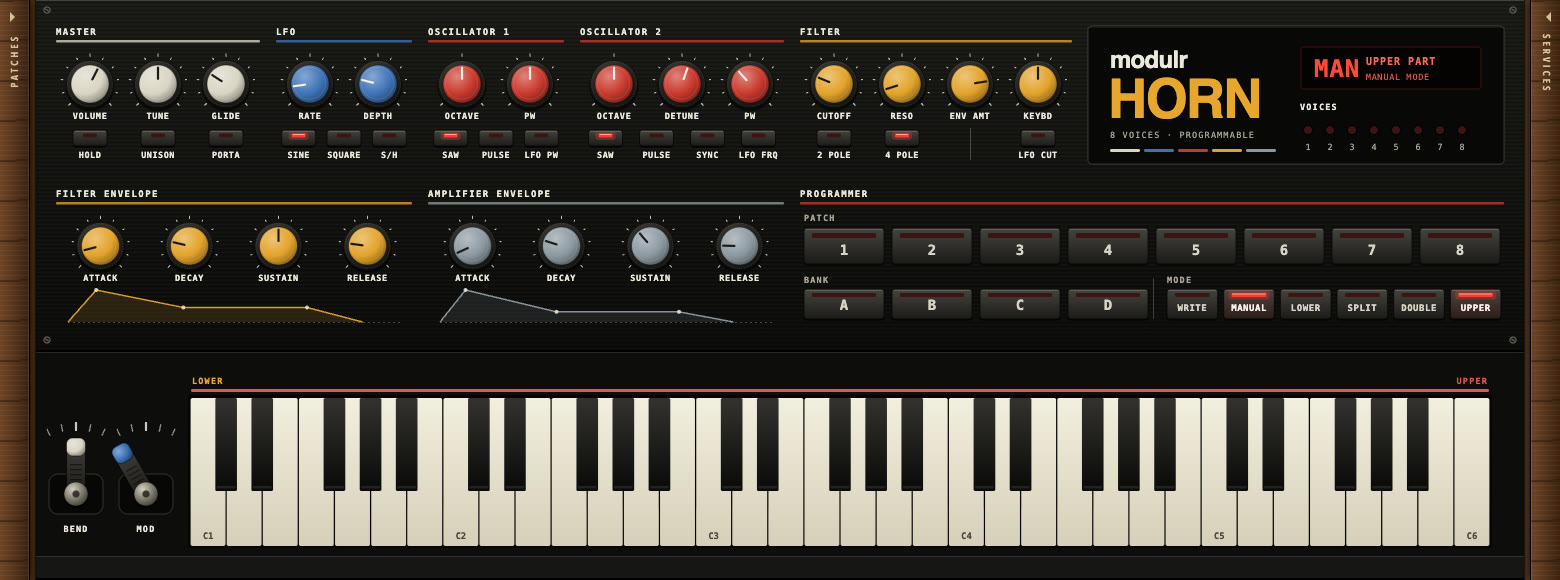
Two oscillators a voice, a filter that switches between two and four poles, and an upper and a lower part, over fifty patches that each load the whole sound.
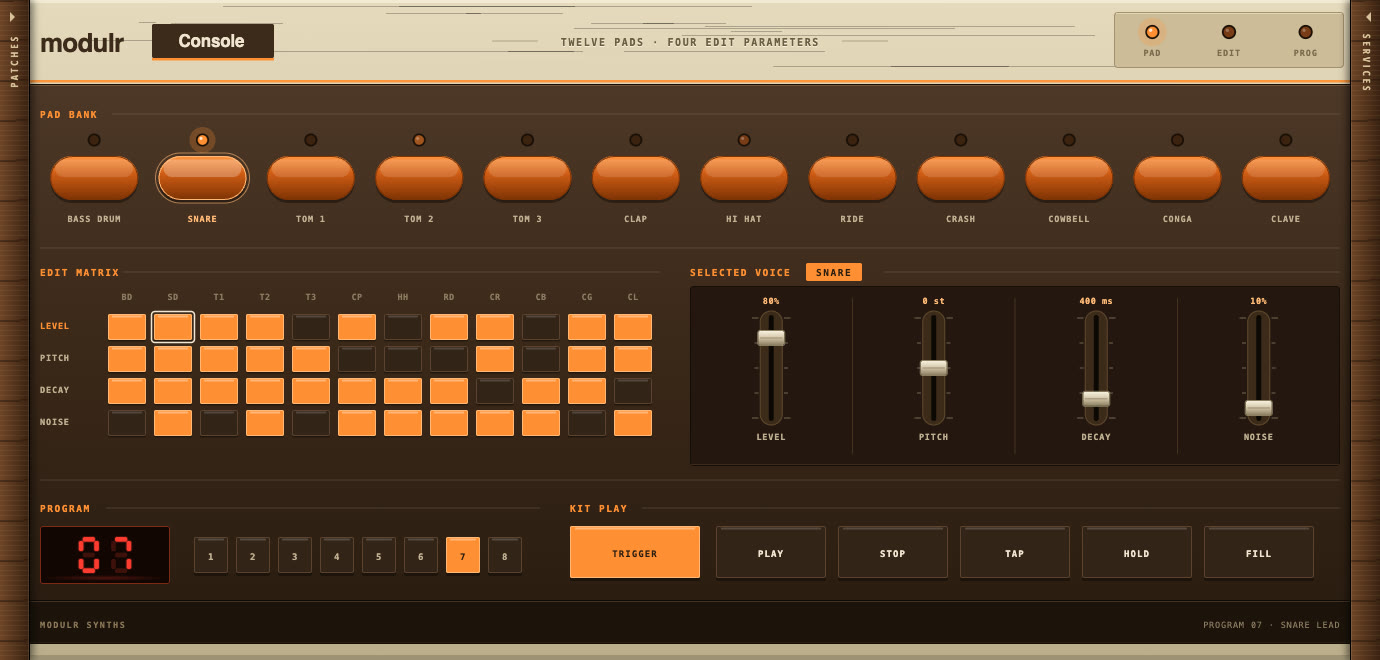
Twelve membrane pads, a parameter matrix and four sliders for the selected voice, with twenty-eight kits that each load the whole sound.
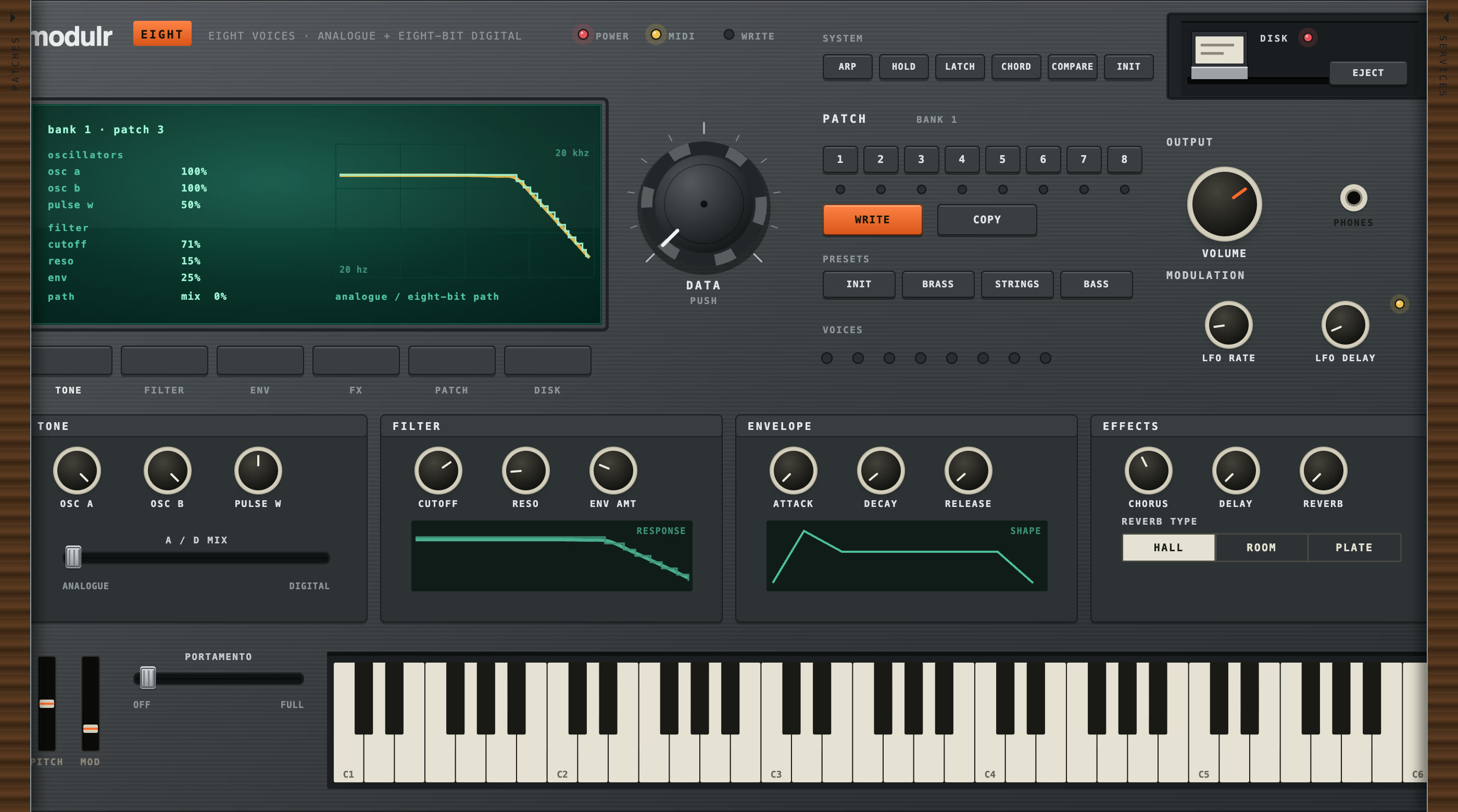
Eight voices of analogue-style oscillators, a resonant filter and an eight-bit digital path, all edited from one backlit screen.
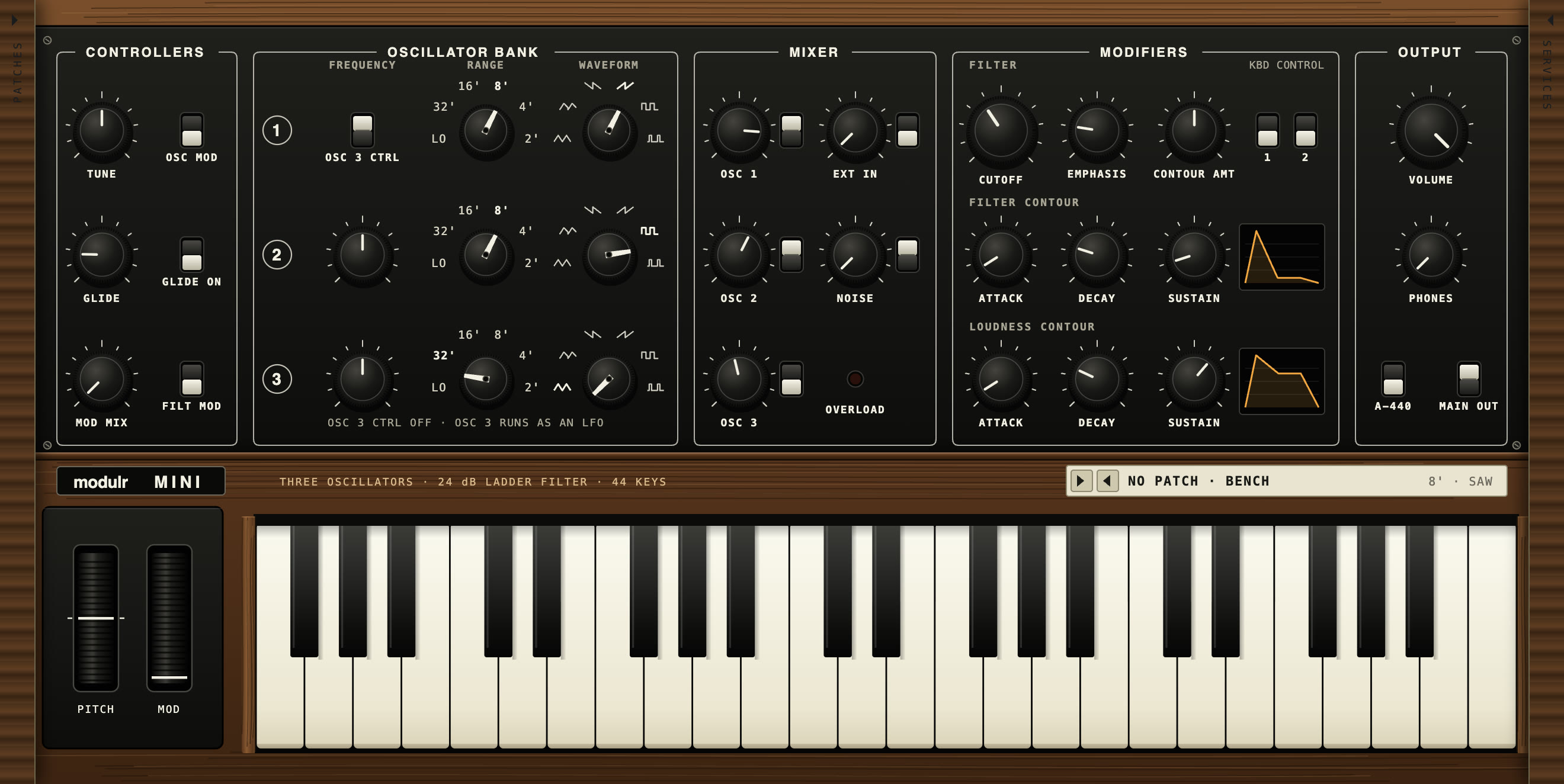
Three oscillators, a mixer and a four-pole ladder filter, with every section boxed and titled on the panel, played from your keyboard as a VST3 and Audio Unit.
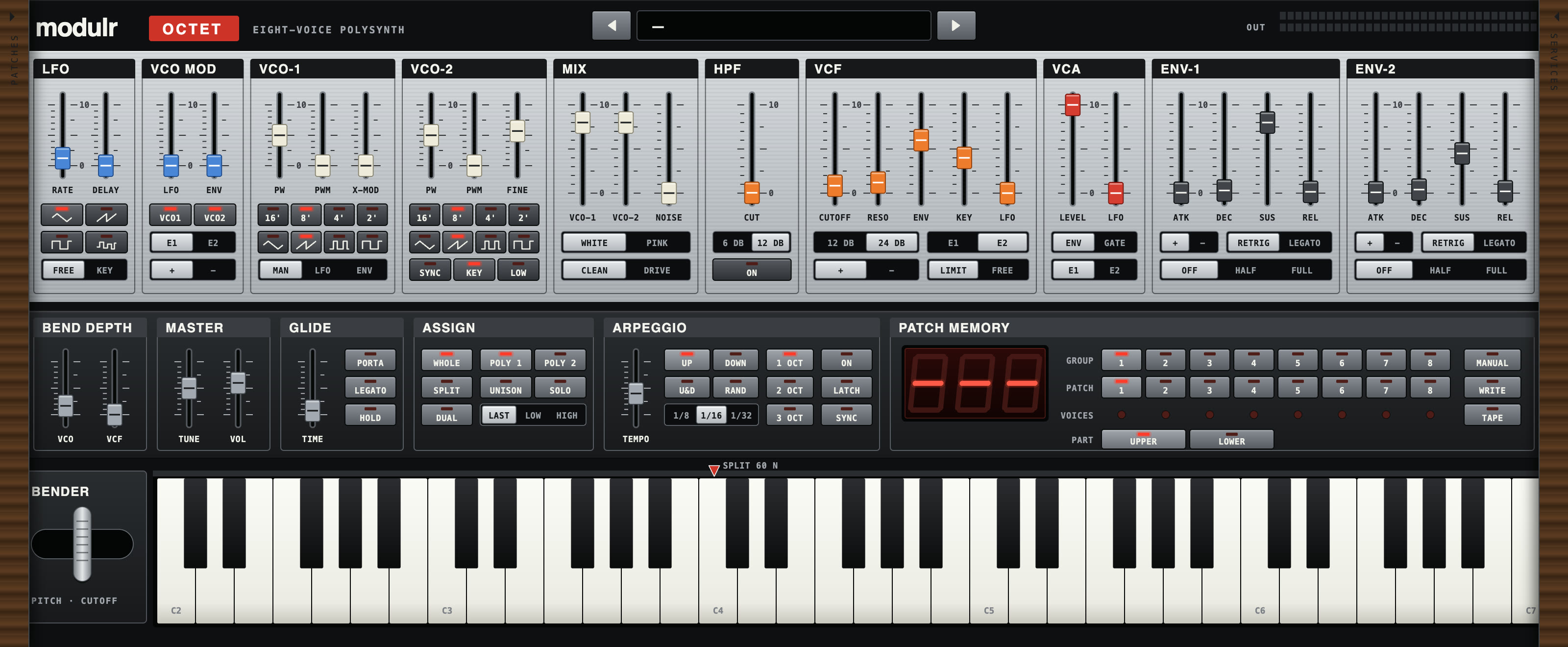
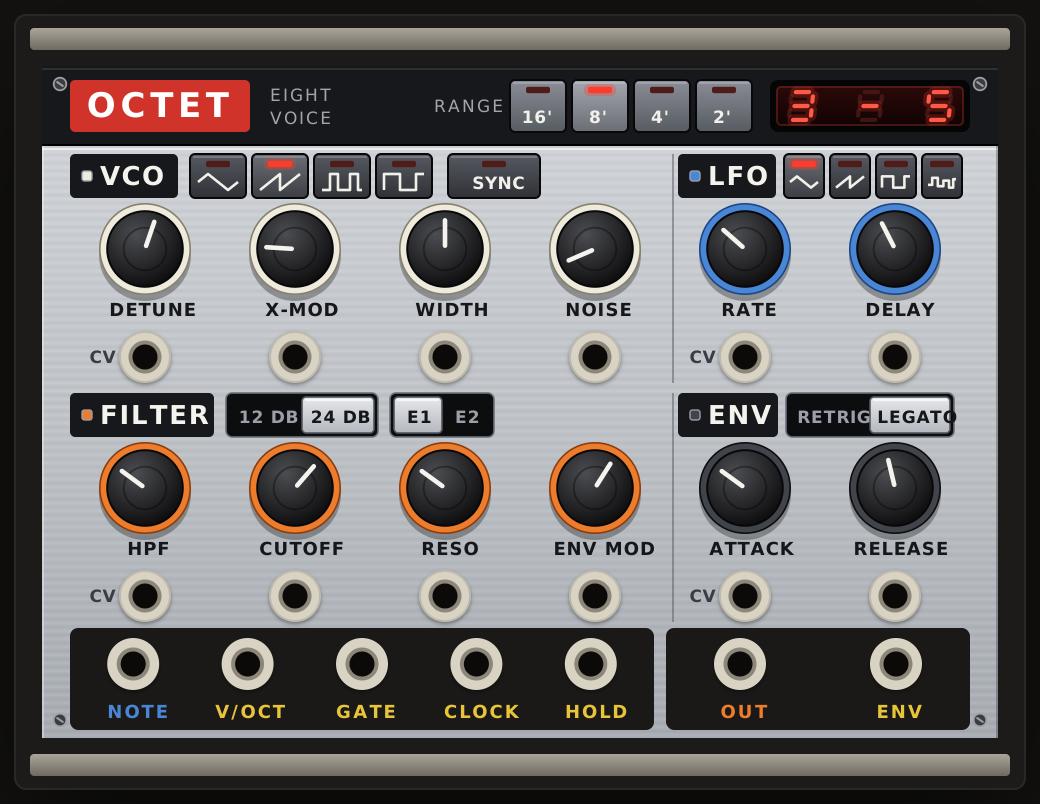
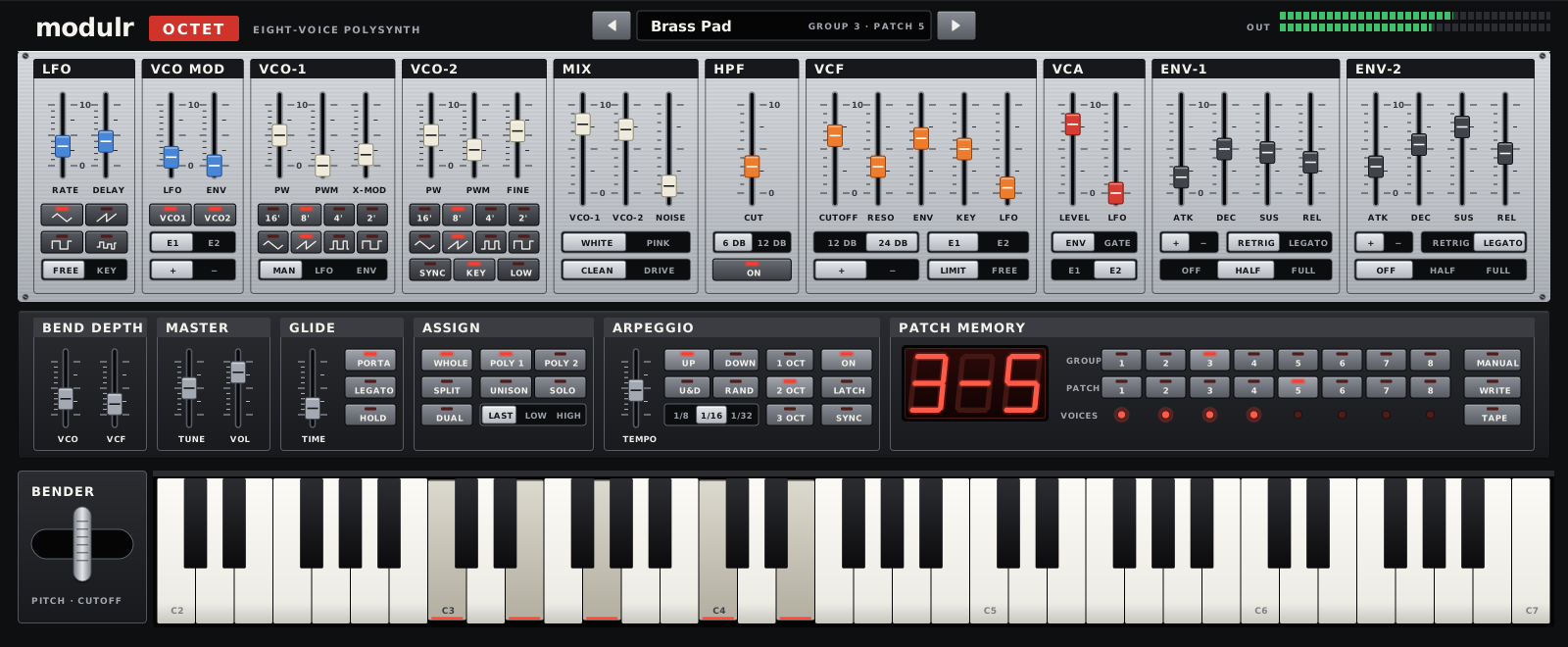
Eight voices of two oscillators each, a split and a dual mode, and an upper and a lower part, over fifty-four patches that each load the whole sound.
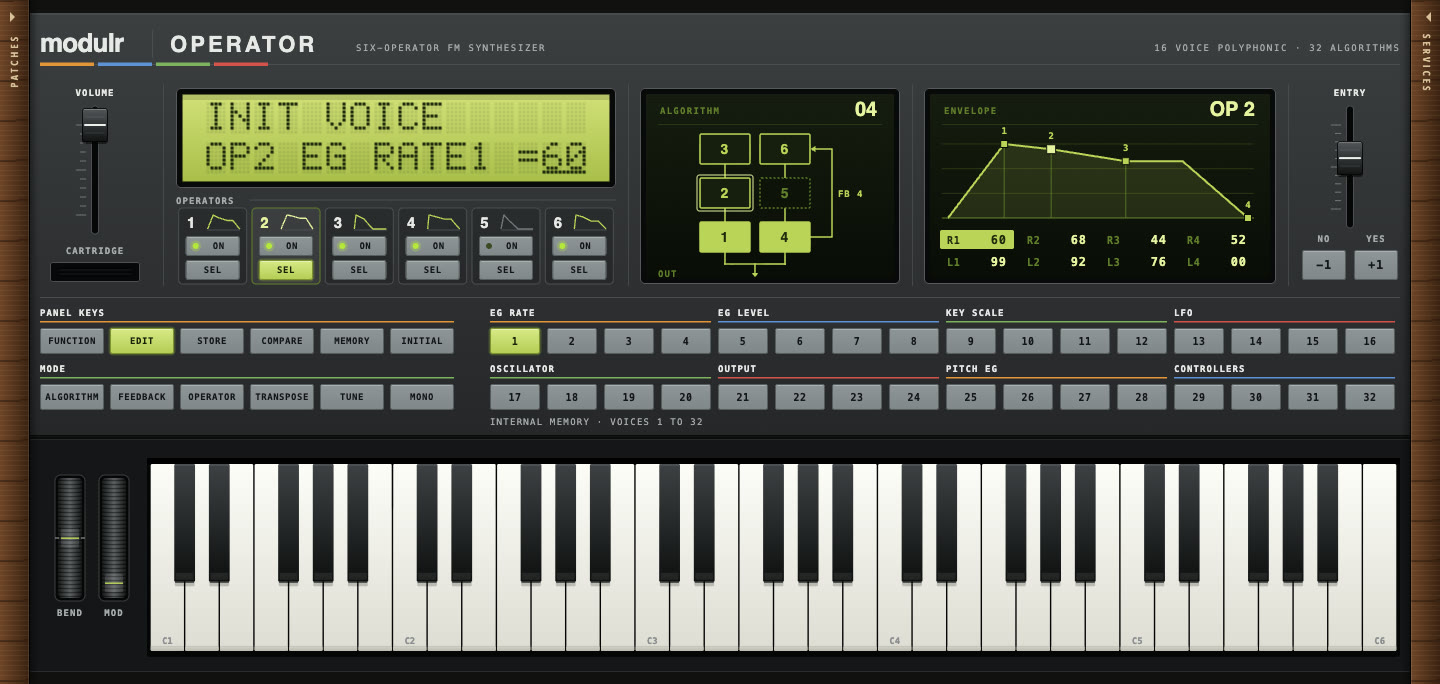
Six operators, thirty-two algorithms and four-rate envelopes, edited from a slider and a membrane panel, over fifty patches.
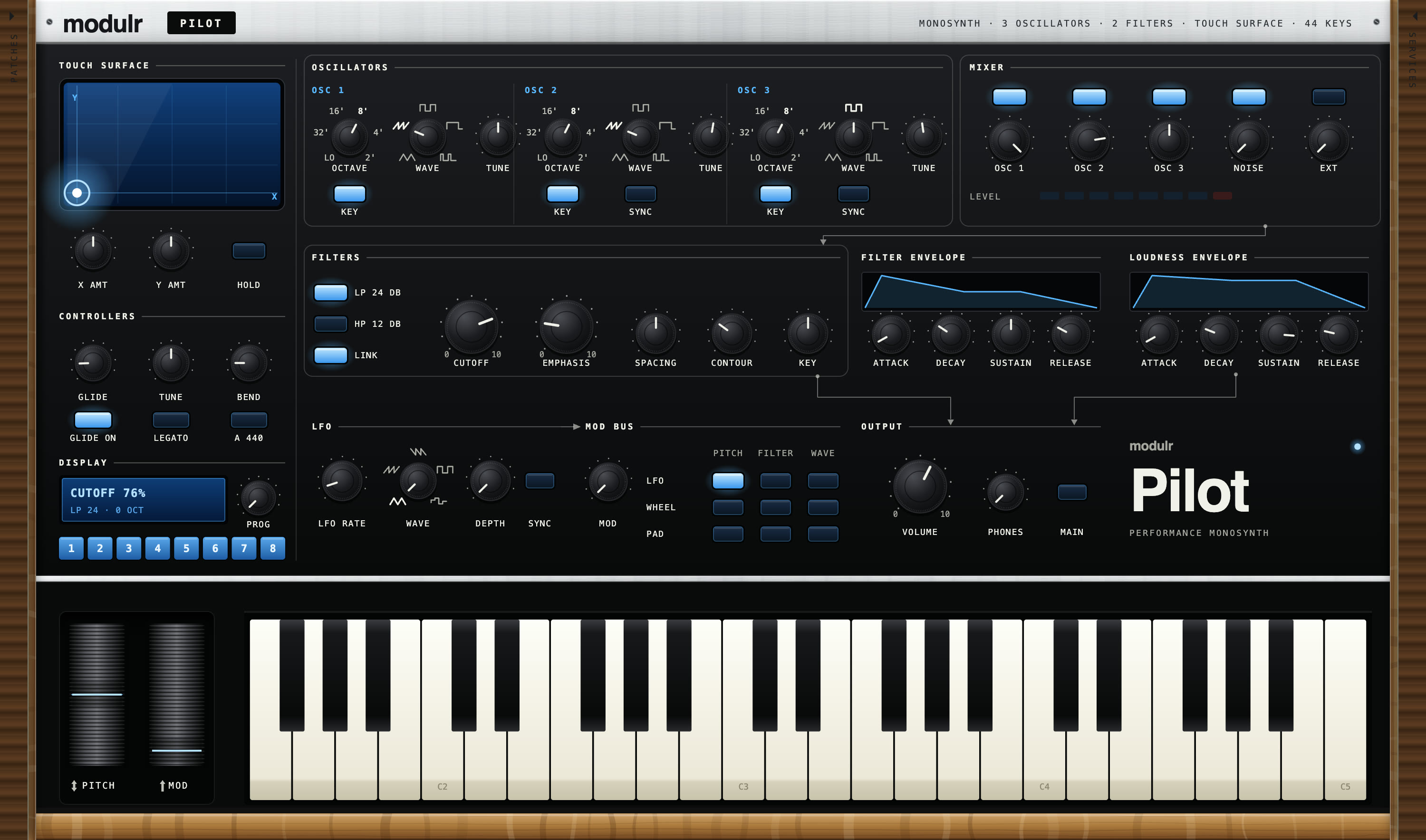
Three oscillators, two filters with a spacing control, and a touch surface with an X and a Y, over forty-two patches that each load the whole sound.
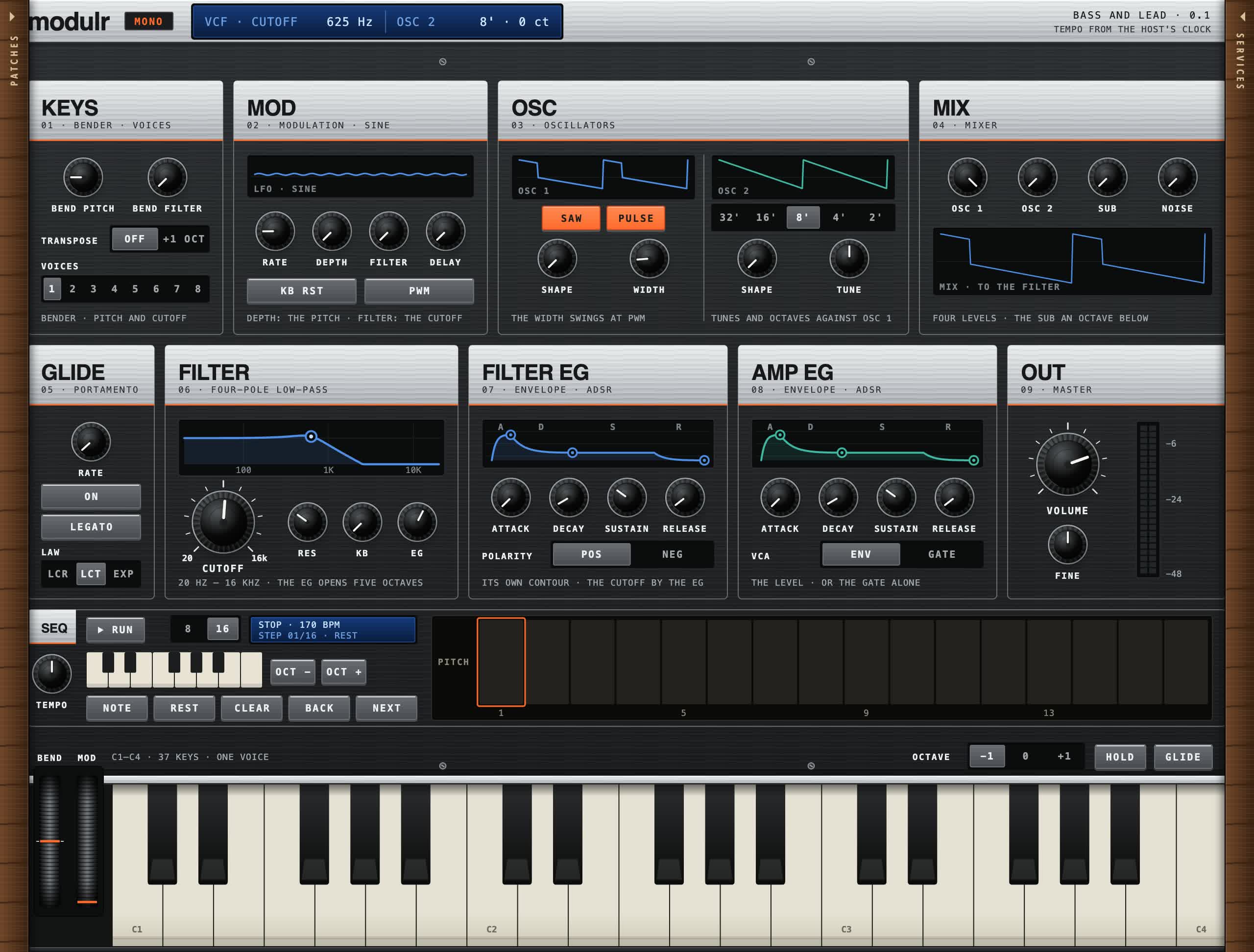
One control per function: two oscillators, a sub and noise, a resonant filter, an envelope each for the filter and the level, a glide and a sixteen-step sequencer, played from your keyboard as a VST3 and Audio Unit.
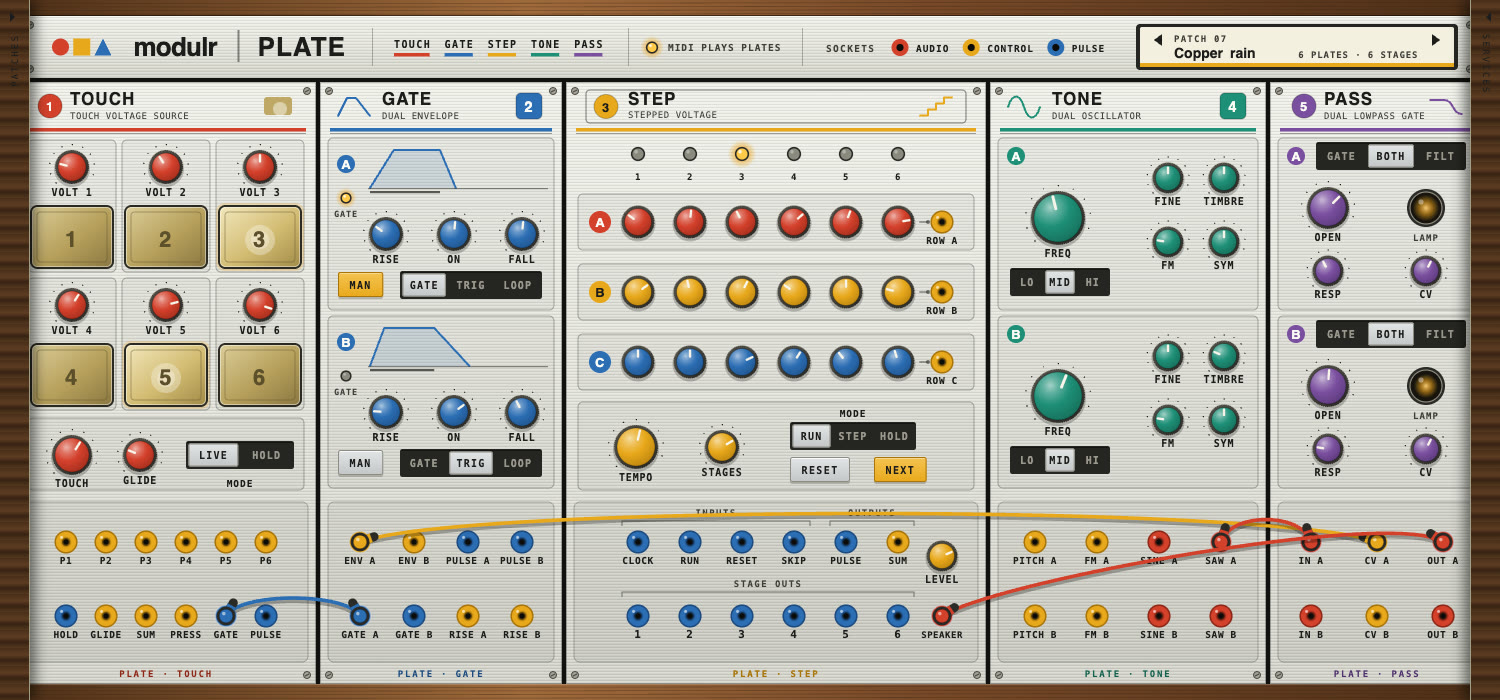
A touch-plate rack you can patch: five panels, forty-four live sockets and fifty-three controls, with eleven patches.
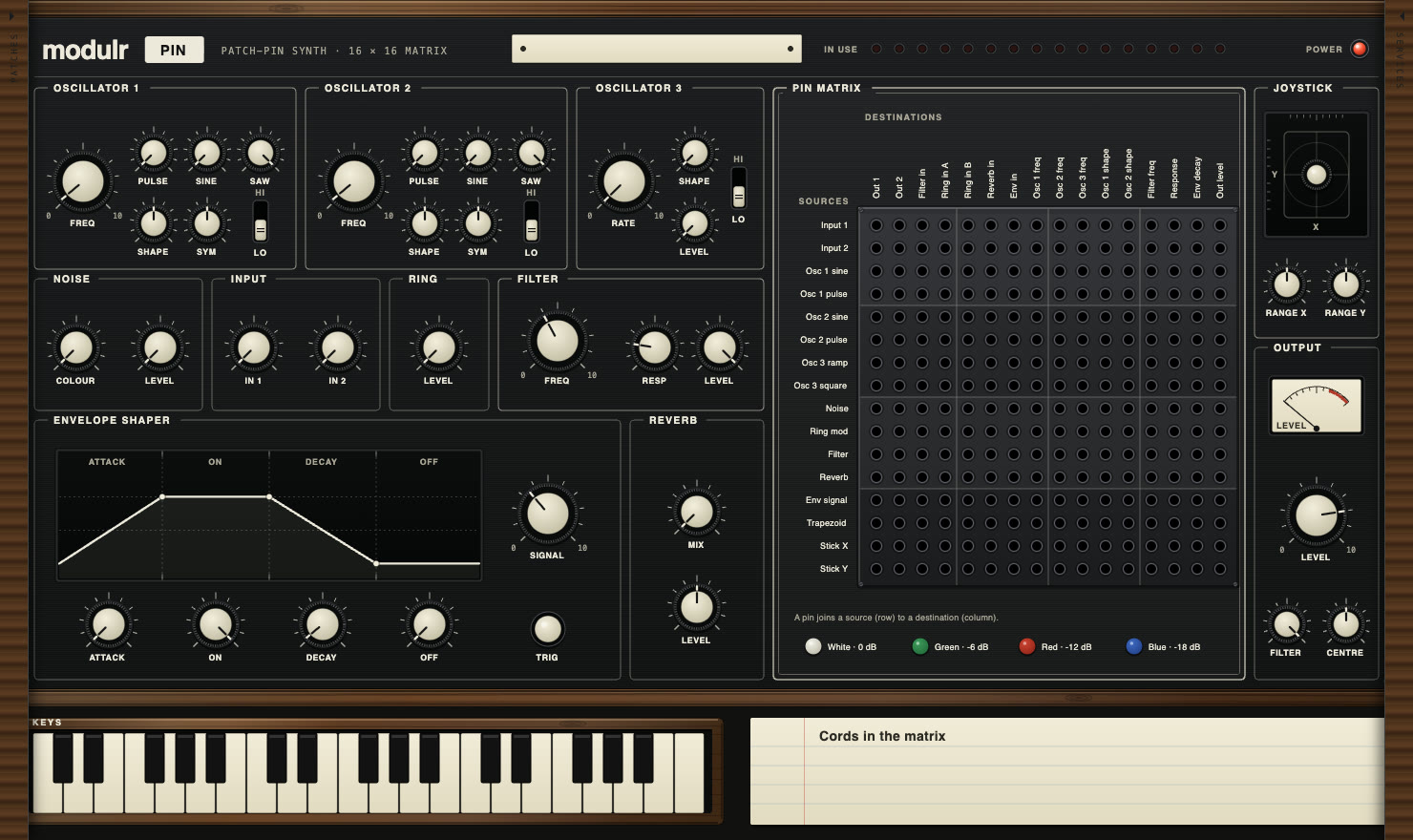
A pin matrix of sixteen by sixteen sockets, three oscillators, a ring modulator and a joystick, as a plug-in.
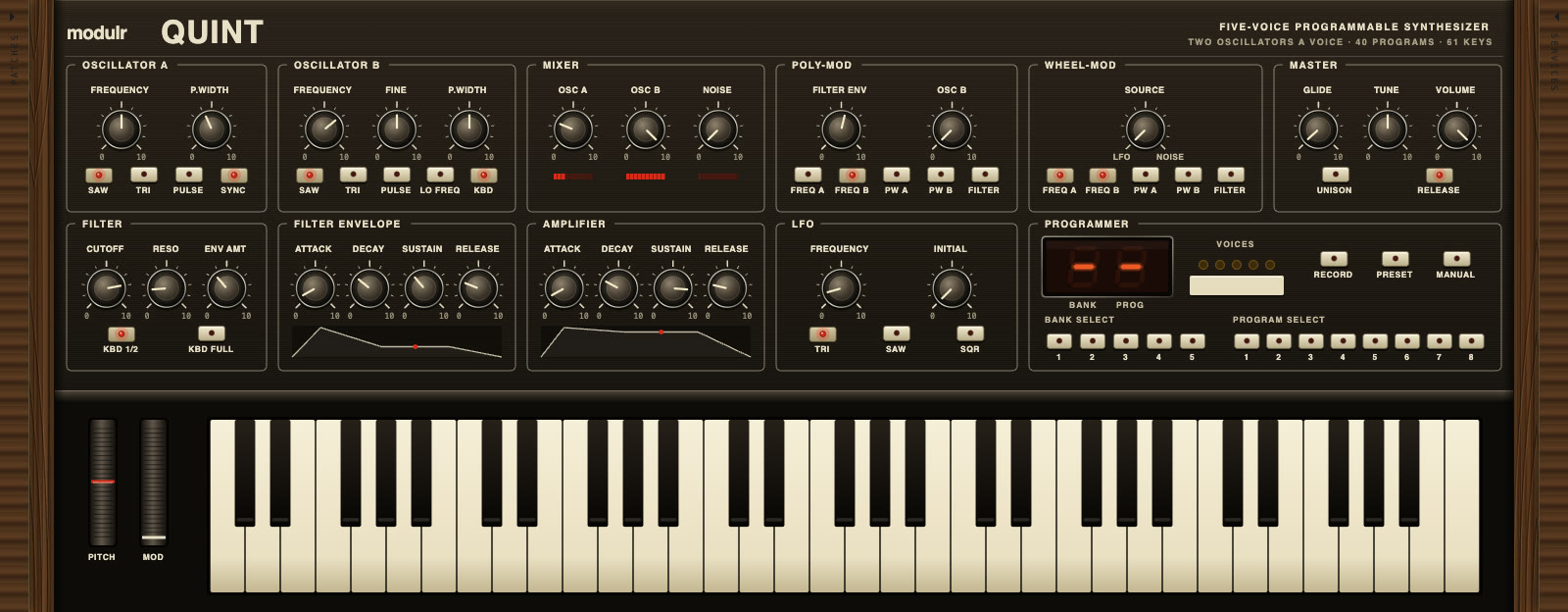
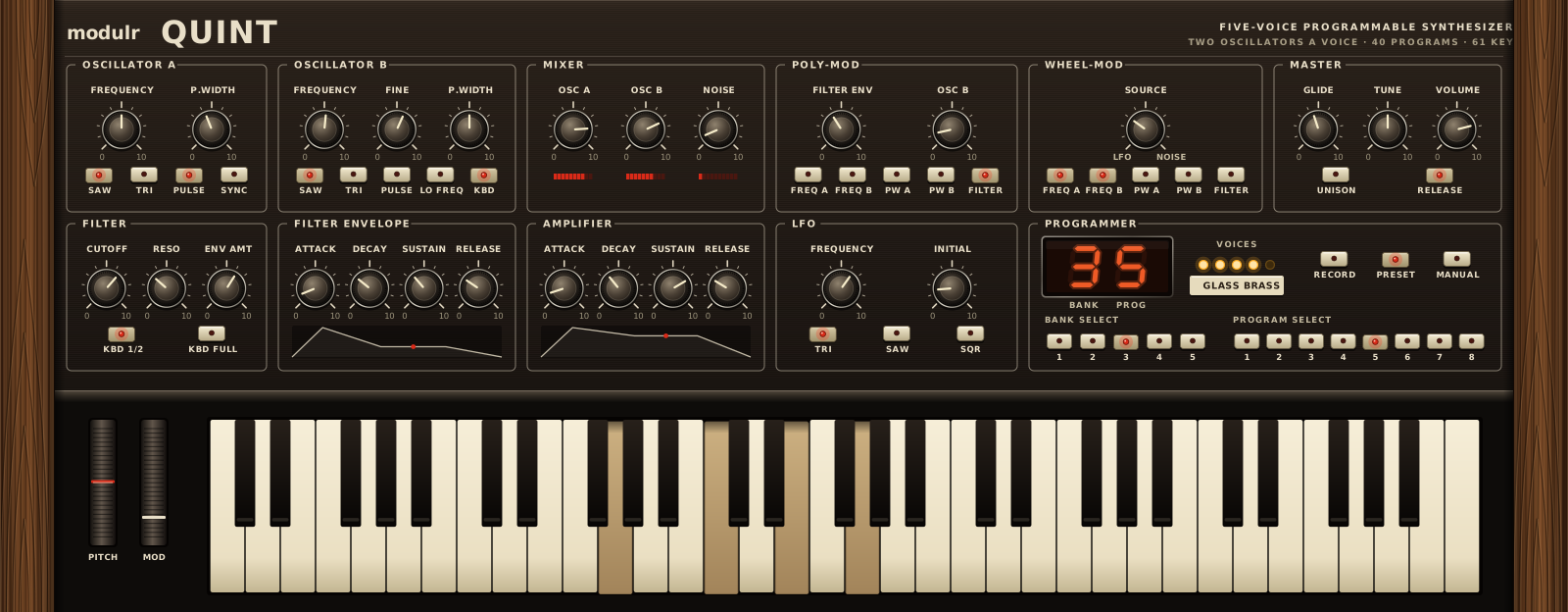
Five voices of two oscillators each, a hard sync, poly-mod and wheel-mod, and a filter envelope and an amplifier envelope of their own, with forty-nine patches.
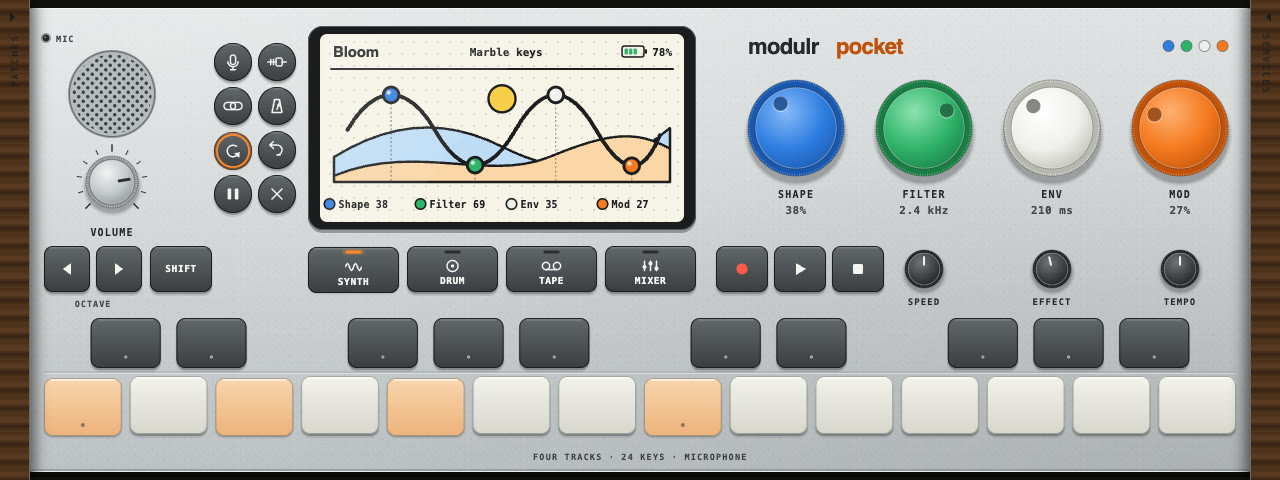
Four encoders in four colours and one small screen, drawn over a single synth voice with nine patches.
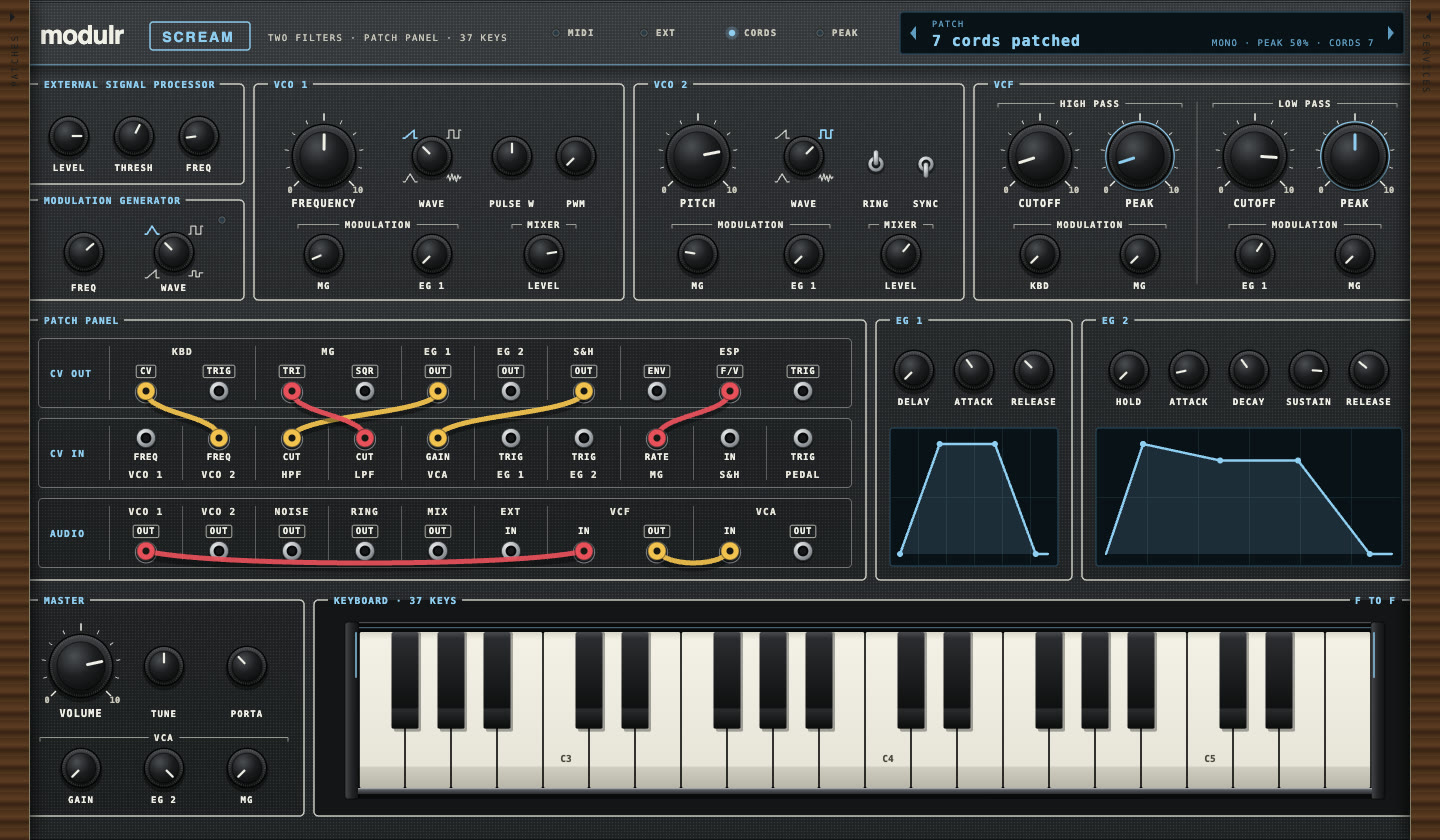
Two oscillators, a high-pass and a low-pass filter each with a peak that screams, and a patch panel you can patch.
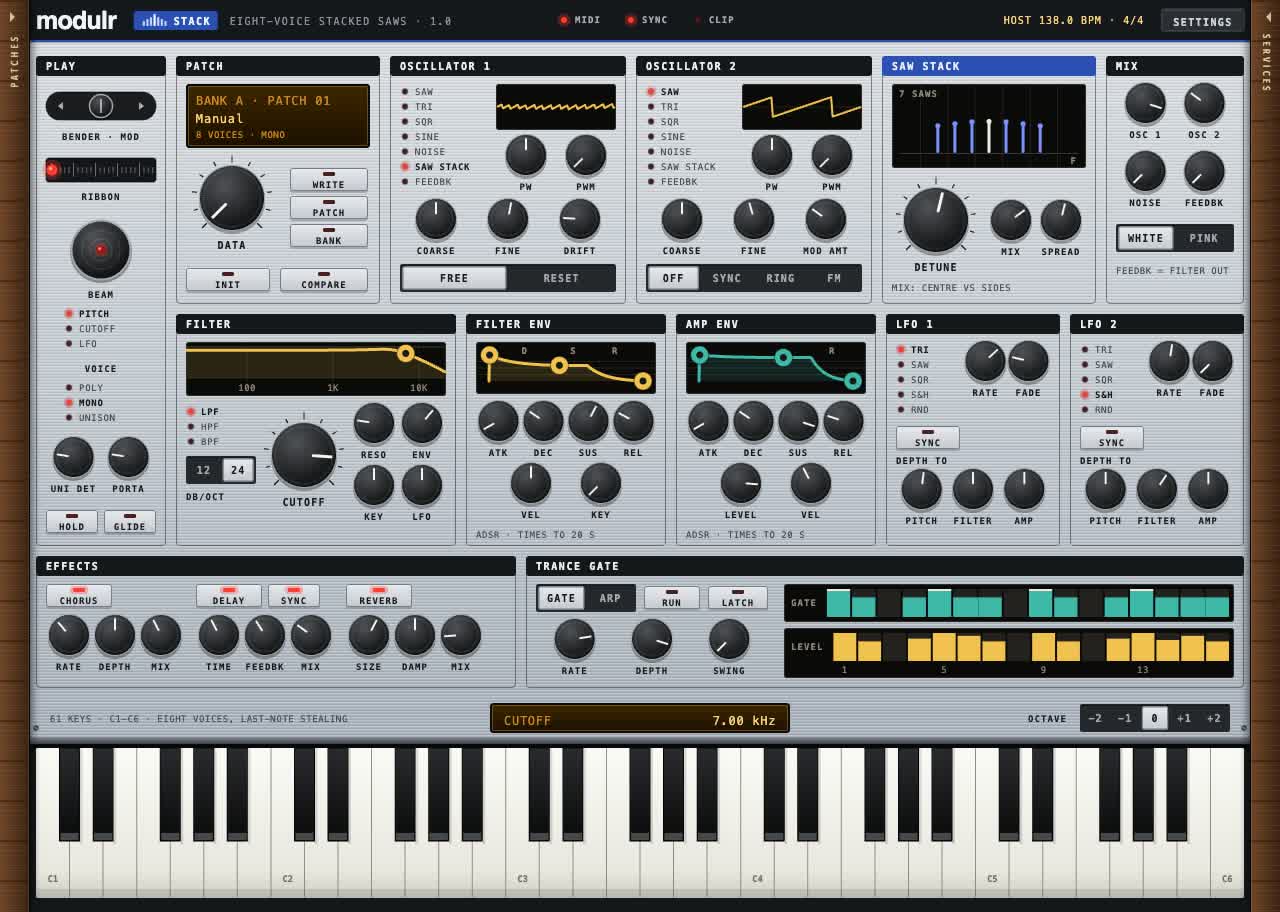
Eight voices of seven saws each, a filter with three types, a trance gate and three effects, played from your keyboard as a VST3 and Audio Unit.
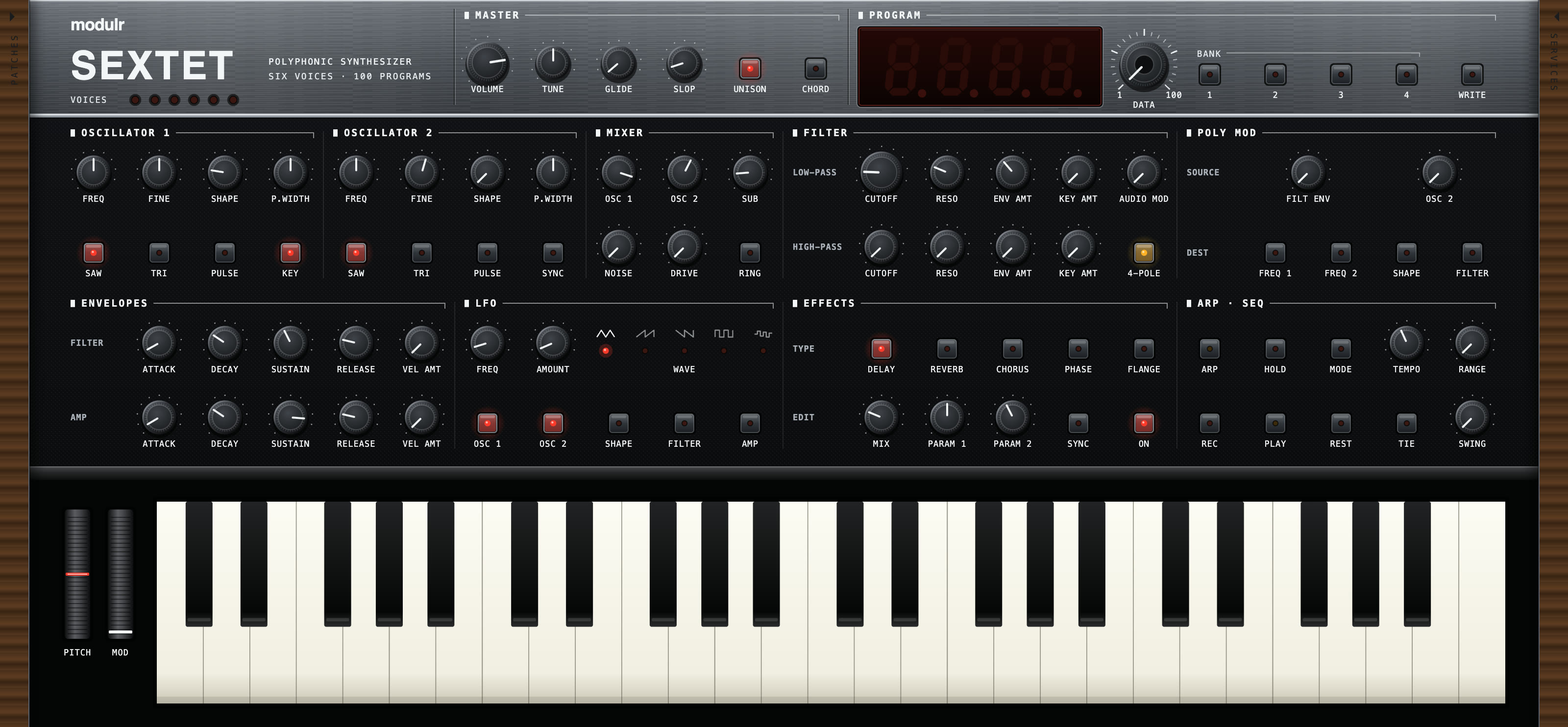
Six voices of two oscillators with a shape and a hard sync, a sub, a resonant low-pass and high-pass, poly mod, one effect, an arpeggiator and a sequencer.
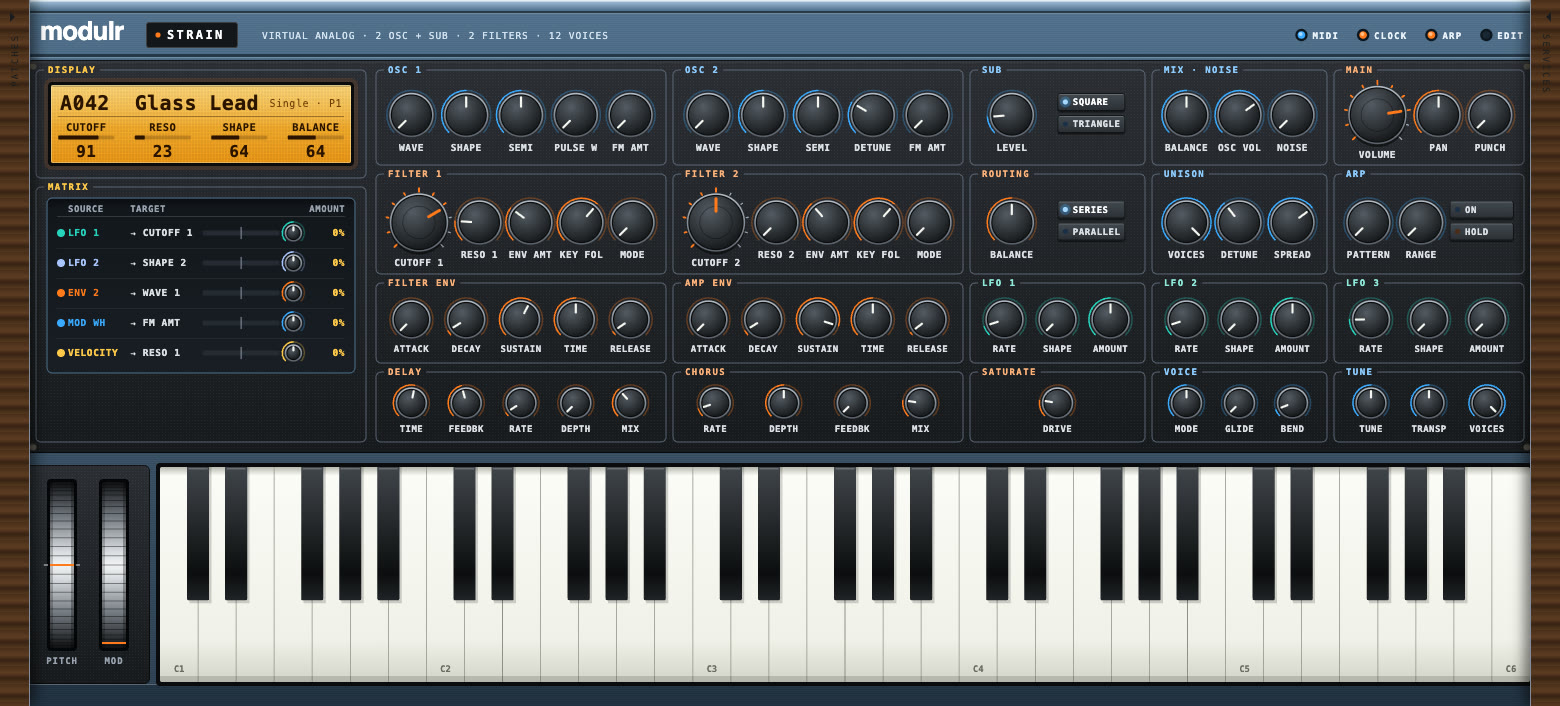
Two oscillators and a sub, two filters with four routings, a five-slot modulation matrix, three LFOs and twelve voices.
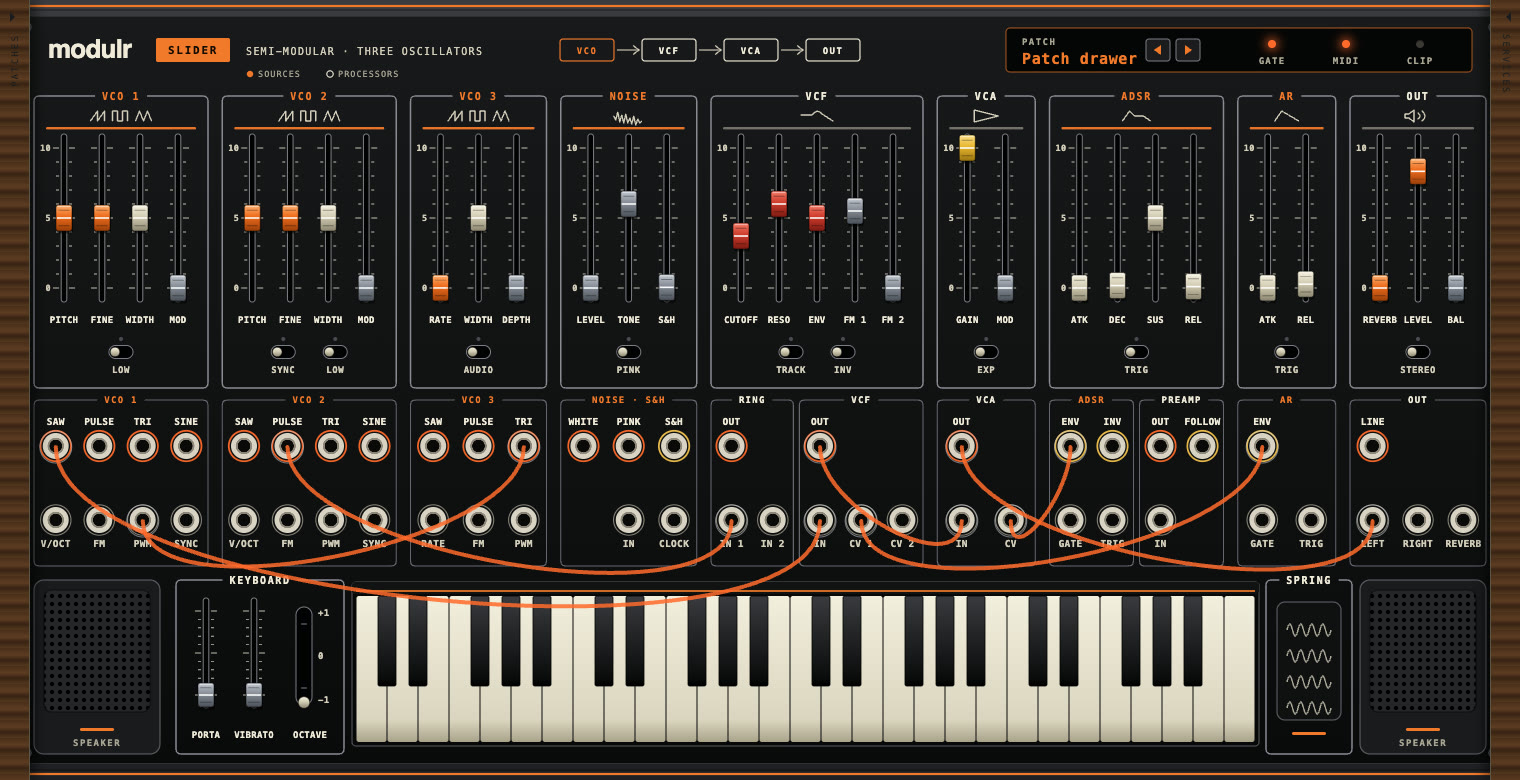
Three oscillators, a ring modulator and a spring reverb, every control a slider over a patch bay of live cables.
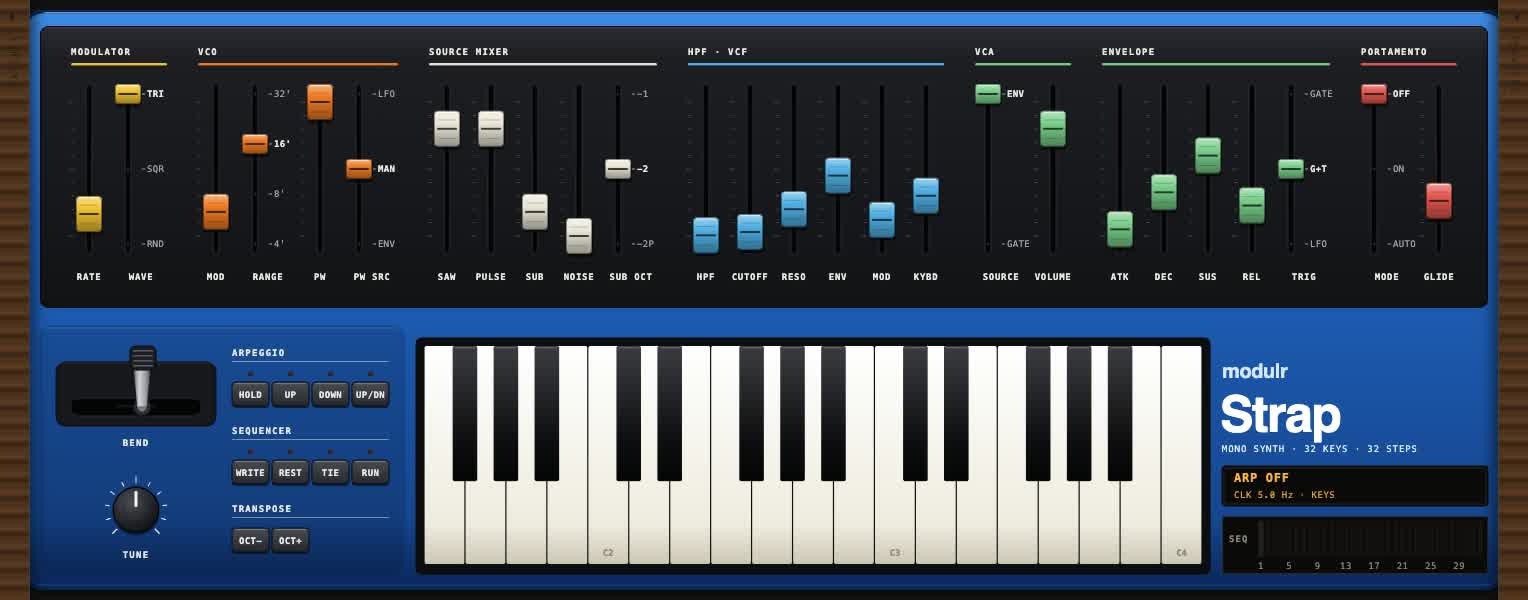
One oscillator with a sub and noise, a resonant filter, a key sequencer and an arpeggiator, played from your keyboard as a VST3 and Audio Unit.
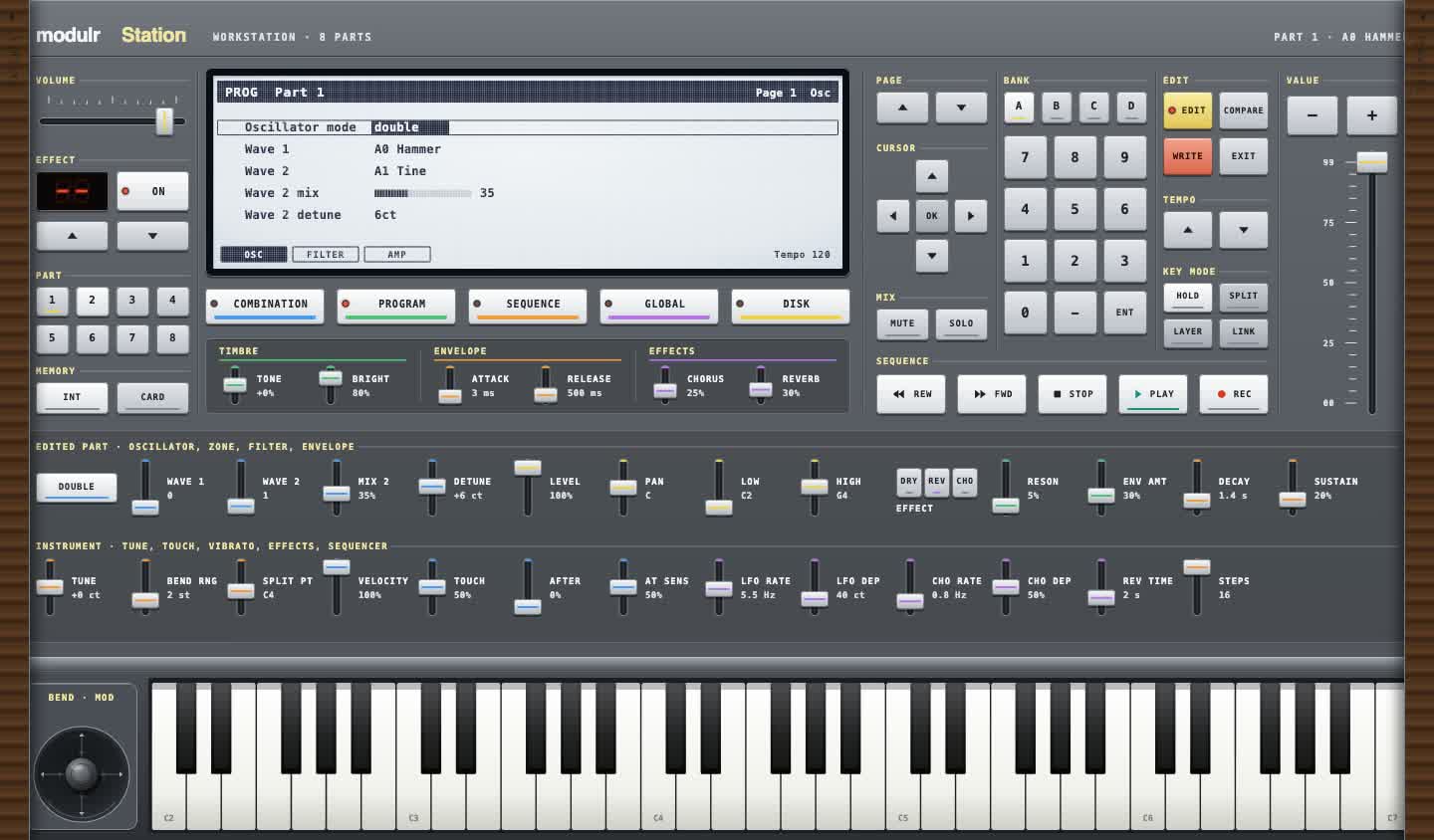
Eight parts, thirty-two waves, a display with a data slider, and a fader or key for every control, played from your keyboard as a VST3 and Audio Unit.
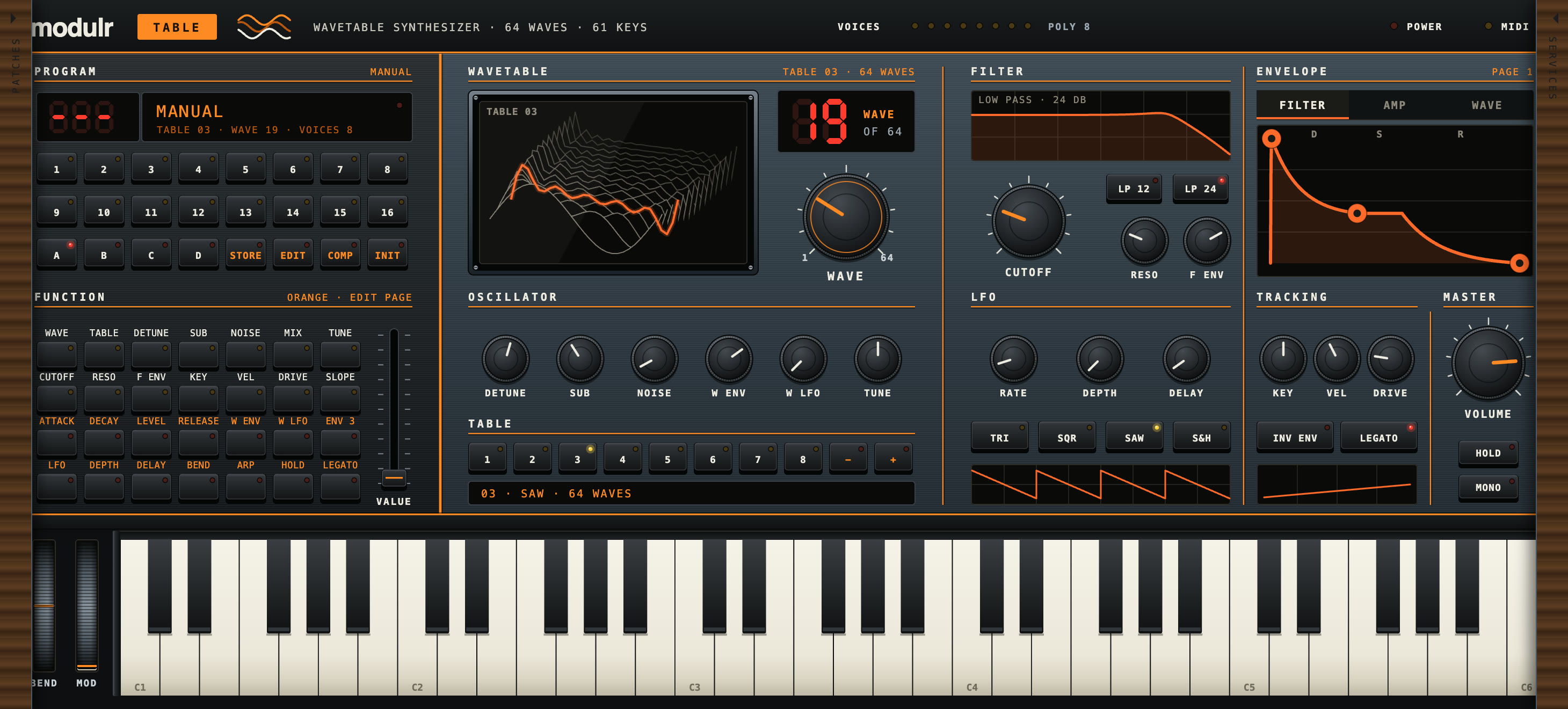
Sixty-four waves on a table, one large knob to sweep them, and a resonant filter with envelopes of its own.
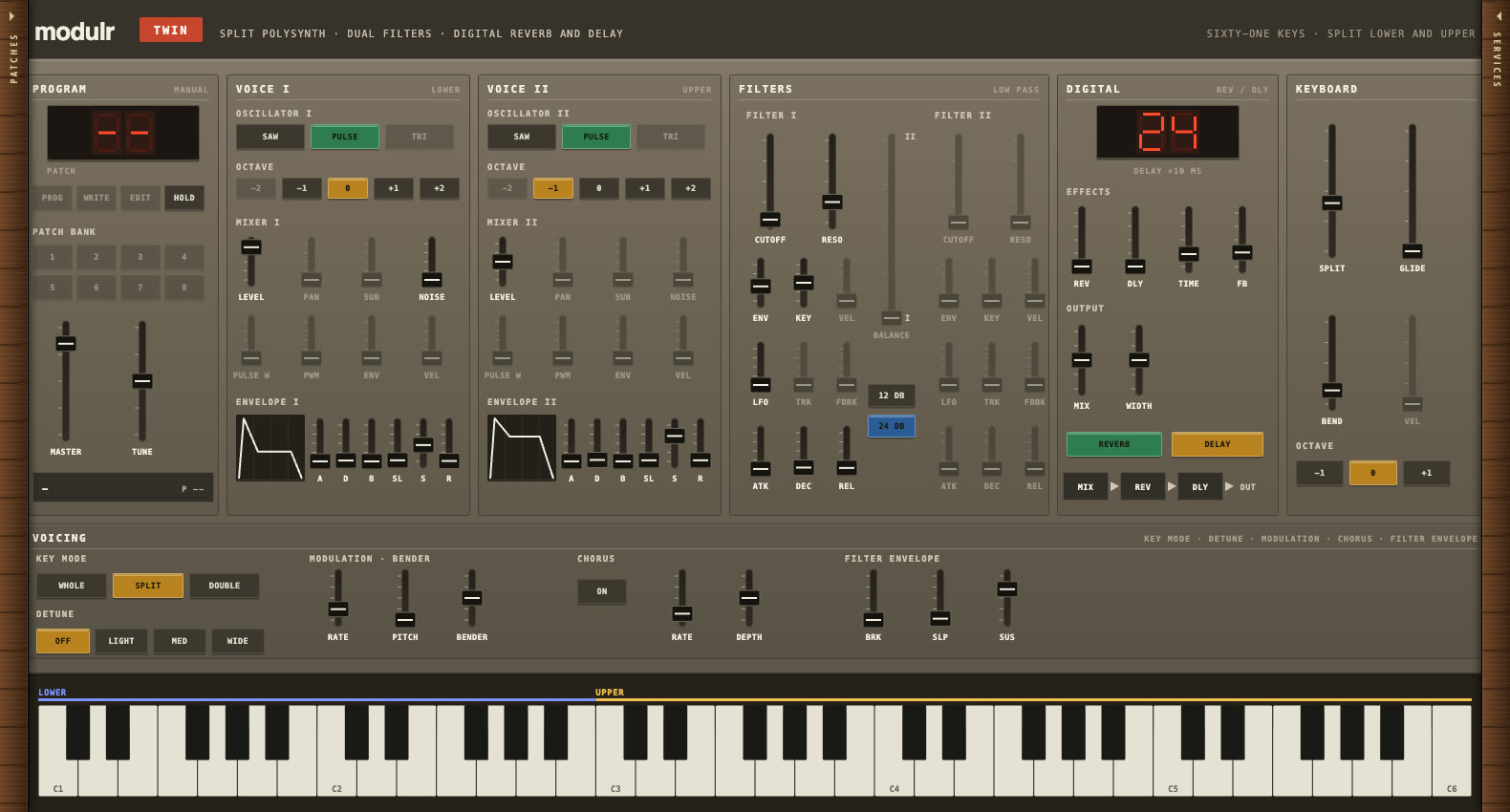
Two groups of four voices, a resonant filter with its own envelope, a chorus and a digital reverb and delay, played from your keyboard as a VST3 and Audio Unit.
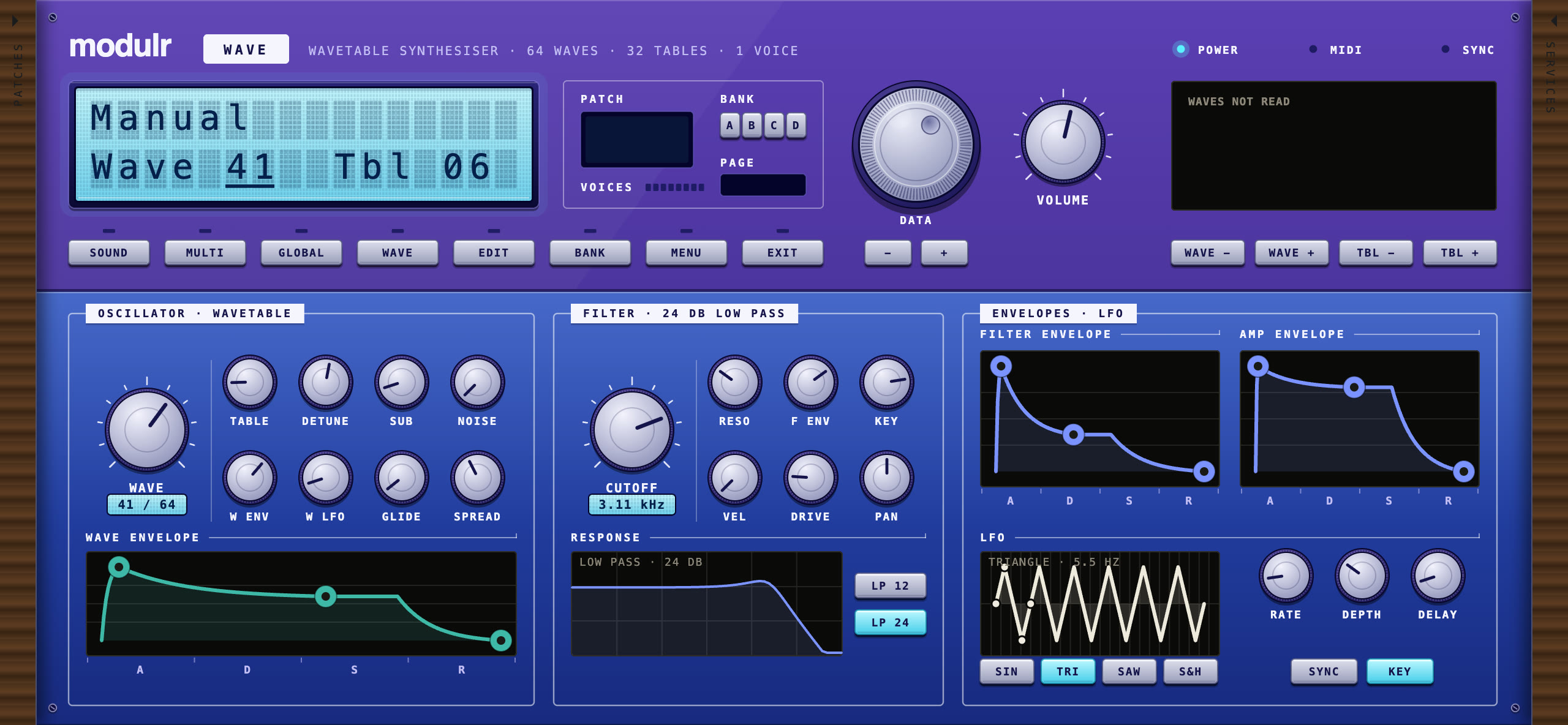
Sixty-four waves in each of thirty-two tables, a knob to sweep them, and a resonant low-pass with envelopes of its own.
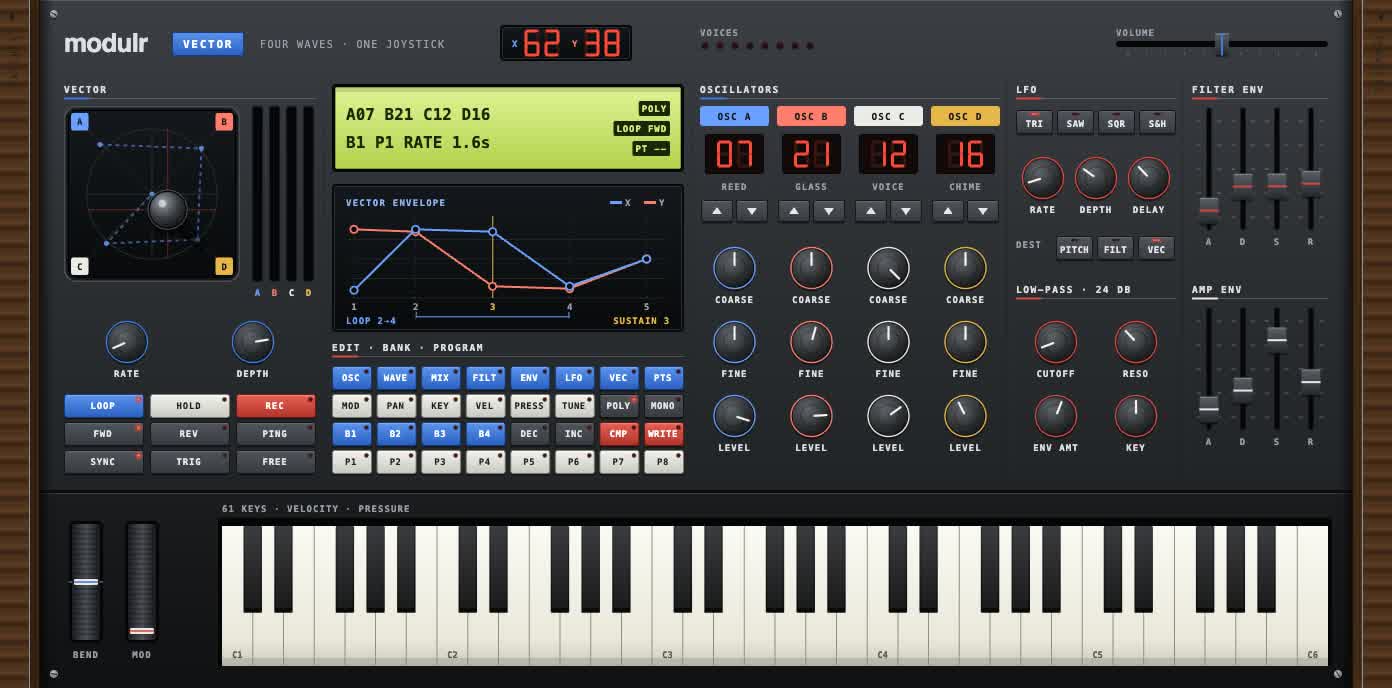
Four waves mixed around a square by a vector joystick, and a five-point vector envelope that moves the stick by itself, played from your keyboard as a VST3 and Audio Unit.
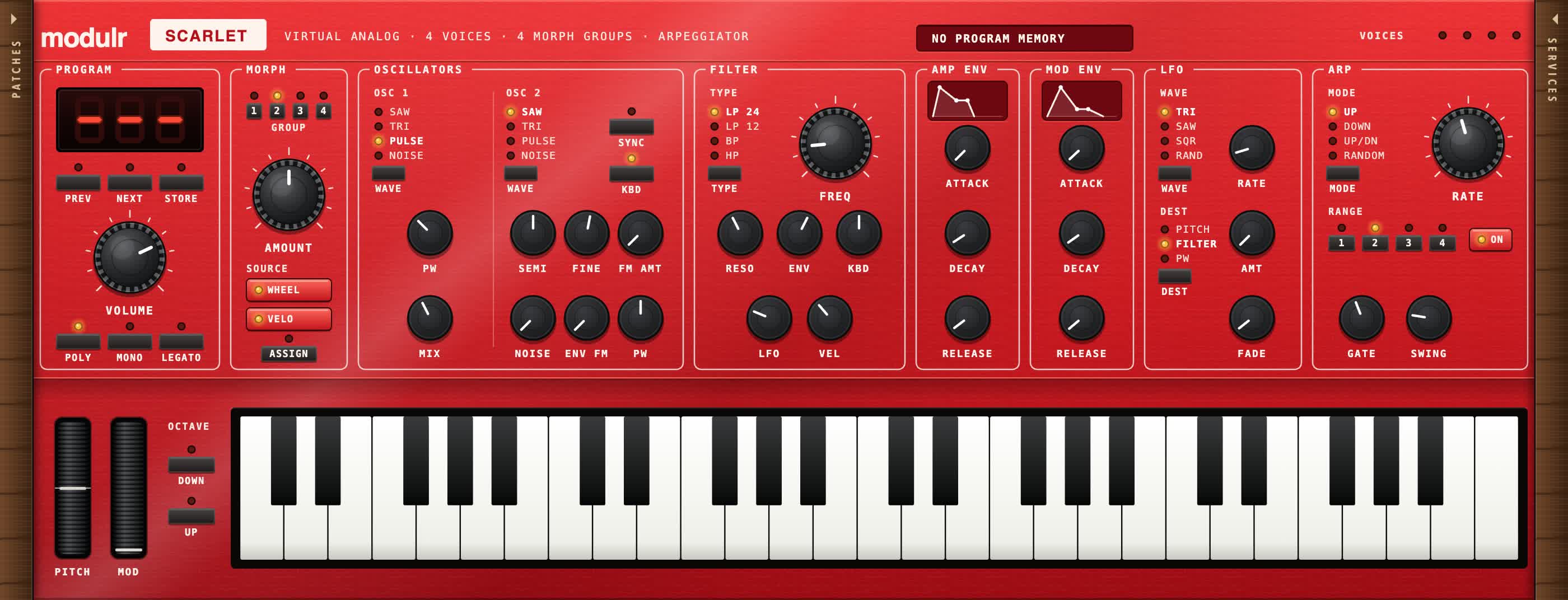
Four morph groups, two oscillators with wave lists and a filter that changes type, played from your keyboard as a VST3 and Audio Unit.
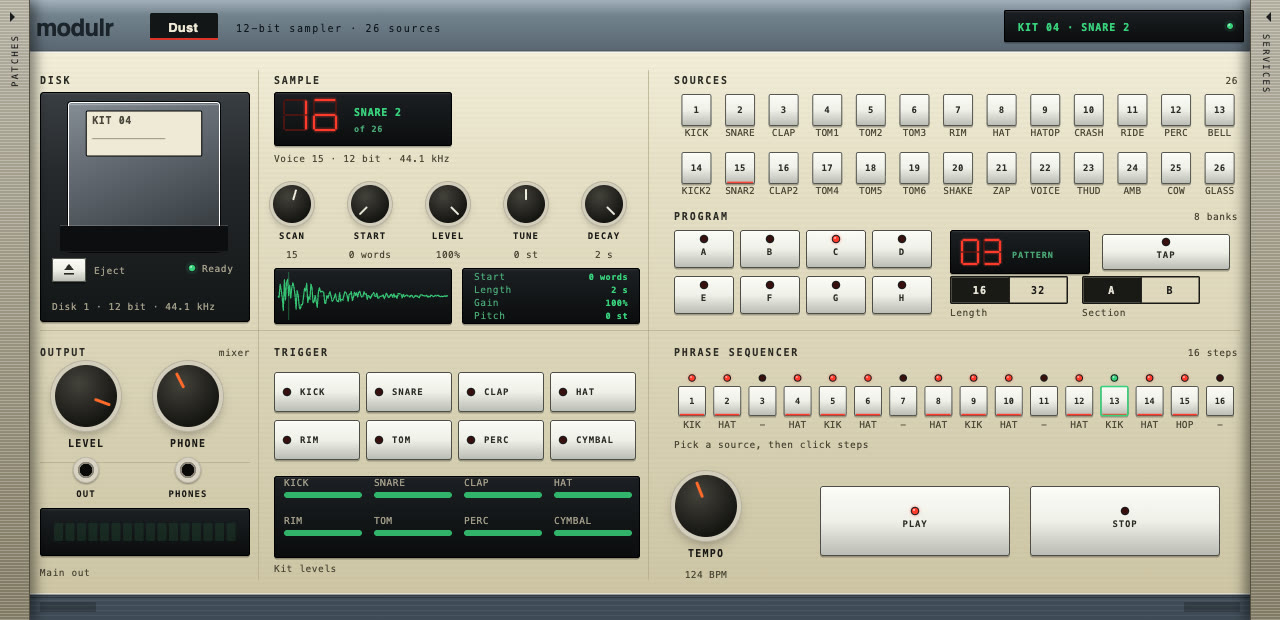
A floppy of twelve-bit samples, a start, a tune, a level and a decay for each, and a phone amplifier for the trigger.
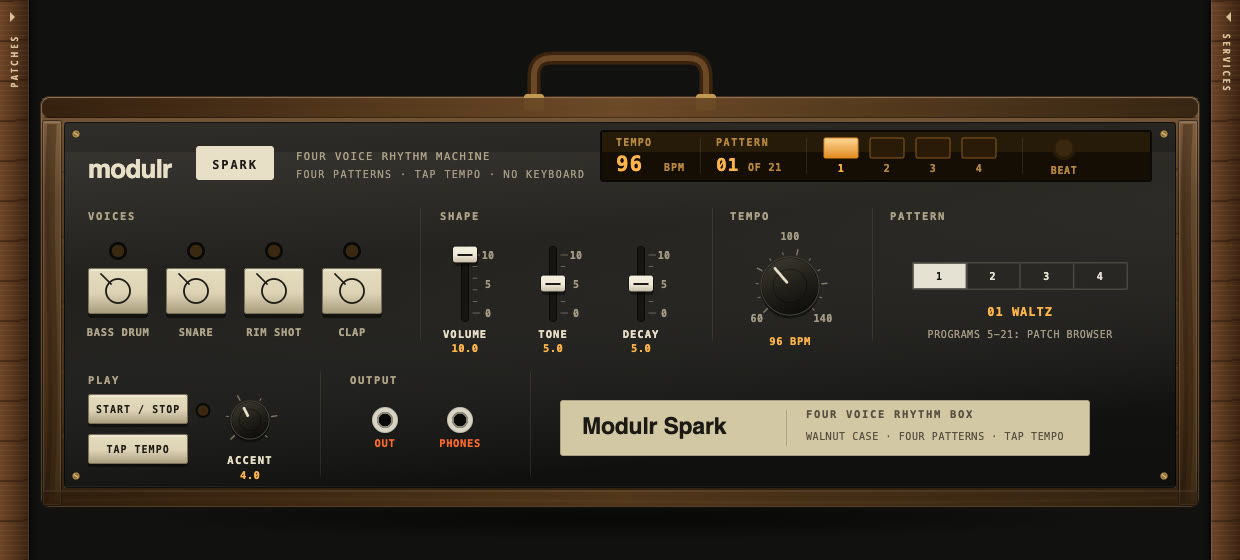
Four trigger buttons, three sliders and a wooden case: the first of them, and the one every later machine answers to.
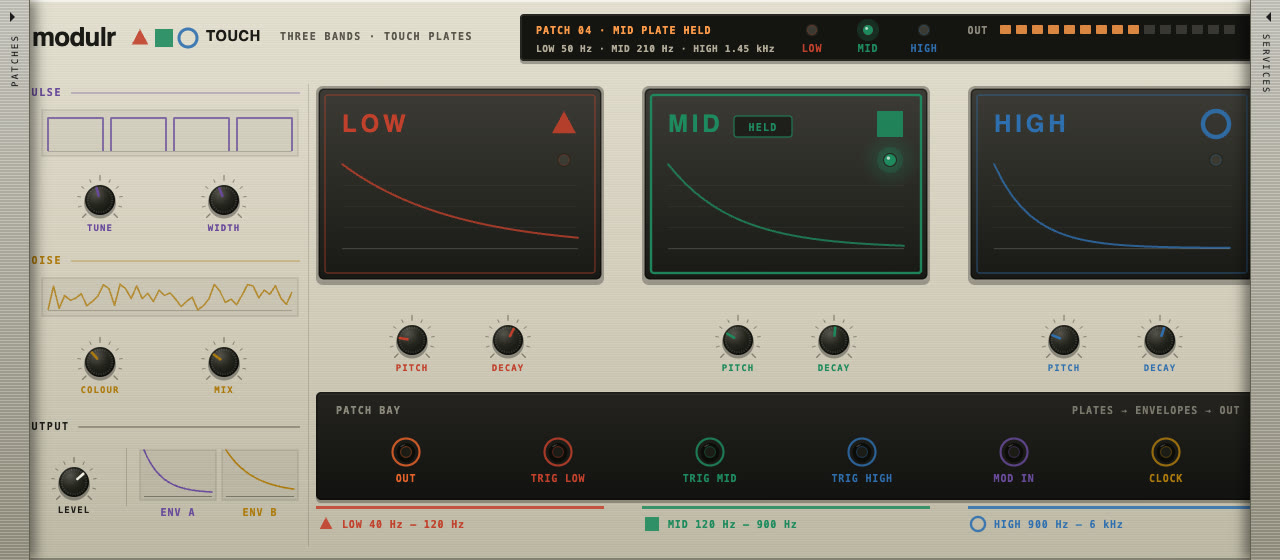
Three touch plates for the low, the middle and the high of a drum sound, with no buttons and no keyboard at all.
Compressors, reverbs, warmth, movement, a filter, grains and a spring — $20 each. Every picture is the effect’s own screen, running.
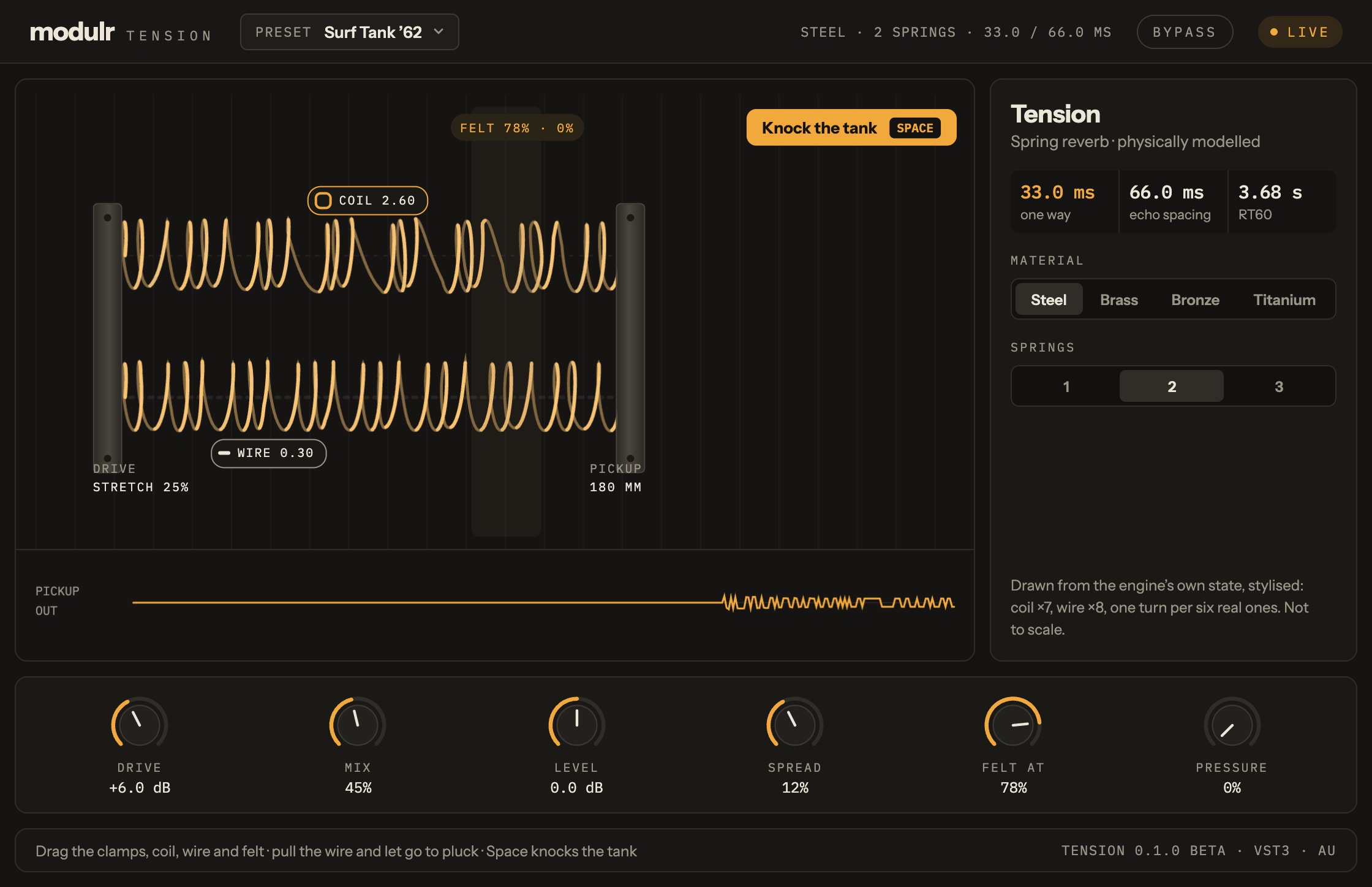
A spring reverb you can take apart: change the metal, stretch the spring, then pluck it.
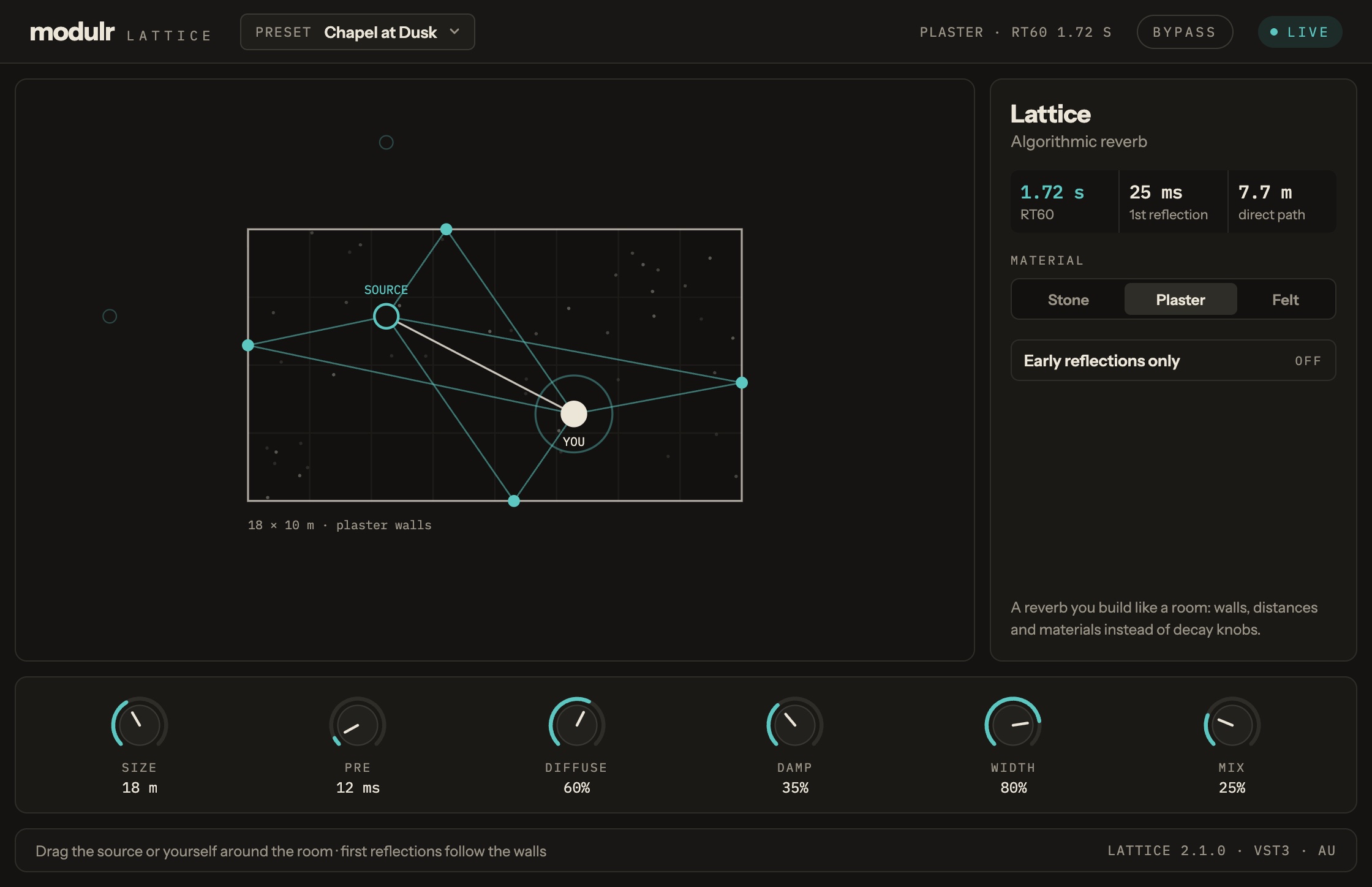
A reverb you set up like a room: drag the walls, walk around in it, hear where you are.
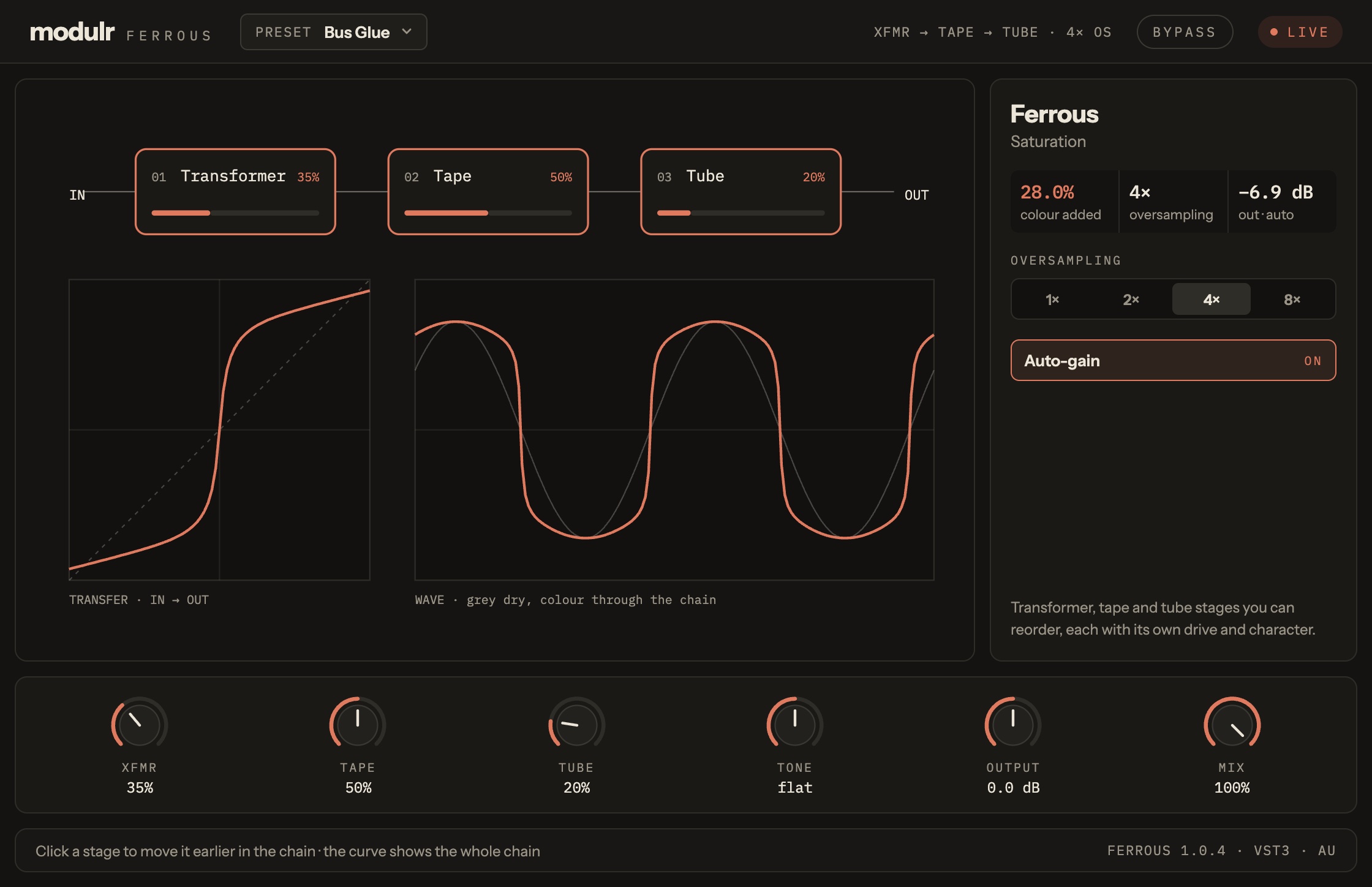
Transformer, tape and tube warmth, in any order — turn each up until it sounds right.
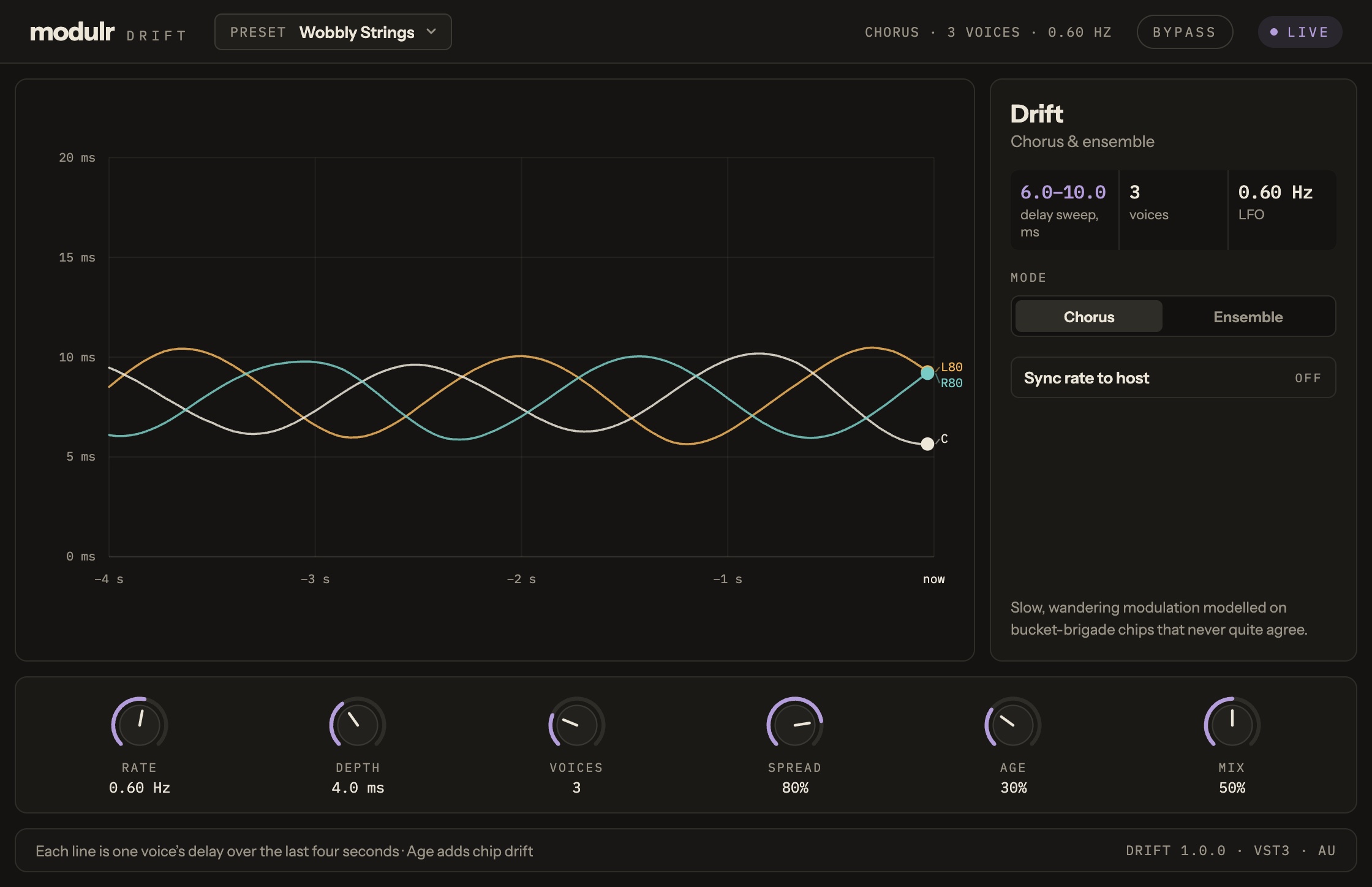
A chorus with the wobble of old hardware: warm, wide, and never quite the same twice.
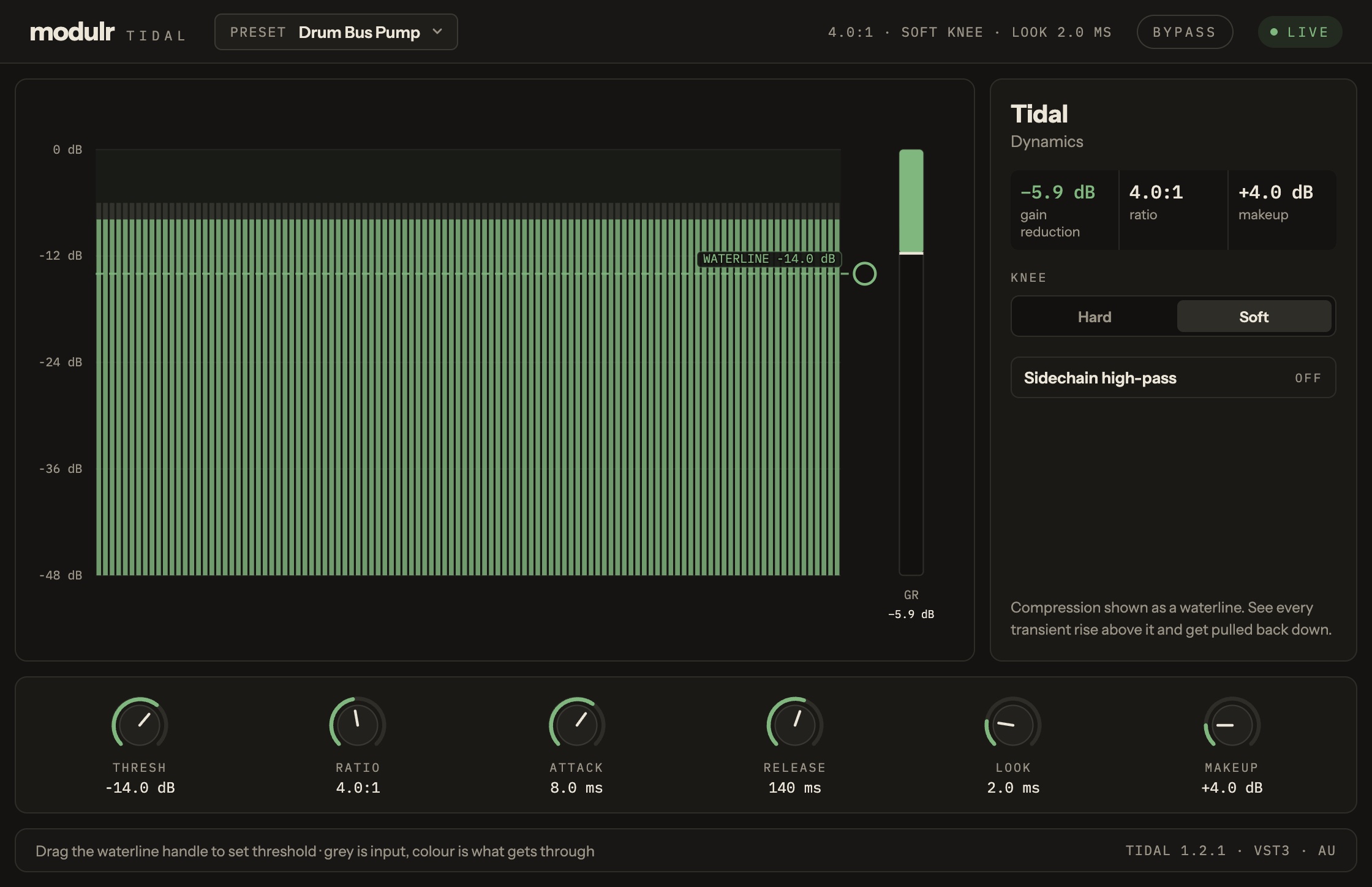
A compressor you can see: drag the waterline and watch the sound bob above it.
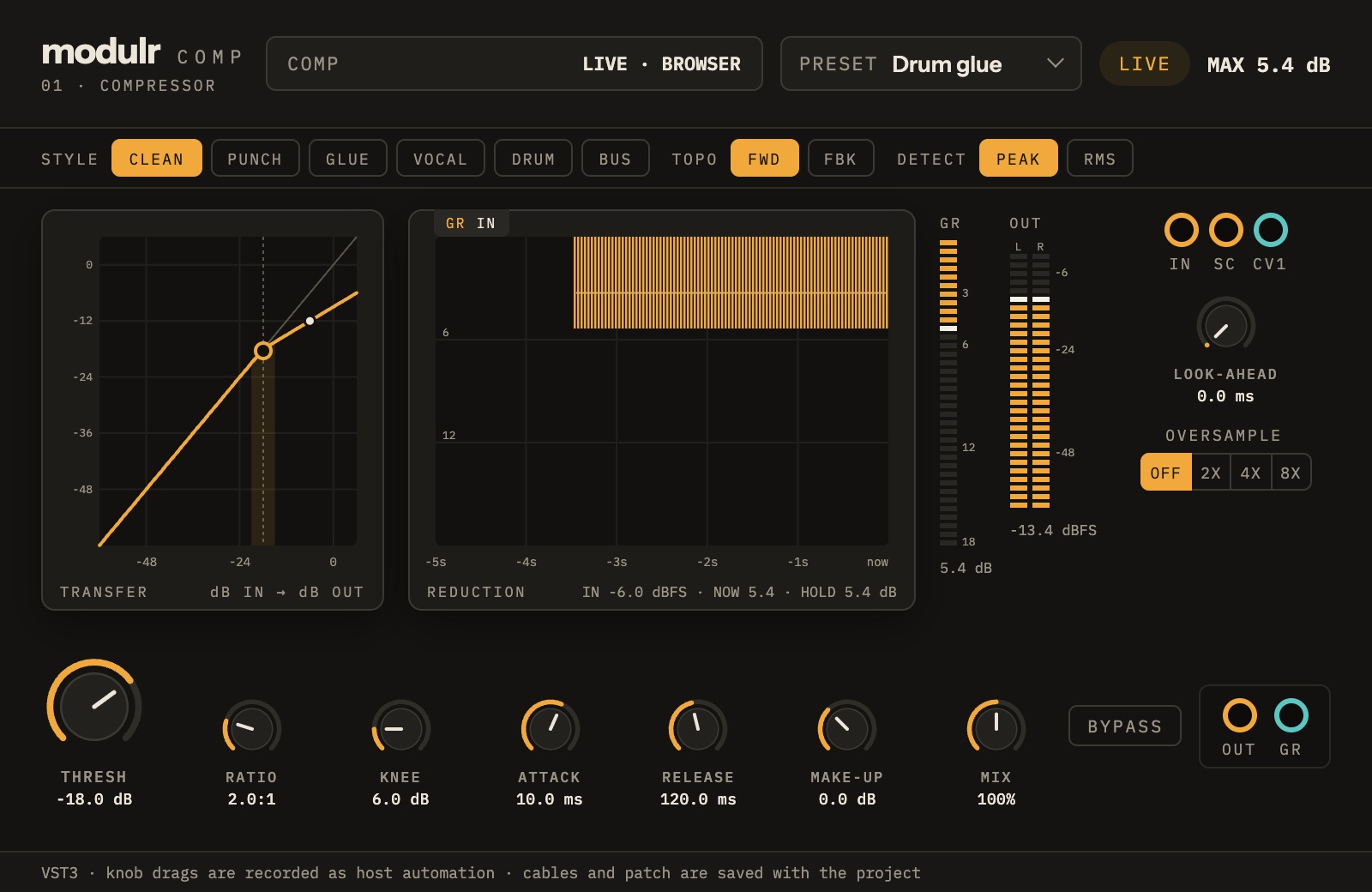
Six compressors in one — pick the character your track needs, from clean and invisible to glue.
Not a plug-in — a small app that sits beside your music software. Press one key, type what you want in plain words, and Roadie shows you the plan before it does anything. Anything risky is previewed first, everything can be undone, and the optional assistant suggests — it never acts on its own.
The palette is redrawn from the Roadie specification’s own wireframes. Mock UI — redrawn from the Roadie specification’s own wireframes, not a screenshot of the shipped app. Values are illustrative, not measured.
Legendary is our love letter to the instruments of all time: 43 studies, 33 after the synthesizers and 10 after the drum machines, each drawn twice — once as a plug-in’s screen, once as the rack module it would be. The five below open the list.
after the Minimoog Model D · 1970 · 22 HP
Three oscillators, a mixer and a four-pole ladder filter, with every section boxed and titled on the panel.
after the DX7 · 1983 · 24 HP
Six operators, thirty-two algorithms and four-rate envelopes, edited from a slider and a membrane panel.
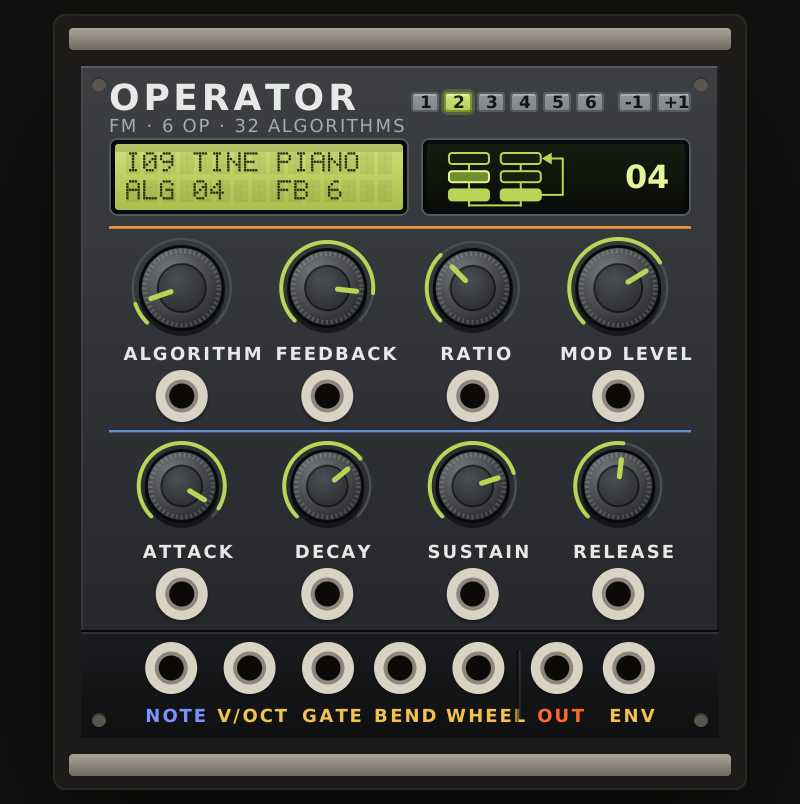
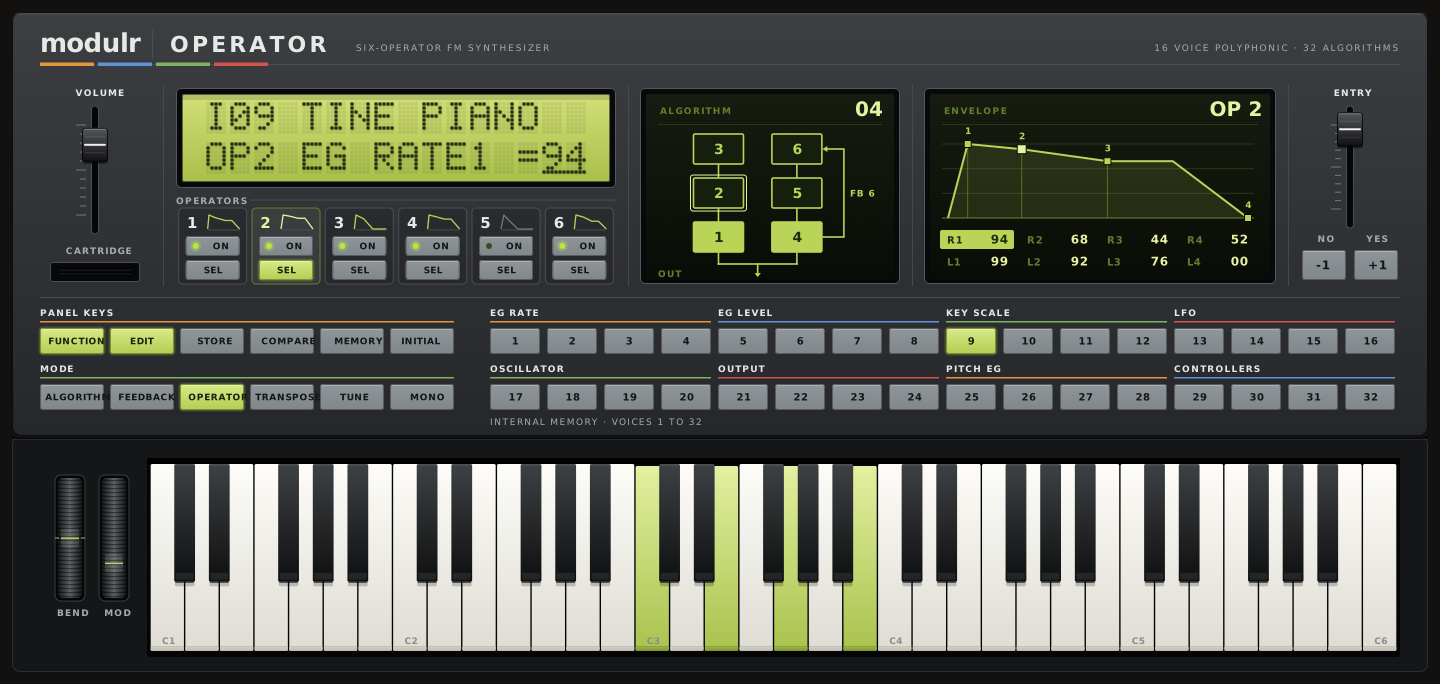
after the Prophet-5 · 1978 · 28 HP
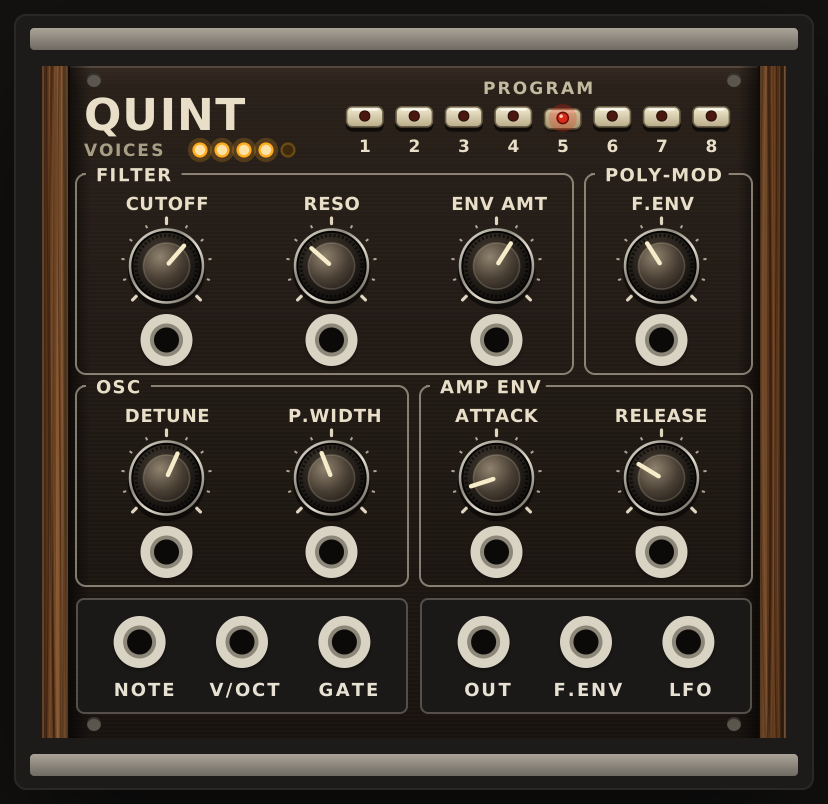
Two oscillators, poly-mod and a five-voice programmer, with a filter contour and a loudness contour of their own.
after the Jupiter-8 · 1981 · 36 HP
Eight voices of two oscillators each, a split and a dual mode, and a red display over a bed of coloured sliders.
after the Moog modular · 1965 · 40 HP
A cabinet of numbered modules: oscillators, a filter bank, amplifiers, envelopes, a sequencer and a ring modulator, patched by hand.
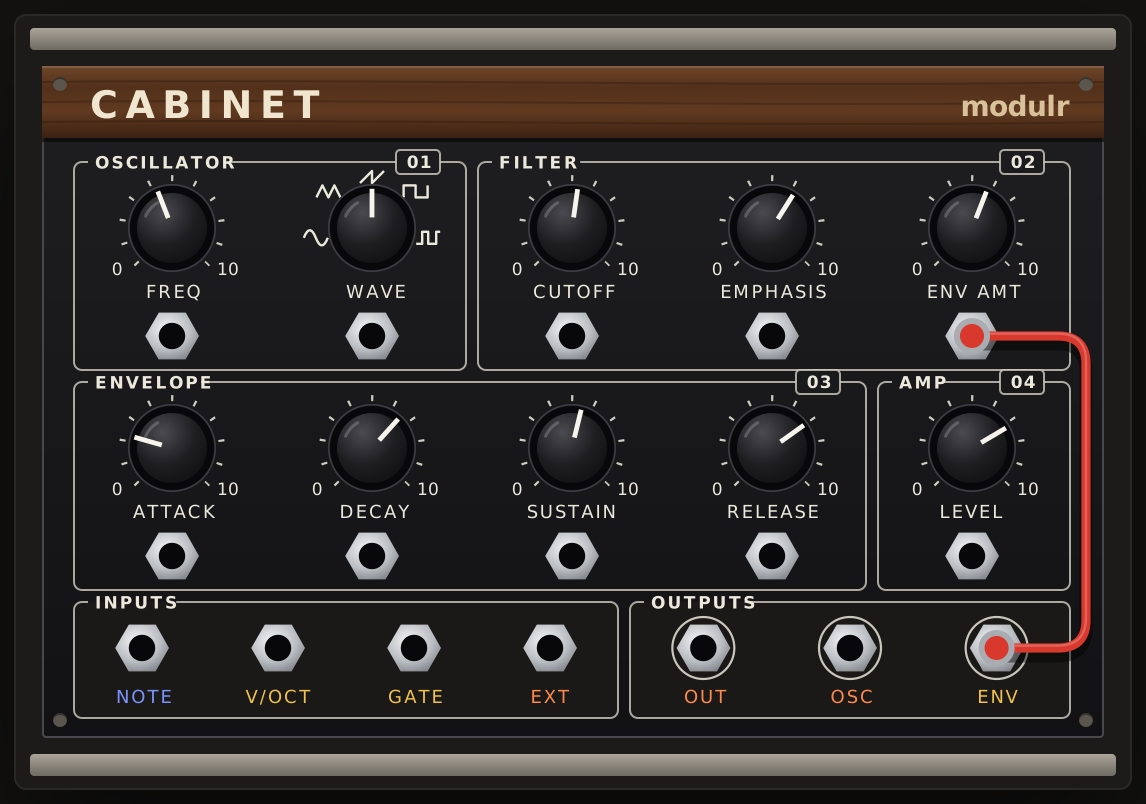
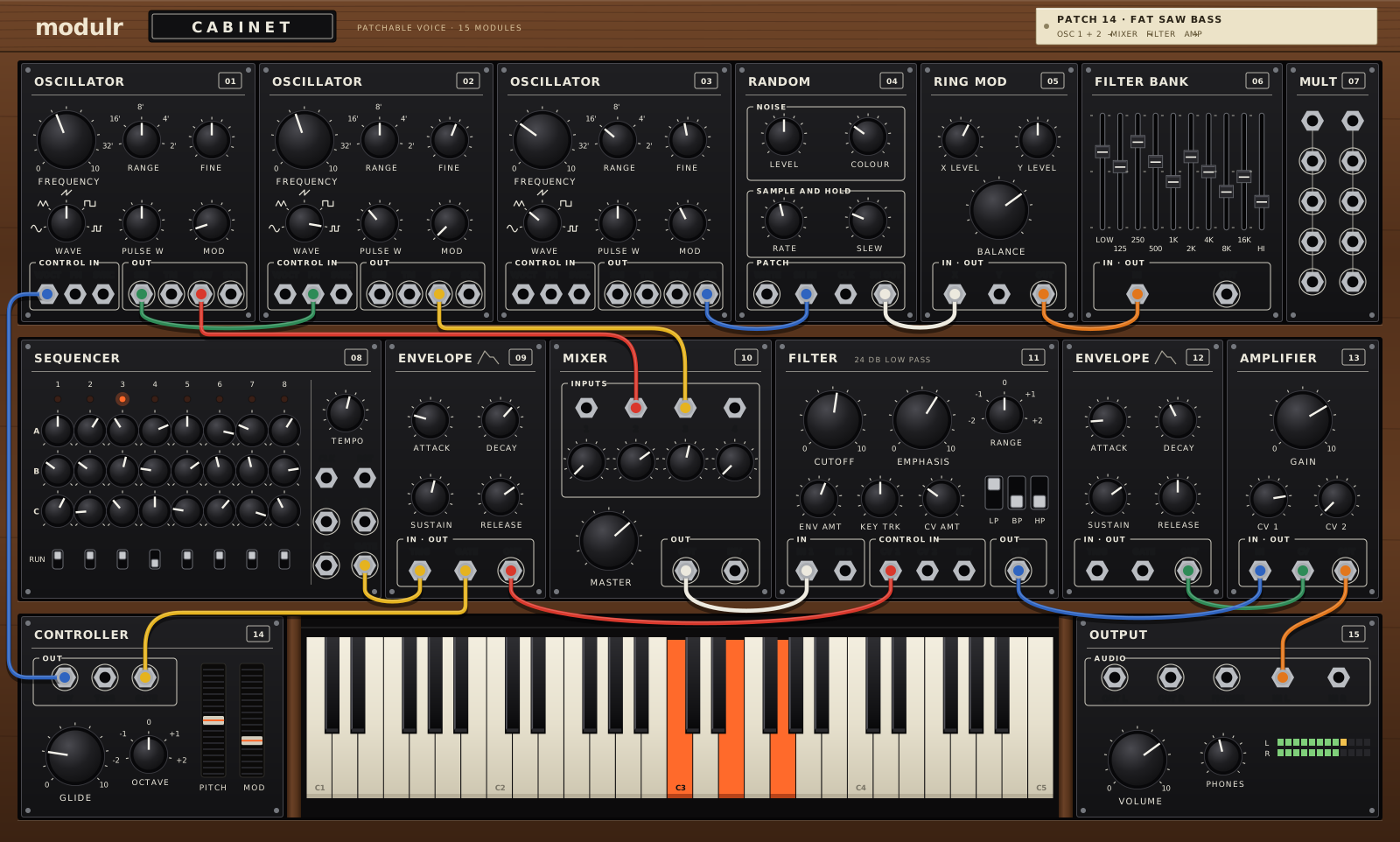
Every drawing is the specification’s own kit, not a photograph of a shipped instrument. The studies are drawings, not plug-ins: none of them is built, and none of them is sold on its own. Values are illustrative, not measured.
Ten products on one framework: the synth, seven effects, the rack and the hub, each with its own editor, its bar against the field and its parameters. All on sale.
Eight modules, twenty-three jacks, and a patch bay that takes any cable you give it.
Eight bands, any shape, and a latency figure you can read off the panel.
Dynamic, linear-phase, mid/side equaliser
→Gain reduction is a signal here. Patch it into anything.
Multi-style compressor
→Four compressors, three crossovers, one display that shows all of them moving.
Multiband dynamics
→A ceiling that holds, and the four loudness numbers under it.
True-peak limiter, loudness metering
→Three curves, each written down to the decibel.
Tape, console and multiband saturation
→Plate, Room and Hall from one network, with six bands on the decay.
Reverb with a decay-rate equaliser
→Six taps, a drive, two filters, and a time knob that moves like tape or like nothing at all.
Modulated, patchable delay
→Sixteen slots. Any output to any input. One latency figure for the chain.
The container: every product as a module
→Install the suite once. Keep it verified, current and in step.
Installer, licensing, presets, updates
→Every card shows the product’s editor. Mock UI — drawn from the specification, not a screenshot of the shipped editor. Values are illustrative, not measured. The synth’s is redrawn from the Modulr Synth prototype (v0.1).
Each one is rooted in something the framework already does, and each carries the limit that stops it being a claim of fact.
A knob drag, a cable edit and a preset load are each one reversible row, and every editor action is a command a script can send.
Where it stands:Tagged Measured on the synth; the journal keeps 4,000 commands in memory and is not saved with the project.
In the Rack, any output jack cables to any input jack: a compressor’s reduction can pull a band of the equaliser.
Where it stands:On sale in the Rack. The figures for it are the book’s targets, not measurements.
Presets and projects are JSON with a schema stamp, never binary. The synth’s eight factory patches are one 7,864-byte file.
Where it stands:Measured on Modulr 0.1.0, without a version field; the stamp and migration are as the book specifies.
A licence is a signed JSON file read at load, capped at 4 KiB, checked with a key built into the plug-in.
Proposed
A lapse never alters a saved project, a preset or audio that is playing; it changes only the next DSP object.
Proposed
A plug-in, a synth and Roadie are each bought once, with an offline route, the model FabFilter sells on; the whole suite can also be rented by the month. The book rejected subscription-only, and the one-time prices stay beside the plan: it is the bundle plan with an expiry that Table 25.3 says only measured demand would reopen.
Proposed
Every figure on this site is from “Modulr — the audio suite: design and architecture specification”, October 2026, and carries that book’s tag: Measured, Proposed, Estimate, Reported or Open question. The one exception is the prices: they are the owner’s, set on 24 October 2026, and neither book names one.